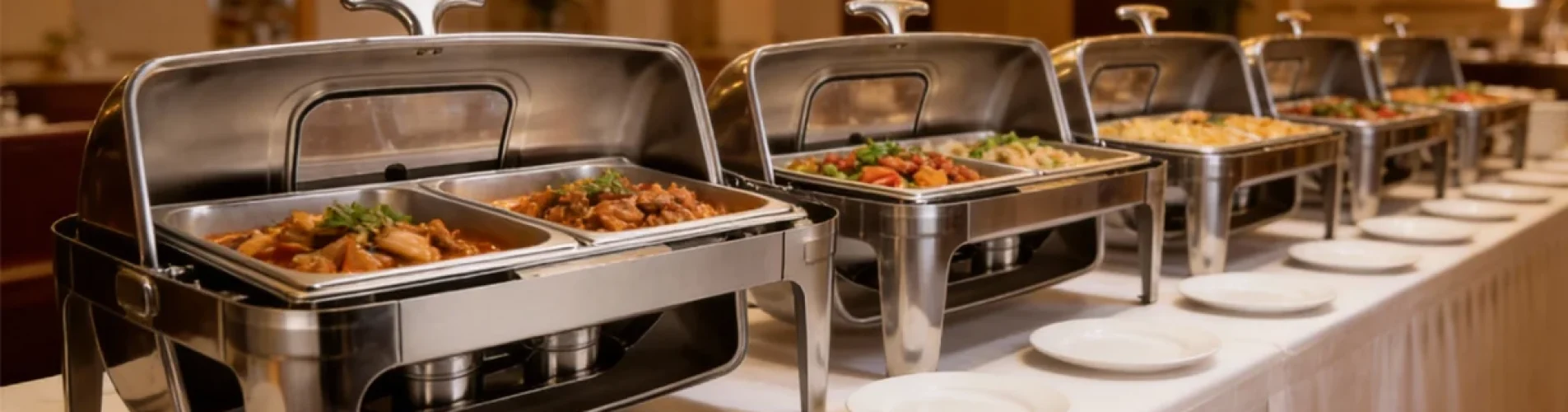
Whether you’re planning a wedding reception, corporate buffet, or catering event, keeping food at the perfect temperature is essential for both safety and guest satisfaction. Chafing dishes—also known as chafers—are the professional solution for maintaining hot, delicious food throughout your entire service. This comprehensive guide covers everything from types and sizes to proper usage techniques, helping you choose and use the right chafing dish set for any occasion.
What is a Chafing Dish?
A chafing dish is a specialized food warmer designed to keep prepared dishes at safe serving temperatures during buffets, banquets, and catering events. The term “chafing” comes from the French word “chauffer,” meaning “to heat.” These essential pieces of buffet equipment maintain food between 140°F and 165°F (60°C to 74°C), preventing bacterial growth while preserving taste and texture.
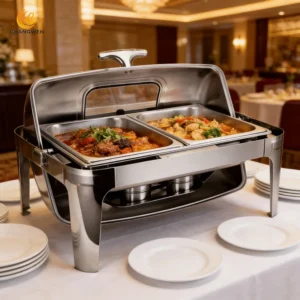
How Chafing Dishes Work
Chafing dishes use indirect heat to keep food warm without overcooking. The basic principle is simple yet effective:
- A water pan (also called a bain-marie) sits in the frame and is filled with hot water
- A heat source beneath the water pan creates gentle steam
- The food pan sits above the water pan, warmed by the rising steam
- A lid covers the food pan, trapping heat and moisture
This gentle heating method ensures your food stays at the ideal temperature for hours without drying out or continuing to cook. Unlike direct heat sources, chafing dishes won’t scorch sauces or overcook delicate proteins, making them indispensable for professional food service.
Primary Uses for Chafing Dishes
Chafing dishes are versatile workhorses in the hospitality industry:
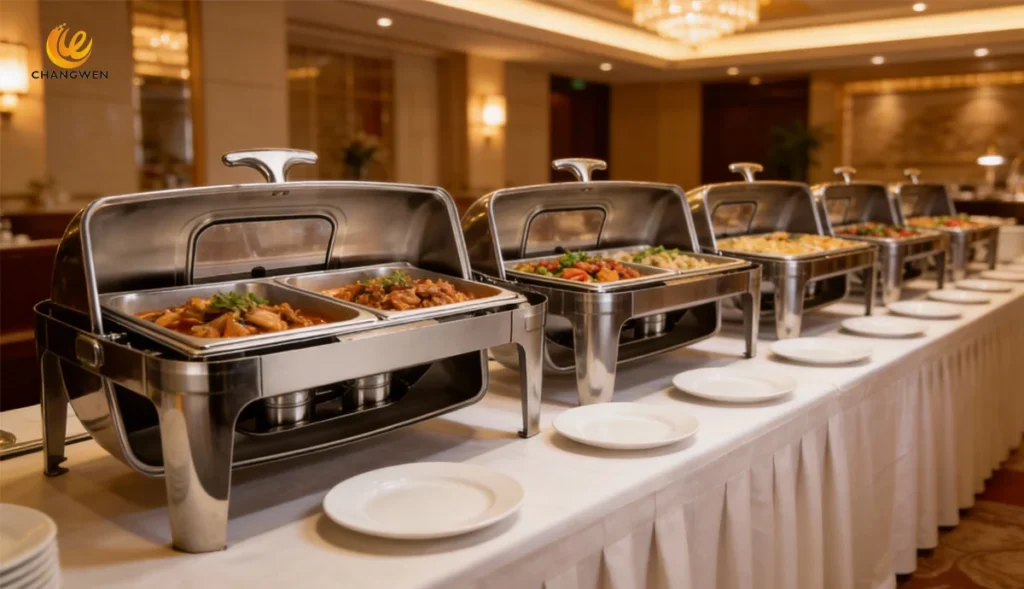
- Buffet service at weddings, conferences, and hotel breakfast bars
- Catering events where food must remain hot during transport and service
- Restaurant buffets for brunches, dinner buffets, and all-you-can-eat concepts
- Outdoor events where traditional warming equipment isn’t practical
- Self-service stations in cafeterias and corporate dining facilities
Types of Chafing Dishes
Selecting the right type of chafing dish depends on your menu, event style, and service requirements. Let’s explore the main categories to help you make an informed decision.
Types by Shape
Rectangular Chafing Dishes
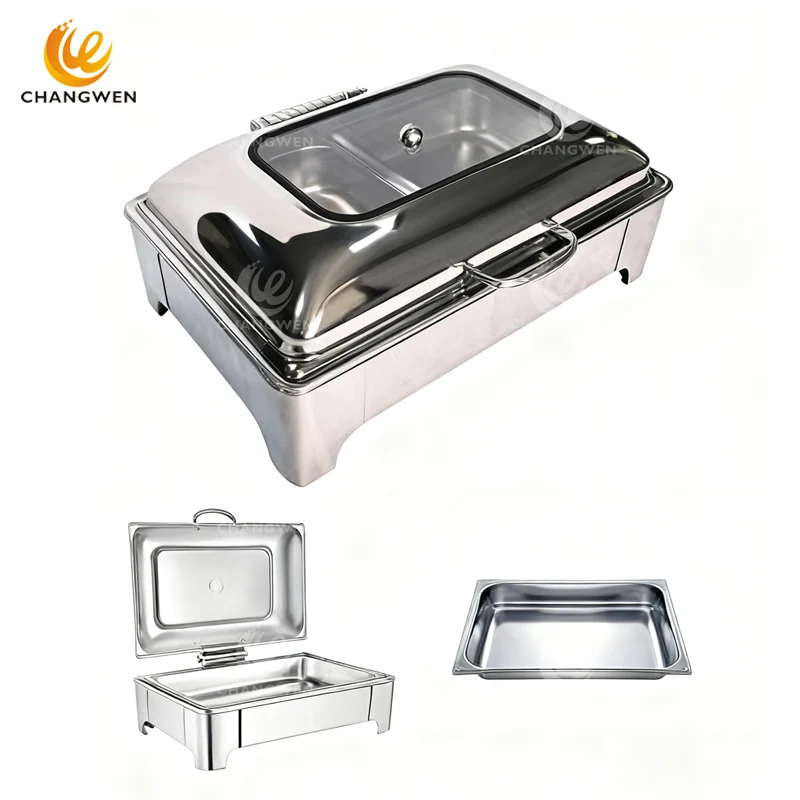
Rectangular chafing dishes are the most common and versatile option for buffet service. Their elongated shape maximizes serving capacity while fitting neatly in buffet lines.
Best for:
- Main courses like roasted chicken, pasta, or rice dishes
- Vegetables and side dishes
- Breakfast items such as scrambled eggs and bacon
- Any food that needs to be portioned efficiently
Typical dimensions: Full-size rectangular pans measure approximately 53cm x 32cm (20.75″ x 12.75″)
The straight edges make it easy for guests to serve themselves, and the rectangular shape allows you to arrange multiple dishes side-by-side for an organized presentation.
Round Chafing Dishes
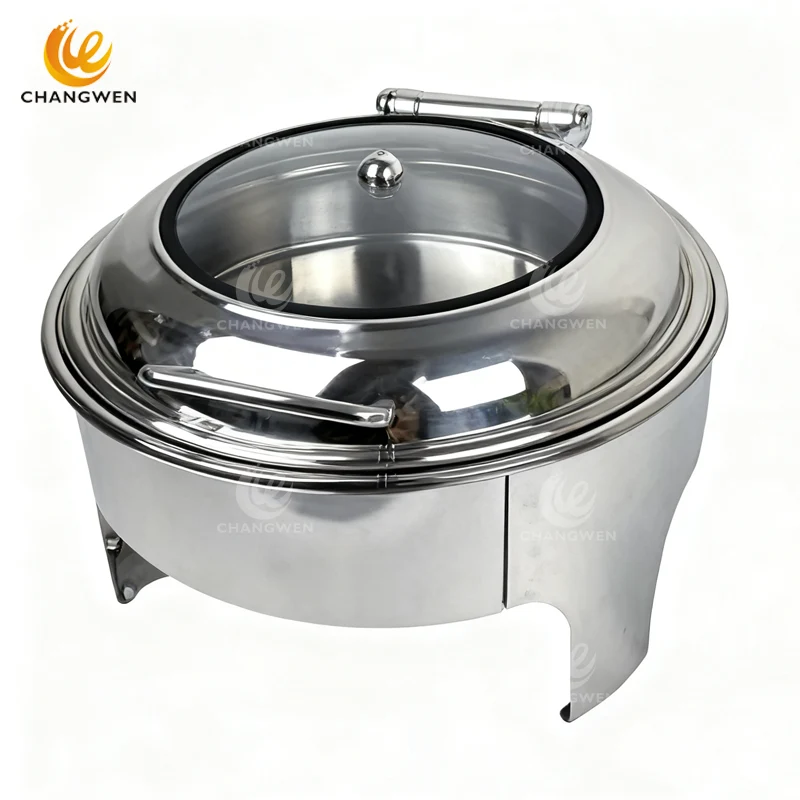
Round chafing dishes excel at holding and serving liquid or semi-liquid foods. The circular shape promotes even heat distribution and makes scooping easier.
Best for:
- Soups and stews
- Creamy sauces and gravies
- Macaroni and cheese
- Chili and other hearty one-pot meals
- Asian-style dishes with sauce
Typical dimensions: Round chafing dishes usually come in 28cm to 35cm (11″ to 14″) diameters
Round chafers add visual variety to buffet lines dominated by rectangular dishes, creating a more appealing presentation.
Oval Chafing Dishes
Oval chafing dishes combine the capacity of rectangular models with the elegant curves of round ones, creating an upscale presentation.
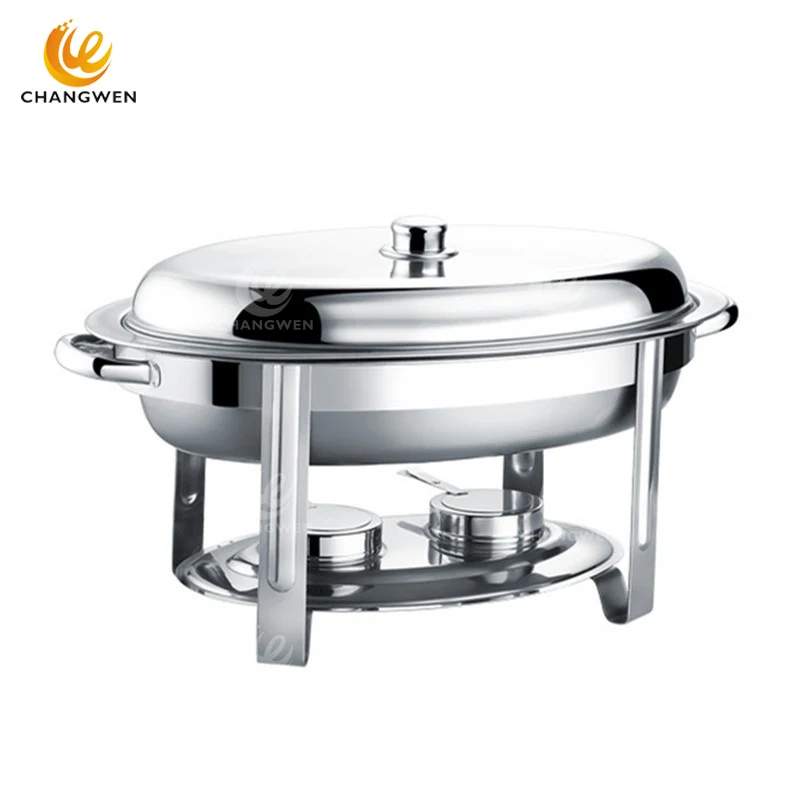
Best for:
- Whole roasted meats or fish
- Carved ham or turkey presentations
- High-end catering events
- Dishes you want to showcase as centerpieces
Oval chafers make a statement at formal events and are particularly popular for wedding receptions and corporate galas.
Types by Material
Stainless Steel Chafing Dishes
Stainless steel is the industry standard for professional chafing dishes, and for good reason. This material offers unmatched durability and maintains a polished appearance even after years of heavy use.
Advantages:
- Exceptional durability and resistance to dents
- Won’t rust or corrode, even with frequent washing
- Maintains professional appearance over time
- Easy to clean and sanitize
- Retains heat efficiently
- Available in various finishes (mirror polish, brushed, hammered)
Ideal for: Restaurants, catering companies, and anyone seeking long-term equipment investments
A quality stainless steel chafing dish can serve thousands of events without losing its luster, making it the most cost-effective choice for professional use.
Aluminum Chafing Dish Sizes
Aluminum chafing dishes are lightweight alternatives to stainless steel, popular for their affordability and portability.
Common aluminum chafing dish sizes:
- Full size: 52cm x 32cm x 8cm deep (20.5″ x 12.5″ x 3″ deep)
- Half size: 32cm x 26cm x 6.5cm deep (12.5″ x 10.25″ x 2.5″ deep)
- Third size: 32cm x 17cm x 6.5cm deep (12.5″ x 6.75″ x 2.5″ deep)
Advantages:
- Significantly lighter than stainless steel
- More affordable initial investment
- Excellent heat conductivity
- Perfect for disposable or occasional use
Considerations:
- Less durable than stainless steel
- Can dent or warp with heavy use
- May discolor over time
- Not as elegant for high-end events
Aluminum chafing dishes work well for caterers who frequently transport equipment or need disposable options for outdoor events.
Types by Heating Method
Fuel-Based Chafing Dishes
Traditional chafing dishes use canned chafing fuel (commonly called “Sterno”) placed beneath the water pan.
Advantages:
- Completely portable—no electricity required
- Perfect for outdoor events and venues without power
- Reliable and time-tested heating method
- Fuel canisters are widely available
- No power cords to trip over
Best for: Outdoor weddings, park events, tent receptions, and any location without convenient electrical outlets
Electric Chafing Dishes
Electric chafers plug into standard outlets and use electric heating elements instead of open flame fuel.
Advantages:
- Precise temperature control with adjustable settings
- No open flame—safer for indoor venues
- No need to purchase or replace fuel canisters
- Consistent heat throughout the event
- More eco-friendly than disposable fuel
Considerations:
- Requires access to electrical outlets
- Power cords can create tripping hazards
- Less portable than fuel-based options
- Higher initial investment
Best for: Indoor events, hotel ballrooms, conference centers, and venues with strict fire safety regulations
Induction Chafing Dishes
Induction chafing dishes represent the latest technology, using electromagnetic fields to heat the food pan directly.
Advantages:
- Most precise temperature control available
- Fastest heating time
- Energy-efficient operation
- Cool-to-touch exterior surfaces
- Modern, high-end appearance
Considerations:
- Requires compatible cookware (magnetic food pans)
- Highest price point
- Needs electrical power
Best for: High-end catering, fine dining buffets, and operations prioritizing energy efficiency
Types by Lid Style
Roll-Top Lids
Roll-top chafing dishes feature hinged, curved lids that roll back smoothly and stay open without assistance.
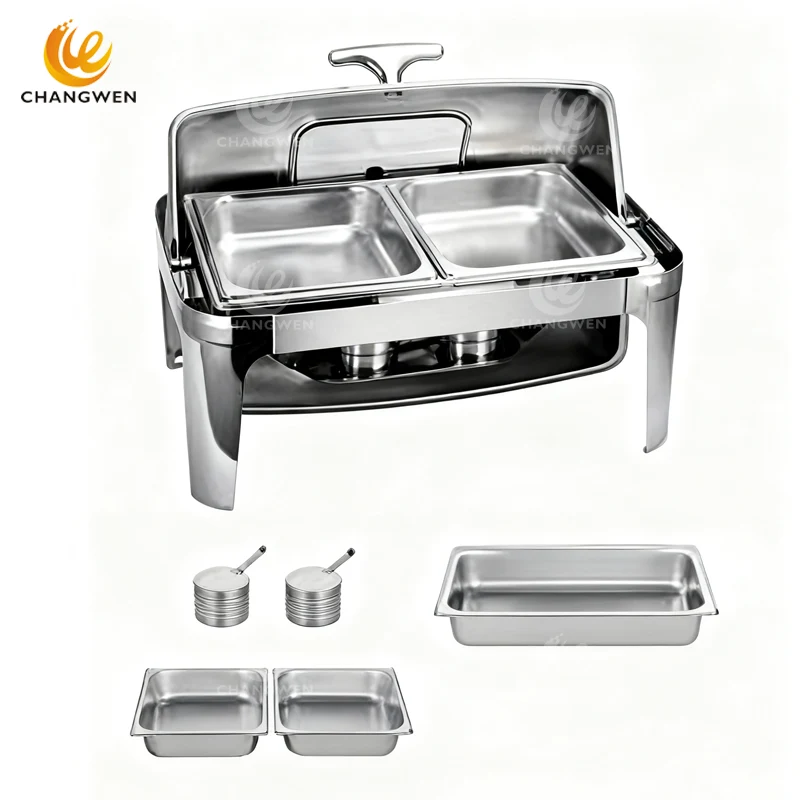
Advantages:
- Guests can serve themselves one-handed
- Lid stays securely open during service
- Professional, polished appearance
- No need to find a place to set the lid
- Reduces heat loss during service
Popular in hotel buffets and upscale catering, roll-top lids add convenience and elegance to any buffet line.
Lift-Off Covers
Traditional lift-off covers completely remove from the chafing dish.
Advantages:
- Generally more affordable
- Simpler design with fewer parts
- Easy to clean and maintain
- Provides full access to the food pan
Considerations:
- Requires a place to set the hot lid during service
- Guests may have difficulty managing lid and serving plate
- More heat escapes when lid is removed
Glass-Top Covers
Glass-top chafing dishes feature transparent lids that allow visibility without removing the cover.
Advantages:
- Guests can see food without opening the lid
- Reduces heat loss and contamination
- Maintains food temperature more effectively
- Creates an attractive presentation
- Minimizes questions about dish contents
Glass tops are increasingly popular for health-conscious venues and help maintain better food safety standards.
Chafing Dish Sizes Guide
Selecting the correct chafing dish size ensures you have adequate capacity without wasting space or money. Here’s a comprehensive breakdown of standard sizes in both metric and imperial measurements.
Standard Chafing Dish Sizes Chart
| Size Category | Dimensions (cm) | Dimensions (inches) | Capacity (Liters/Quarts) | Servings | Best For |
|---|---|---|---|---|---|
| Full Size Rectangular | 53 x 32 x 8.5 cm | 20.75″ x 12.75″ x 3.5″ | 8-9 liters / 8-9 quarts | 50-60 | Main entrées, large gatherings |
| Half Size Rectangular | 32 x 26 x 6.5 cm | 12.75″ x 10.5″ x 2.5″ | 4-5 liters / 4-5 quarts | 25-30 | Side dishes, smaller portions |
| Third Size Rectangular | 32 x 17 x 6.5 cm | 12.75″ x 6.75″ x 2.5″ | 2.5-3 liters / 3 quarts | 15-20 | Sauces, condiments, appetizers |
| Round (Small) | 28 cm diameter x 7 cm | 11″ diameter x 2.75″ | 3-4 liters / 3-4 quarts | 20-25 | Soups, dips, small portions |
| Round (Large) | 35 cm diameter x 9 cm | 14″ diameter x 3.5″ | 6-7 liters / 6-7 quarts | 40-45 | Large soup servings, stews |
| Oval | 45 x 30 x 8 cm | 18″ x 12″ x 3″ | 6-7 liters / 6-7 quarts | 35-40 | Carved meats, special presentations |
Chafing Dish Size in CM and Inches: Detailed Breakdown
Full-Size Chafing Dishes
- External dimensions: Approximately 56cm x 35cm x 30cm high (22″ x 14″ x 12″ high) including frame
- Food pan capacity: 53cm x 32cm x 8.5cm deep (20.75″ x 12.75″ x 3.5″ deep)
- Water pan capacity: Usually 5cm (2″) of water depth
- Total weight when filled: 15-20 kg (33-44 lbs)
Full-size rectangular chafing dishes are the workhorses of catering. They hold generous portions of main courses and can typically serve 50-60 people for a single entrée.
Half-Size Chafing Dishes
- External dimensions: Approximately 35cm x 29cm x 30cm high (14″ x 11.5″ x 12″ high)
- Food pan capacity: 32cm x 26cm x 6.5cm deep (12.75″ x 10.5″ x 2.5″ deep)
- Perfect for: Side dishes, vegetables, smaller gatherings of 25-30 guests
Half-size chafers offer excellent versatility. You can fit two half-size pans in the same footprint as one full-size chafer, allowing you to offer more variety on your buffet.
Round Chafing Dish Measurements
- Small round: 28cm (11″) diameter, 7cm (2.75″) deep, holds 3-4 liters
- Medium round: 30cm (12″) diameter, 8cm (3″) deep, holds 5-6 liters
- Large round: 35cm (14″) diameter, 9cm (3.5″) deep, holds 6-7 liters
Round chafing dishes work beautifully for soups, sauces, and dishes that need gentle stirring during service.
How to Choose the Right Size
For a party of 50 people:
- 2-3 full-size chafing dishes for main courses
- 2-4 half-size chafing dishes for sides
- 1-2 round chafing dishes for soups or sauces
For a party of 100 people:
- 4-6 full-size chafing dishes for main courses
- 4-6 half-size chafing dishes for sides
- 2-3 round chafing dishes for soups or sauces
Pro tip: Always have at least one backup chafing dish ready with fresh food. Refilling during an event maintains presentation quality and ensures food stays at safe temperatures.
Understanding Chafing Dish Parts
A typical chafing dish consists of several components that work together to keep food at the perfect serving temperature. Understanding each part helps you use and maintain your equipment properly.
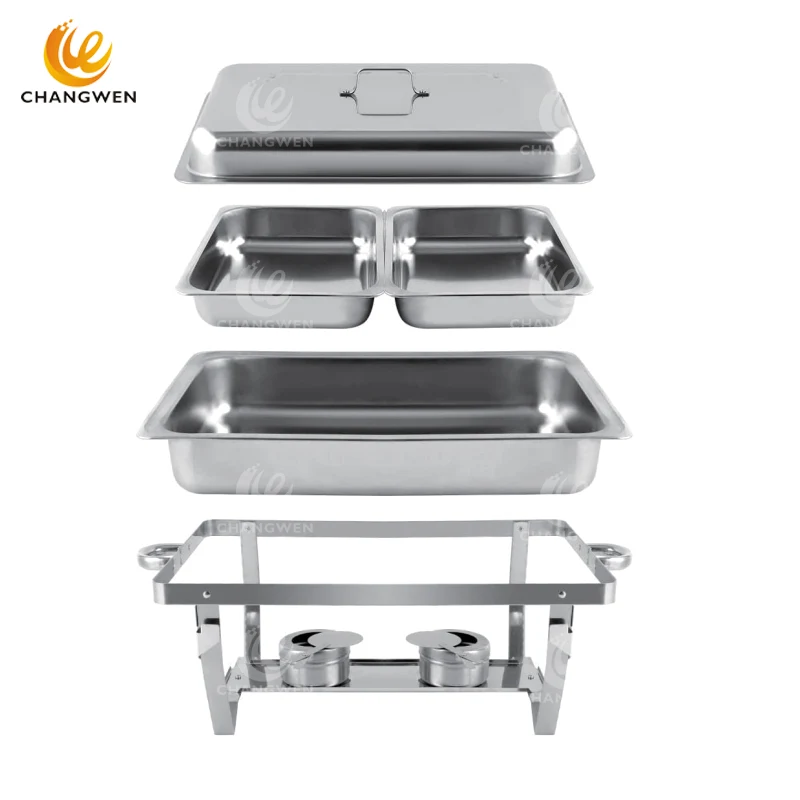
1. Frame or Stand
The frame is the structural foundation that holds all other components. Most frames are made from stainless steel or chrome-plated steel.
Key features:
- Sturdy legs that provide stable support on buffet tables
- Fuel holders or electric element housing
- Wire or solid construction depending on the model
- Handles for easy transport (on some models)
- Folding or stackable design for storage
Important: Ensure the frame sits level on your buffet table. An unstable frame can lead to spills and safety hazards.
2. Water Pan (Bain-Marie)
The water pan sits inside the frame and creates the steam bath that indirectly heats the food pan.
Specifications:
- Usually 5-8cm (2-3 inches) deep
- Made from stainless steel or aluminum
- Typically holds 2-3 liters of water
- Some models have measurement lines for proper water levels
Usage tips:
- Always use hot or boiling water to reduce heating time
- Fill to about 2.5-5cm (1-2 inches) depth
- Check water levels every hour during long events
- Never let the water pan run dry—this can damage the pan and create fire hazards
3. Food Pan (Insert Pan)
The food pan holds your prepared dishes and sits above the water pan.
Common types:
- Standard depth: 6.5-8.5cm (2.5-3.5 inches)
- Deep pans: 10-15cm (4-6 inches) for soups and stews
- Perforated pans: For steamed vegetables or fried foods
- Divided pans: Multiple compartments in one pan
Material options:
- Stainless steel: Durable, professional appearance
- Aluminum: Lightweight, excellent heat conductivity
- Polycarbonate: Transparent, shatter-resistant plastic for cold foods
- Porcelain-coated: Elegant presentation for upscale events
Compatibility note: Food pans follow standard “gastronorm” sizing (GN), making them interchangeable between different chafing dish brands.
4. Lid or Cover
The lid is crucial for maintaining temperature and protecting food from contamination.
Lid styles:
- Dome lids: Classic design, maximum heat retention
- Roll-top lids: Hinged design that rolls back and stays open
- Glass lids: Transparent for easy food identification
- Hinged lids: Attached but lift up rather than roll
- Flat lids: Space-saving design for stacking during transport
Features to look for:
- Cool-touch handles or knobs
- Tight-fitting edges to prevent heat loss
- Condensation channels to prevent dripping
- Easy-clean surfaces
5. Fuel Holder
The fuel holder (also called fuel frame or fuel bracket) securely positions the chafing fuel canister beneath the water pan.
Types:
- Removable holders for easy fuel replacement
- Built-in holders welded to the frame
- Adjustable height holders for temperature control
- Multiple fuel positions for larger chafing dishes
Safety features:
- Heat-resistant construction
- Secure locking mechanisms
- Proper ventilation spacing
- Easy fuel access without touching hot surfaces
6. Handles
Quality chafing dishes feature ergonomic handles for safe transport and service.
Handle locations:
- Food pan handles: For lifting hot pans (stay-cool design preferred)
- Lid handles: For safely removing covers during service
- Frame handles: For moving the entire setup (on portable models)
Materials:
- Stainless steel: Durable but can get hot
- Black plastic: Stay-cool design for safety
- Bakelite: Classic material with heat resistance
- Silicone-covered: Modern, comfortable grip
Optional Accessories
Drip pans: Catch condensation under roll-top lids Sneeze guards: Protective shields for self-service buffets Ladles and serving utensils: Purpose-designed for each dish Fuel safety covers: Prevent accidental extinguishing Pan clips: Secure food pans in place during transport
Chafing Dish Buffet Sets
A complete chafing dish buffet set includes everything you need for professional food service right out of the box. These sets offer convenience and value, especially for those new to catering or setting up their first buffet service.
What’s Included in a Standard Chafing Dish Set?
A typical buffet set includes:
Essential components:
- Frame/stand (usually foldable for storage)
- Water pan
- One or more food pans (often includes both full-size and half-size options)
- Lid (style varies by set)
- Fuel holders
Often included:
- 2-6 chafing fuel canisters
- Serving utensils (spoons, tongs, ladles)
- User manual with safety instructions
Premium sets may include:
- Additional food pans in various sizes
- Glass lids or roll-top covers
- Carrying case or storage bag
- Extra fuel and wick adjusters
- Decorative accents or trim
Types of Buffet Sets
Disposable Chafing Dish Sets
Perfect for one-time events or outdoor gatherings where cleanup is a priority.
Features:
- Aluminum construction throughout
- Wire rack frame
- 2-4 fuel canisters included
- Complete set costs $10-25
- Recyclable materials
Best for: Outdoor parties, casual gatherings, events where equipment loss is a concern
Reusable Starter Sets
Ideal for small catering businesses or frequent entertainers.
Features:
- Stainless steel construction
- 1-2 chafing dishes
- Basic accessories included
- Price range: $80-150 per set
Best for: Home caterers, small businesses, regular entertainers
Professional Catering Sets
Comprehensive packages designed for commercial use.
Features:
- Multiple chafing dishes (typically 4-8 units)
- Mix of sizes and shapes
- Heavy-duty stainless steel
- Roll-top or premium lids
- Price range: $400-1,200+ per set
Best for: Catering companies, restaurants, event venues
How to Choose the Right Buffet Set
Consider your needs:
- Frequency of use
- Occasional (1-4 times/year): Disposable sets
- Regular (monthly): Reusable starter sets
- Professional (weekly): Commercial-grade sets
- Guest count
- Small gatherings (20-30): 2-3 chafer set
- Medium events (50-75): 4-6 chafer set
- Large functions (100+): 8+ chafer set
- Menu complexity
- Simple menus: Uniform-size sets
- Varied menus: Mixed-size sets with rounds and rectangles
- Buffet-style service: Sets with multiple size options
- Budget considerations
- Entry-level: $50-150 (disposable or basic sets)
- Mid-range: $200-500 (quality reusable sets)
- Professional: $600-1,500+ (commercial-grade equipment)
Value-Added Set Options
Theme-specific sets:
- Breakfast buffet sets (designed for eggs, bacon, pastries)
- Soup and salad sets (round chafers with appropriate serving tools)
- Carving station sets (oval chafers with cutting boards and knives)
Expandable sets: Start with a basic set and add compatible pieces as your needs grow. Look for brands that offer:
- Interchangeable pans
- Stackable frames
- Universal accessories
- Matching finish options
How to Use a Chafing Dish
Proper use of chafing dishes ensures food safety, maintains quality, and creates a professional presentation. Follow these step-by-step instructions for best results.
Setup and Assembly
Step 1: Inspect Your Equipment Before the event, check all components:
- Ensure the frame is stable and undamaged
- Verify water pan has no leaks or dents
- Check that food pans fit properly in the frame
- Test lid fit (should sit securely without gaps)
- Confirm you have adequate fuel or electrical access
Step 2: Position the Chafing Dish
- Place on a level, stable buffet table
- Leave 15-20cm (6-8 inches) clearance around each chafer
- Position away from high-traffic areas to prevent bumping
- Ensure electrical cords (if applicable) don’t create tripping hazards
- Keep fuel-based chafers away from curtains, decorations, or other flammable materials
Step 3: Assemble the Frame
- Unfold or assemble the frame according to manufacturer instructions
- Ensure all legs are fully extended and locked
- Verify the frame sits level (use shims if necessary)
- Insert fuel holders or connect electrical elements
Preparing the Water Pan
Step 4: Fill the Water Pan
- Use hot or boiling water for faster heating
- Fill to approximately 2.5-5cm (1-2 inches) depth
- Never fill above the recommended line
- For longer events, keep extra hot water nearby for refilling
Important: The water pan should NEVER be empty when the heat source is active. This can cause damage and create fire hazards.
Lighting and Managing Heat
For Fuel-Based Chafing Dishes:
Step 5: Light the Chafing Fuel
- Remove fuel canister lid
- Place canister securely in fuel holder
- Use a long lighter or match to ignite
- Adjust the wick height if using adjustable fuel
- Never leave lit fuel unattended
Temperature management tips:
- Use 2-3 fuel canisters for large chafing dishes
- Partially cover the fuel to reduce heat
- Replace fuel canisters every 2-3 hours
- Keep extra fuel canisters away from heat sources
For Electric Chafing Dishes:
Step 5: Connect and Set Temperature
- Plug into a grounded electrical outlet
- Set temperature dial to desired level (usually medium-high)
- Allow 10-15 minutes for water to heat
- Adjust temperature as needed during service
Optimal serving temperatures:
- Hot foods: 140-165°F (60-74°C)
- Soups and sauces: 150-170°F (65-77°C)
Adding Food
Step 6: Prepare and Place Food
- Cook food completely before transferring to chafer
- Pre-heat the food pan if possible
- Transfer hot food directly from cooking vessel
- Fill food pan 3/4 full (leave space for serving)
- Stir liquid foods gently to distribute heat
Food safety guidelines:
- Add only fully cooked, piping hot food (165°F / 74°C minimum)
- Don’t use chafing dishes to cook raw food
- Replace food rather than adding fresh to old
- Discard food that’s been held longer than 4 hours
Step 7: Cover and Monitor
- Place lid on immediately to trap heat
- Keep lid closed except during service
- Check water levels every 30-60 minutes
- Monitor food temperature with a probe thermometer
- Stir occasionally to ensure even heating
During Service
Best practices:
- Provide appropriate serving utensils (tongs, ladles, spoons)
- Replenish food before pans look empty
- Wipe drips and spills from chafer edges
- Replace lids promptly after guests serve themselves
- Maintain a professional appearance throughout the event
When to refill:
- When food level drops below halfway
- If food begins to look dry or crusted
- When approaching the 4-hour safety limit
- If you notice uneven heating or cold spots
Breakdown and Cleanup
Step 8: Safe Shutdown
- Extinguish or turn off all heat sources
- Allow equipment to cool for 15-20 minutes
- Use oven mitts or towels to handle warm components
- Dispose of fuel canisters according to local regulations
Step 9: Proper Cleaning
- Remove and scrape food pans while still warm
- Wash water pans, food pans, and lids in hot soapy water
- Use non-abrasive cleaners on stainless steel
- Dry all components completely to prevent water spots
- Polish stainless steel with appropriate cleaner
Storage tips:
- Store in a dry location
- Stack carefully with protective padding between pans
- Keep lids separate to prevent damage
- Store fuel canisters in a cool, dry place away from heat
Chafing Fuels
Understanding chafing fuels is essential for safe and effective buffet service. The right fuel keeps your food at proper temperatures while the wrong choice can lead to safety hazards or poor performance.
Types of Chafing Fuels
Gel Chafing Fuel
Gel fuel consists of alcohol-based gel in a can, providing clean-burning heat.
Advantages:
- Burns cleanly with minimal smoke or odor
- Spill-resistant gel formula
- Easy to light and extinguish
- No flare-ups when accidentally tipped
- Safe for indoor use
Burn times:
- 2-hour canisters: Ideal for shorter events
- 4-hour canisters: Standard for most buffets
- 6-hour canisters: Extended events and long receptions
Wick Chafing Fuel
Wick fuel uses a fiber wick suspended in liquid fuel (typically methanol or ethanol).
Advantages:
- Adjustable heat output (raise or lower wick)
- Burns hotter than gel fuel
- Economical choice for large events
- Longer burn times per ounce
Disadvantages:
- More smoke and odor than gel
- Greater fire risk if tipped
- Requires more attention during service
- Not recommended for enclosed spaces
Burn times: Typically 4-8 hours depending on wick adjustment
Best for: Outdoor events, well-ventilated spaces, situations requiring higher heat output
Liquid Chafing Fuel
Liquid fuel comes in canisters similar to wick fuel but without the wick mechanism.
Characteristics:
- Hottest burning fuel option
- Professional-grade heat output
- Requires special burner cups
- Most economical per hour of burn time
Safety considerations:
- Higher fire risk
- More fumes than gel alternatives
- Requires well-ventilated areas
- Needs careful handling and storage
Eco-Friendly Alternatives
Plant-based fuels:
- Made from renewable resources (corn, sugarcane)
- Biodegradable formulas
- Reduced carbon footprint
- Comparable performance to petroleum-based fuels
Canned heat alternatives:
- Butane burners with precise temperature control
- Electric warming elements (flameless)
- Induction heating systems
- Rechargeable battery-powered warmers
How Long Does Chafing Fuel Last?
Standard burn times:
- 2-hour canisters: 1.5 to 2 hours actual burn time
- 4-hour canisters: 3.5 to 4.5 hours actual burn time
- 6-hour canisters: 5.5 to 6.5 hours actual burn time
Factors affecting burn time:
- Ambient temperature (cold weather reduces efficiency)
- Wind exposure (outdoor events burn fuel faster)
- Food pan size (larger pans may require multiple canisters)
- Wick height adjustment (if applicable)
- Lid usage (keeping lid on extends fuel efficiency)
Calculating fuel needs:
- Average 4-hour buffet: 1 canister per chafing dish
- Extended events (6+ hours): 1.5 to 2 canisters per chafer
- Outdoor or cold weather: Add 25-30% more fuel
- Always have 20-30% extra fuel as backup
Safety Guidelines for Chafing Fuels and Sternos
Before lighting:
- Read all manufacturer instructions
- Check that canisters are undamaged
- Ensure proper ventilation in the room
- Keep extra fuel away from heat sources
- Have fire extinguisher nearby
During use:
- Never refill a hot or burning canister
- Don’t move chafing dishes with lit fuel
- Keep fuel away from flammable decorations
- Monitor fuel levels throughout the event
- Never leave burning fuel unattended
Extinguishing fuel:
- Use the provided cap to smother flames
- Don’t blow on fuel (can spread flames)
- Allow canisters to cool completely before handling
- Wait at least 15 minutes before disposal
Storage and disposal:
- Store in cool, dry location
- Keep away from children and pets
- Dispose according to local hazardous waste regulations
- Many municipalities have specific disposal requirements
- Never pour liquid fuel down drains
Cost Comparison
Per-unit costs (approximate):
- Disposable gel fuel (2-hour): $1-2 each
- Disposable gel fuel (4-hour): $2-4 each
- Disposable gel fuel (6-hour): $4-6 each
- Wick fuel (6-hour): $3-5 each
- Liquid fuel (8-hour): $5-8 each
Bulk pricing: Purchasing fuel in cases (12-72 canisters) typically offers 20-40% savings over individual purchases.
Annual costs for a catering business:
- Small operation (50 events/year): $400-800 in fuel costs
- Medium operation (200 events/year): $1,500-3,000 in fuel costs
- Large operation (500+ events/year): $4,000-8,000 in fuel costs
Choosing the Right Chafing Dish
Selecting the perfect chafing dish depends on several factors including your budget, event type, menu, and service style. This section will guide you through making an informed decision.
Consider Your Event Type
Wedding Receptions and Formal Events
Recommended choices:
- Stainless steel with mirror or polished finish
- Roll-top lids for elegant presentation
- Oval chafers for carved meat stations
- Mix of full-size and half-size for variety
Why: Formal events demand equipment that looks as good as the food tastes. High-polish stainless steel creates a professional, upscale appearance that matches the occasion’s sophistication.
Budget: $150-400 per chafing dish
Corporate Buffets and Conferences
Recommended choices:
- Electric chafing dishes for precise temperature control
- Rectangular shapes for efficient serving lines
- Glass-top lids for easy identification
- Durable stainless steel construction
Why: Corporate events prioritize efficiency and reliability. Electric models eliminate fire safety concerns in hotel ballrooms and conference centers.
Budget: $180-500 per chafing dish
Outdoor Events and Picnics
Recommended choices:
- Fuel-based chafers (no electricity needed)
- Aluminum construction for lightweight transport
- Disposable options for casual gatherings
- Wind-resistant designs with stable frames
Why: Portability and independence from power sources are essential for outdoor success.
Budget: $25-150 per chafing dish
Restaurant Buffets
Recommended choices:
- Heavy-duty stainless steel
- Round chafers for soup stations
- Electric or induction for consistent performance
- Easy-clean designs for daily use
Why: Daily use demands the most durable equipment available. Restaurant-grade chafers must withstand constant cleaning and heavy service.
Budget: $200-600 per chafing dish
Menu Considerations
For Liquid Foods (Soups, Sauces, Gravies):
- Choose round chafing dishes
- Deeper pans (10-15cm / 4-6 inches)
- Secure lids to prevent spills
- Ladle-friendly openings
For Solid Foods (Meats, Vegetables, Casseroles):
- Rectangular chafing dishes maximize capacity
- Standard depth pans (6.5-8.5cm / 2.5-3.5 inches)
- Wide serving access
- Tong and spoon compatibility
For Mixed Menus:
- Combination of shapes and sizes
- Divided food pans for variety
- Multiple smaller chafers instead of fewer large ones
- Allows greater menu flexibility
Budget-Conscious Decisions
Entry-Level Options ($30-100 per unit)
What you get:
- Basic stainless steel or aluminum construction
- Standard lift-off lids
- Adequate for occasional use
- Limited warranty
Best for: Home entertainers, new caterers testing the market, infrequent use
Mid-Range Options ($100-300 per unit)
What you get:
- Quality stainless steel construction
- Choice of lid styles
- Better heat retention
- 1-2 year warranties
- Professional appearance
Best for: Established caterers, small restaurants, regular event hosts
Premium Options ($300-800+ per unit)
What you get:
- Heavy-gauge stainless steel
- Roll-top or glass lids
- Electric or induction heating
- Superior craftsmanship
- Extended warranties
- Replaceable parts availability
Best for: High-end catering companies, luxury hotels, fine dining establishments
Quality Indicators to Look For
Construction quality:
- Heavy-gauge metal (16-18 gauge stainless steel is ideal)
- Welded rather than riveted joints
- Smooth, polished surfaces without rough edges
- Sturdy, wobble-free frames
Heat efficiency:
- Well-designed water pans that distribute heat evenly
- Tight-fitting lids that minimize heat loss
- Adequate fuel holder capacity
- Proper ventilation for flame-based heating
Ease of maintenance:
- Dishwasher-safe components (commercial dishwashers)
- Non-stick coatings on food pans (optional)
- Removable parts for thorough cleaning
- Stain-resistant finishes
Safety features:
- Cool-touch handles
- Stable, tip-resistant frames
- Secure fuel holders
- Proper spacing between heat source and food
Brand Recommendations by Category
Best Overall Value
Brands: Choice, Tiger Chef, Excellanté Price range: $60-150 Why: Solid construction, good warranties, widely available parts
Best for Professional Use
Brands: Bon Chef, Vollrath, Update International Price range: $200-600 Why: Restaurant-quality durability, superior heat retention, extensive product lines
Best Budget Option
Brands: Sterno (disposable), Simple Living, Cheftor Price range: $25-80 Why: Adequate performance for occasional use, minimal investment
Best Electric Models
Brands: Choice (electric line), Global Solutions, Acopa Price range: $180-500 Why: Precise temperature control, safe for all venues, energy efficient
Additional Factors to Consider
Frequency of use:
- Daily use: Invest in premium commercial-grade
- Weekly use: Mid-range quality is sufficient
- Monthly or less: Budget options work fine
- One-time events: Consider disposable
Storage capacity:
- Limited space: Choose stackable models
- Ample storage: Can opt for larger, non-folding designs
- Mobile catering: Prioritize lightweight, compact options
Replacement parts availability:
- Stick with major brands for easy part replacement
- Check if food pans are standard gastronorm sizes
- Verify lid and handle availability
- Consider brands with strong customer service
Aesthetic preferences:
- Traditional: Mirror-finish stainless steel
- Modern: Brushed or matte finishes
- Rustic: Copper or hammered metal accents
- Minimal: Clean lines and simple designs
Making the Final Decision
Questions to ask yourself:
- How often will I use this equipment?
- What’s my total budget for chafing dishes?
- Do I have access to electricity at my events?
- How many guests do I typically serve?
- What types of food will I be serving most often?
- Do I have adequate storage space?
- How important is appearance versus functionality?
- Will I need to transport the equipment frequently?
Investment strategy:
Starter approach: Begin with 2-3 versatile pieces
- 1 full-size rectangular chafing dish
- 1 round chafing dish
- 1 half-size rectangular chafing dish
Expansion approach: Add specialized pieces as needs grow
- Oval chafers for special presentations
- Electric models for venues requiring them
- Additional sizes for larger events
Professional approach: Invest in complete sets
- Multiple sizes and shapes
- Backup equipment for busy seasons
- Specialized chafers for signature dishes
Frequently Asked Questions
How do you pronounce chafing dish?
The correct pronunciation is “CHAY-fing dish.” The word “chafing” rhymes with “safing” and comes from the French verb “chauffer,” meaning “to heat” or “to warm.” Some people mistakenly pronounce it as “CHAF-ing” (rhyming with “laughing”), but the proper pronunciation emphasizes the long “A” sound.
What size chafing dish do I need for my event?
The size depends on your guest count and menu:
- For 25-30 guests: 1-2 full-size or 2-3 half-size chafing dishes
- For 50-60 guests: 2-3 full-size chafing dishes for mains, 2-4 half-size for sides
- For 100+ guests: 4-6 full-size chafing dishes for mains, 4-6 half-size for sides
Standard sizes are:
- Full-size: 53cm x 32cm (20.75″ x 12.75″)
- Half-size: 32cm x 26cm (12.75″ x 10.5″)
- Round: 28-35cm (11-14″) diameter
Can I use a chafing dish without water in the water pan?
No, you should never use a chafing dish without water in the water pan. The water creates steam that provides gentle, indirect heat to warm the food. Without water:
- Food will burn or dry out from direct heat
- The food pan can warp or become damaged
- Fire hazards increase significantly
- Temperature distribution will be uneven
Always maintain at least 2.5cm (1 inch) of water in the pan, and check levels every 30-60 minutes during service.
How long can food stay safely in a chafing dish?
According to food safety guidelines, hot food should not be held in a chafing dish for more than 4 hours. To maintain food safety:
- Keep food temperature above 140°F (60°C) at all times
- Use a food thermometer to monitor temperature
- Discard food that has been held longer than 4 hours
- Replace with fresh batches rather than adding new food to old
- Stir food occasionally to ensure even heating
For events longer than 4 hours, plan to replace food with freshly prepared batches.
What’s the difference between chafers and chafing dishes?
There is no difference—”chafers” is simply a shortened, informal term for “chafing dishes.” Both terms refer to the same equipment used to keep food warm during buffet service. “Chafing dish” is the formal, complete term, while “chafer” is the industry shorthand commonly used by catering professionals.
Do I need Sterno for electric chafing dishes?
No, electric chafing dishes do not require Sterno or any other chafing fuel. They plug into standard electrical outlets and use electric heating elements to warm the water pan. This makes them:
- Safer for indoor venues (no open flame)
- More convenient (no need to purchase fuel)
- More precise (adjustable temperature settings)
- More cost-effective over time (no recurring fuel costs)
However, electric chafers do require access to electrical outlets, making fuel-based chafers better for outdoor or remote locations.
How do I clean stainless steel chafing dishes?
Follow these steps for best results:
After each use:
- Allow equipment to cool for 15-20 minutes
- Remove food residue while pans are still warm
- Wash all components in hot, soapy water
- Use a non-abrasive sponge or cloth
- Rinse thoroughly with clean water
- Dry immediately with a soft towel to prevent water spots
For stubborn stains:
- Use a paste of baking soda and water
- Apply stainless steel cleaner following product directions
- For burnt-on food, soak in hot water with dish soap
Maintenance tips:
- Polish with stainless steel cleaner monthly
- Never use steel wool or abrasive cleaners
- Avoid chlorine bleach (can damage stainless steel)
- Store completely dry to prevent corrosion
What are the standard aluminum chafing dish sizes in cm?
Standard aluminum chafing dish sizes in centimeters are:
- Full-size: 52cm x 32cm x 8cm deep
- Half-size: 32cm x 26cm x 6.5cm deep
- Third-size: 32cm x 17cm x 6.5cm deep
- Round small: 28cm diameter x 7cm deep
- Round large: 35cm diameter x 9cm deep
These measurements refer to the food pan dimensions. The overall frame dimensions are typically 3-5cm larger on each side to accommodate the water pan and frame structure.
Can I use regular pans in a chafing dish frame?
While some regular pans might physically fit in a chafing dish frame, it’s not recommended. Chafing dish food pans are specifically designed to:
- Fit securely in the frame without wobbling
- Allow proper steam circulation from the water pan
- Withstand prolonged heating without warping
- Feature appropriate depth for buffet service
- Provide easy access with standard serving utensils
For best results and safety, always use food pans specifically designed for chafing dishes. Most chafers use standard “gastronorm” sizing, making replacement pans readily available.
How many Sterno canisters do I need per chafing dish?
For standard 4-hour service:
- Full-size chafing dish: 2 fuel canisters
- Half-size chafing dish: 1 fuel canister
- Round chafing dish: 1-2 fuel canisters (depending on size)
Factors that increase fuel needs:
- Outdoor or cold weather events (add 50% more fuel)
- Events longer than 4 hours (plan 1 canister per 3-4 hours)
- Windy conditions (add 25-30% extra fuel)
- Large or deep food pans (may require 2-3 canisters)
Pro tip: Always have 20-30% extra fuel on hand as backup. Unused canisters can be saved for future events.
What’s better for catering: fuel or electric chafing dishes?
The answer depends on your specific needs:
Choose fuel-based chafing dishes if:
- You frequently work at outdoor venues
- Electrical outlets are unreliable or unavailable
- You need maximum portability
- Initial equipment cost is a primary concern
- You prefer traditional buffet presentation
Choose electric chafing dishes if:
- You primarily work indoors with reliable power
- Your venues have fire safety restrictions
- You want precise temperature control
- You serve delicate foods requiring consistent heat
- You want to eliminate recurring fuel costs
Best solution for most caterers: Own both types. Use electric chafers for indoor events and fuel-based chafers for outdoor or remote locations. This flexibility ensures you’re prepared for any venue or client requirement.
Conclusion
Chafing dishes are indispensable tools for successful buffet service, whether you’re catering a wedding, hosting a corporate event, or running a restaurant buffet. Understanding the different types, sizes, and proper usage techniques ensures your food stays at safe temperatures while maintaining its quality and appeal.