A commercial steamer pot should be sized by the portions a kitchen can serve during its busiest window. Start with food that fits on one usable tier, count the tiers that finish to the same standard, and time the whole cycle from loading to readiness for the next batch. Then check the filled base and assembled stack on the actual burner. A broad tier can hold more food without raising the lid, while a taller stack can use less range space but takes more room to lift and unload.
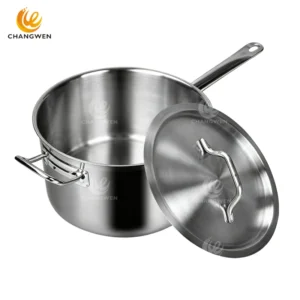
A commercial steamer pot is a stovetop assembly with a water vessel, one or more perforated food tiers and a lid. The base produces steam, and the tiers let it circulate around food. A restaurant buying for dim sum, seafood or vegetable service can use the same shopping method, but each menu produces a different answer. Bowl clearance may matter most for custard; uninterrupted floor area may matter most for fish. This guide shows how to measure those differences and turn them into an order your staff can verify.
Which size should a commercial kitchen choose?
Size names such as 28 cm, 32 cm and 36 cm are useful starting points when asking for samples. Request the usable inside diameter at the bottom of each tier before treating those names as cooking dimensions. A rolled rim, a curved wall and a perforated floor can give three different diameters on the same piece. Measure where the food actually sits, then note how much of that surface is suitable for the liner or dishes your kitchen uses.
If two round tiers truly provide 28 cm and 32 cm of flat internal diameter, the larger tier has about 31 percent more area. That is a geometric comparison, not a guaranteed increase in portions. A row of dumplings may gain only one extra position, while the extra four centimeters may allow an oval fish plate that will not fit at all in the smaller tier. Compare the two drawings using the largest food or dish you intend to serve before paying for a larger body.
For large utensils or serving plates, measure pickup clearance as well as the width that fits. A bowl that just slides into a cold basket can be awkward to lift with a cloth or gripper when the rim is wet. Test with the actual dish and the tool that will lift it. Check that the food clears the underside of the next tier or lid. If the container can be loaded easily but needs to be tipped for removal, a larger or deeper insert may save time across an entire shift.
What does a steamer pot’s capacity actually measure?

Base-pot capacity describes liquid volume under a stated measurement method. Working water capacity describes how much water the pot can use for steaming while maintaining the separation required below the food tier. A pot can have a large brim volume and a much smaller useful fill once the shallow bottom tier is installed. Ask where the manufacturer sets the fill range on the assembled unit and how replenishment should be handled during ordinary service. Use the site’s commercial stockpot guide when evaluating the base for separate liquid cooking.
Food capacity is best written as portions per tier at a specific spacing, or as a measured load for a particular recipe. Twelve dumplings on one tier, for example, tell a buyer more than a claim that the pot holds twenty liters. Keep fixed variables in the trial: the size of each piece, the liner, spacing, the starting condition of the food and the doneness standard used by the kitchen. A tier that handles twelve small dumplings may be a ten-piece tier once the menu moves to larger wrappers.
Usable capacity can also change with the shape of the load. One broad plate may cover much of a perforated insert while leaving a path around its edge. Several smaller dishes may leave channels between them but require more time to unload individually. Compare the actual service arrangement with the supplier’s capacity photograph. A loose tray of vegetables, a liner of bao and a plated fish each use the same floor in a different way, so a single serving count cannot describe all three.
How do you calculate capacity for the busiest service window?
A batch plan begins with the number of acceptable portions due by a specific time. Suppose an order requires 90 dumplings in 45 minutes, and a trial on the proposed cooker consistently yields 12 acceptable dumplings per tier. Two tiers give 24 portions per batch, so the kitchen needs four complete batches to serve at least 90. This is an example, not a cooking time recommendation. The count only matters if both tiers meet the kitchen’s approved doneness and quality checks.
Time the cycle from the first loading movement through recovery, cooking, unloading and readiness for the next batch. If the example two-tier setup takes 13 minutes per complete cycle, four cycles take 52 minutes. If a wider two-tier configuration holds 15 pieces per tier and keeps the same tested cycle time, three cycles take 39 minutes. Include any separate initial preheat or setup that falls within the service window. An equipment selection handbook for institutional foodservice likewise notes that rated capacity may omit loading and unloading time. Foodservice equipment purchasing handbook.
Count the last completed batch rather than rounding an hourly production rate. At 13 minutes per cycle, a 45-minute window allows three complete cycles if the station is ready at the start. Partial batches matter only if the kitchen has verified that they finish sooner and can unload safely in time. Record the first ready portion and the last ready portion separately. A narrow pot may serve the first table quickly, while a wider set may be better for a banquet that needs many portions at nearly the same time.
When are more tiers a better use of range space?
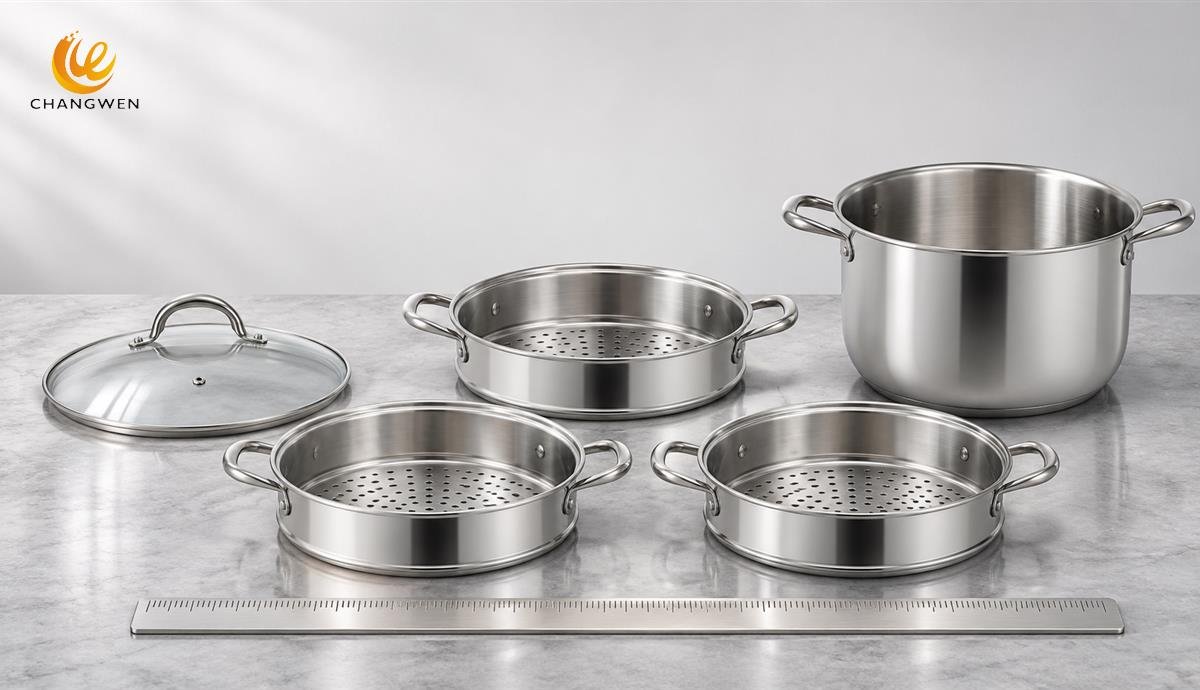
A one-tier setup suits frequent small orders when access is the priority. Staff can lift one lid, remove one tier and check portions without working around a second hot basket. Two tiers can make better use of a busy range if both loads can run together and finish with the same timing. Three tiers are worth sampling when burner space is the bottleneck and staff can comfortably reach the top of the stack. Count the water vessel separately when asking a supplier to quote the number of food tiers.
A wide two-tier pot and a narrower three-tier pot should be compared at their maximum practical loads on the same range. The wider design may provide more pickup room and a lower lid height. The taller design can preserve adjacent burner space, but unloading the lower level may require somewhere to set the upper tier first. Measure the vertical lift needed to clear the lip, the space below the hood or shelf and the width available between neighboring pans. A configuration can fit when assembled yet still be hard to operate.
A stack test should check the same food on each level during the same run. Record loading pattern, liner, food condition and time to meet the kitchen’s doneness standard. If the top and bottom tiers finish at different times, try a revised loading plan permitted by the product instructions and measure again. If staff must repeatedly unstack or rotate hot tiers to finish a standard menu item, account for that time in the production estimate. Selling the extra tier as extra capacity is meaningful only after the service routine can use it.
Should you choose stainless steel or aluminum?
A stainless steel food tier is a practical choice for a kitchen that moves inserts often and wants a hard surface that handles regular washing. Aluminum can reduce lift weight, especially when each person moves several large inserts per shift. Material alone does not establish rigidity. Compare the empty tier weight, floor thickness, shape of the rim and how the loaded basket behaves when carried by both handles. Changwen’s stainless steel versus aluminum commercial stockpot comparison explains related considerations for the water vessel.
The base deserves a separate material specification. A stainless steel shell may enclose a conductive base layer or incorporate an induction-compatible exterior, and the parts may use different metals. Ask suppliers to state the material of the base body, food tier, handles, lid rim and underside separately. Two quotations that both say “stainless steel steamer” can describe different cooking surfaces, different weights and different cooktop compatibility. For buyers who need to identify the grade in a request for quotation, see the comparison of stainless steel grades used in cookware.
Lid selection depends on who opens the pot and how often. A glass lid can provide a view before condensation obscures it. An all-metal lid may suit a kitchen that racks pieces tightly for washing and transport. Compare the complete lid weights, grip opening and ease of replacement. A lid with a comfortable cold grip still needs evaluation with the mitts used during service. Ask the supplier to document the care and temperature limits for the exact assembly, including handles and any glass components.
How do you check the burner, water and handling together?
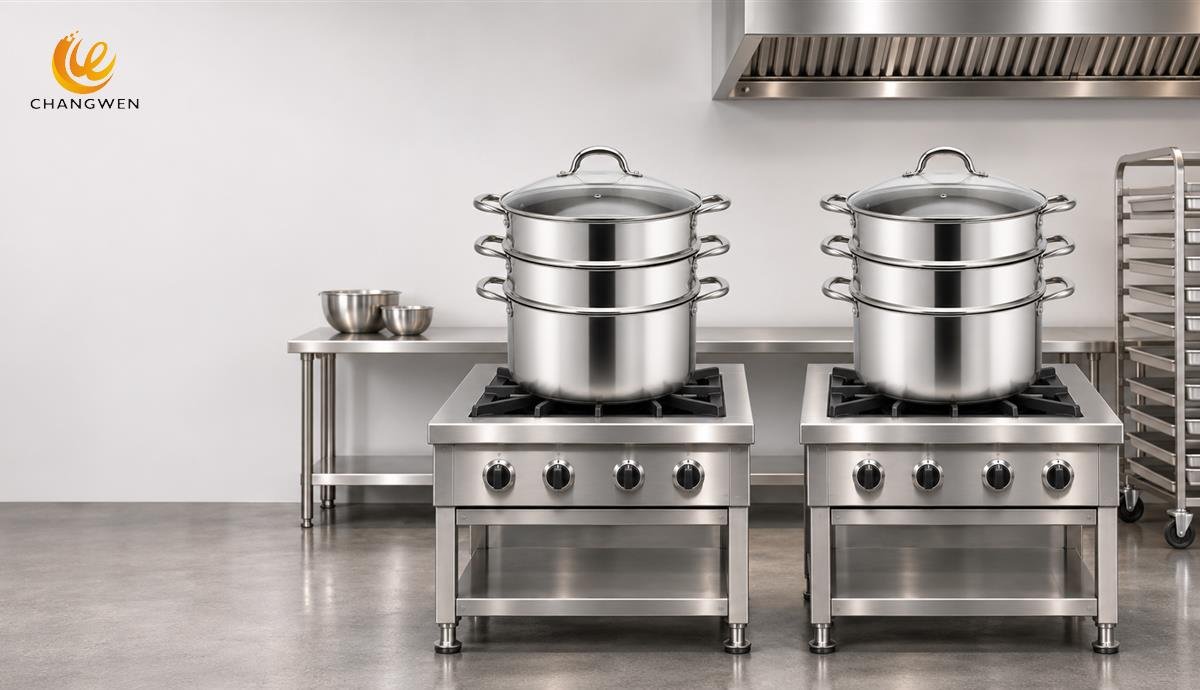
Start the burner trial with the water fill allowed by the supplier and measure the time to useful steam under your normal startup procedure. Match the pot to the supported burner footprint. On induction, verify the actual base on the model in use. A magnet can indicate that the underside contains magnetic material, but detection and useful heating also depend on the cooktop and base geometry. On a shared range, check that the handles and hot rack space can coexist with the other pans used on the same shift.
Estimate the water refill burden over successive loads. Check remaining water between cycles according to the maker’s operating instructions and log how often refilling interrupts production. A deeper base may give a longer interval between refills, while heating more starting water can lengthen a cold start. Compare those effects against the menu schedule. A kitchen that steams continuously may value a longer interval more than a counter that opens the pot only for occasional small orders. Use the maker’s fill limits and keep the pot from boiling dry.
Check the complete handling route with a cold sample before a hot trial. Set out the landing surface for the lid and each food tier, then simulate the route from burner to plating pass and on to washing. Include one filled food tier and the utensils the cook normally holds. Weigh the individual pieces with their expected loads, and assess safe handling using the kitchen’s own procedures. A pot someone can carry empty may still be awkward once the base is full and the stack has to be dismantled.
Is one large pot better than two smaller pots?
Compare the operation that needs redundancy with the operation that needs a large uninterrupted surface. Two smaller pots let staff stagger batches or prepare separate recipes on separate burners. One wider pot may accommodate a large plate or produce more portions in a single load. Two pots also require more independent burner positions, more lids and separate water checks. Draw both layouts on a range plan next to the actual cookware used at peak service, then count the stations each option leaves available.
If two menu items need different loads or checks, separate pots give the cook more control over timing. Opening one can leave the other cooking undisturbed. When the kitchen needs dozens of identical portions together, an adequately supported larger pot may simplify loading and unloading. A measured cycle at peak demand is more useful here than a broad claim about hourly output. Write down which employee loads the pot, which person portions the finished food and where the landing surface is when both operations happen at once.
A dedicated commercial cabinet earns consideration when range space and staff handling limit output even after the pot trials. Cabinet steamers vary in installation requirements, pan formats and water arrangements. A stovetop pot is useful for flexible production on an existing cooking line, while a cabinet can free burners for other menu items. Compare installation, cleaning and maintenance with the actual shift workload before extrapolating from a demonstration. If the kitchen primarily needs to steam or hold standard rectangular inserts, confirm the intended pan system separately. Guide to Gastronorm pan standards.
How do different menus use the same tier differently?
For bao and dumplings, use the finished dimensions the kitchen expects after cooking as well as the raw piece size. A trial with the smallest recipe in the range may overstate the room available for a larger bun that expands. Record whether pieces touch after cooking and whether a worker can lift an individual portion from the middle without disturbing the next row. A slightly wider tier can make handling easier even when the total count stays the same.
For seafood, compare the usable plate length and lifting clearance with the menu’s largest order. A tier that accommodates a whole fish may still require a different serving dish because a projecting rim interferes with the handles. Load the test plate with a representative cold weight and check access on both sides. Buying for the longest fish rather than the stockpot’s advertised volume makes the purchase easier to justify when the model has a wider rim but a similar water capacity.
For vegetables served in bulk, compare a shallow load spread over more surface with a deeper heap in one tier. Check portions from both the center and the outside of the basket using the same kitchen standard. A heavier load earns its place in the plan only if the staff can portion it efficiently and the less exposed pieces cook to the required level. Include the liner or container used in ordinary service, because changing it can alter steam access and the time needed to empty the tier.
For service across several locations, run the same menu trial on the weakest normal burner and the smallest available range position before using one specification everywhere. A kitchen with a more powerful range may meet the target with three tiers, while a smaller site may get more predictable output from two. Record the approved configurations by location so the purchasing team can order a common base and different tier counts when the models are compatible. This also gives training staff a practical explanation for the different setups.
What should a commercial sample trial record?
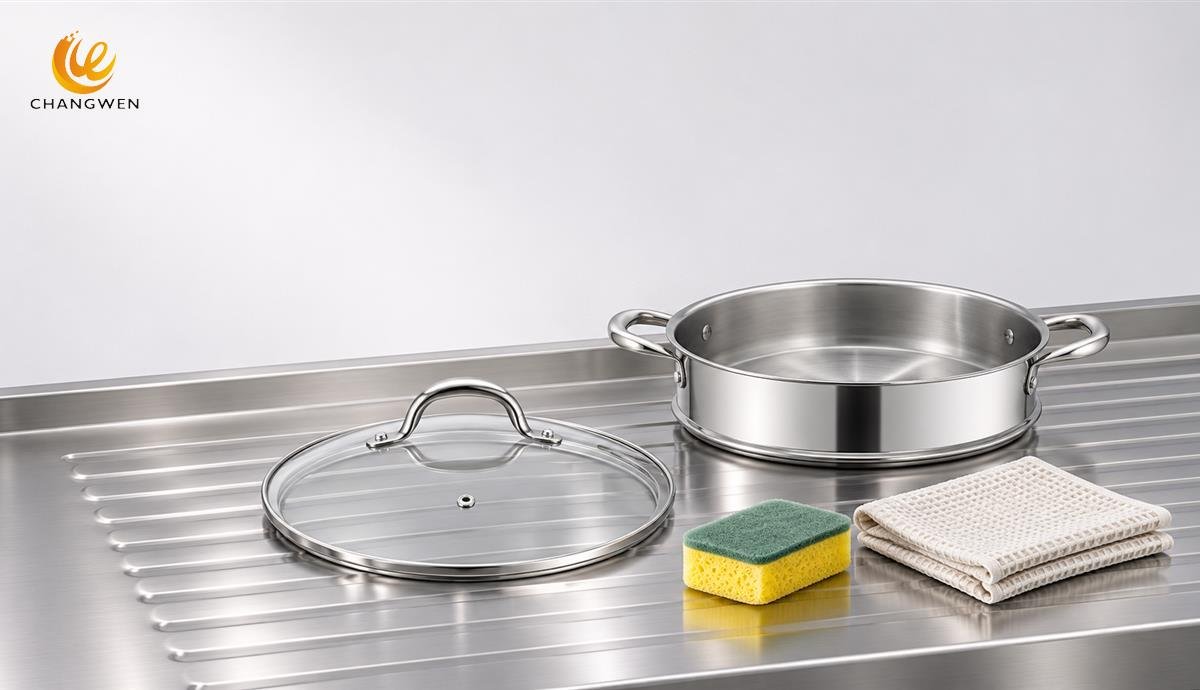
The first sample check is fit. Assemble each tier on the base, try each permitted stack height, and check the contact points between the rims. Confirm the lid sits as designed and the burner supports the stack without rocking. Check that rim edges and perforations are smooth enough for normal cleaning and handling. If you need several sets on one line, exchange tiers between two cold samples where interchangeability is expected. A loose or binding fit can become a service and replacement problem even when each original set works on its own.
The second sample check is cleaning time. Observe which areas retain food or scale after a representative shift: rolled edges, handle joints, perforations and the bottom of the water vessel. Follow the maker’s care method and your kitchen’s procedures, then time washing, rinsing and drying. Ask the supplier to describe the cleaning procedure for any scale the kitchen’s water leaves behind. A low purchase price can lose its value quickly if every basket takes extra scrubbing or if the configuration cannot be placed in the normal washing rack.
The third sample check is replacement availability. Ask for separate part numbers for lids, inserts and base pots, and confirm which generations and diameters work together. Photograph the approved stack and keep a dated drawing showing rim profile and the fit points. In a multi-site purchase, common spare parts can make a slightly smaller approved model easier to support than an assortment whose parts look alike but do not seat correctly. Include spare availability in the quotation comparison rather than checking after the first damaged lid.
What should a buyer put in a wholesale or OEM inquiry?
Describe the menu and the measured output, then list the dimensions required to achieve it. A usable inquiry includes the desired portions per tier, tier and lid clearances, working water range, maximum handle-to-handle width, compatible cooker, empty and loaded handling limits, cleaning routine and destination market. Request price and lead time for the exact number of food tiers, packaging and replacement parts. Changwen’s OEM cookware RFQ checklist can help turn those requirements into a brief that factories can quote consistently.
Ask for samples with the same construction, handles and lid planned for the order. Compare the trial records before deciding whether to add a wider option or an extra level. Keep the locally approved batch plan with the product drawings, so a later buyer understands why the range uses that configuration. For a distributor, the same record can inform an accurate listing: state how the dimensions are measured and give an example load with its assumptions, instead of presenting a large capacity figure without context.
Request wholesale pricing or a private-label sample from Changwen
Changwen supplies commercial cookware wholesale and supports private-label and OEM/ODM projects for distributors, brands and foodservice buyers. To discuss a commercial steamer pot, share the burner type and usable width, the size of the dishes or food, portions needed at peak, quantities, and any branding or carton requirements. Ask which existing configuration fits the service brief and which dimensions or components would require a custom sample. Contact Changwen for a quotation and a sample to evaluate on your cooking line.