Read time: 13 min
Introduction
Opening a bar or café is one of the most equipment-intensive ventures in foodservice. Before a single customer walks through the door, you need hundreds of individual items — espresso machines, grinders, frothing pitchers, cocktail shakers, pour spouts, glassware, speed rails, ice tools, barista supplies, disposables, and cleaning equipment — all sourced, verified, and ready for day one.
Get the sourcing right and you open on schedule, within budget, with equipment that performs under daily commercial demand. Get it wrong and you’re replacing a shaker set two months in, hunting for a matching glassware pattern that’s been discontinued, or discovering your pour spouts don’t fit your bottles.
This guide is the complete framework for bar supplies and café supplies wholesale buying decisions — whether you’re outfitting a new espresso bar, restocking a cocktail lounge, setting up a multi-location café chain, or sourcing as a wholesale restaurant supply distributor. It covers:
- A complete coffee shop equipment list from espresso machines to disposables
- A full barista supplies checklist for specialty coffee operations
- The ultimate bar equipment checklist for cocktail bars, pubs, and hotel lounges
- Wholesale pour spouts and speed service tool guidance
- Regional sourcing notes for buyers in the USA, UK, Australia (Brisbane, Adelaide, Melbourne, Perth, Sydney), and New Zealand
- How to source café supplies wholesale and bar supplies wholesale at the best price with verified quality
Key Takeaways
- Bar and café supplies divide into two operational zones: equipment (large, fixed, mechanical) and smallwares / supplies (hand-held, consumable, and replaceable). This guide focuses on the supplies and smallwares layer — the items every shift depends on.
- Your menu drives your list — a specialty coffee bar and a craft cocktail lounge share almost no supplies. Build your checklist from your drink menu outward, not from a generic list inward.
- Wholesale buying is the professional standard — buying café supplies wholesale or bar supplies wholesale rather than retail delivers 30–50% cost savings with consistent quality for multi-unit operations and regular restocking programs.
- NSF-certified, food-grade materials are required for all commercial food and beverage contact items — not optional, and not interchangeable with consumer-grade equivalents.
- Barista supplies are precision tools — tampers, frothing pitchers, and distribution tools directly affect drink quality. Don’t economize on barista hand tools at the expense of espresso consistency.
- Pour spouts are a profit protection tool — accurate, controlled pours reduce over-pouring losses. In a high-volume bar, pour spout quality directly affects your beverage cost percentage.
- Sourcing from China factory-direct is the most cost-effective approach for volume buyers — verified stainless steel smallwares, glassware, and barware at 30–50% below domestic distributor pricing.
What Are Bar & Café Supplies? (Definition and Scope)
Bar supplies and café supplies refer to all the hand-held, consumable, and regularly replaced tools, equipment, and disposables used in the operation of a commercial bar or coffee shop — everything that isn’t a large fixed appliance like an espresso machine, refrigerator, or commercial dishwasher.
The category covers:
- Barista supplies — tampers, frothing pitchers, distribution tools, cleaning tools, dosing cups
- Coffee brewing equipment accessories — portafilters, group head brushes, knock boxes, descaling supplies
- Bar tools — cocktail shakers, jiggers, strainers, bar spoons, muddlers, mixing glasses
- Pour spouts and speed service tools — free-flow and measured pour spouts, speed rails, ice scoops and buckets
- Glassware — espresso cups, latte glasses, cocktail glasses, beer glasses, wine glasses, water glasses
- Disposables — paper cups, lids, coffee sleeves, straws, napkins, to-go containers
- Cleaning and sanitation supplies — espresso machine cleaners, group head brushes, descaling solutions, bar mats, towels
- Storage and organization — syrup pumps, condiment caddies, garnish organizers, shelf liners
- Front-of-house items — serving trays, sugar caddies, stirrers, menus, order pads
Complete Coffee Shop Equipment List
Whether you’re building a coffee shop equipment list for a new café opening or restocking an established operation, this is the master reference organized by station.
Espresso and Coffee Brewing Station
The heart of any café — every item here directly affects the quality of every drink you serve.
Core brewing equipment (supplied separately, not smallwares):
- Commercial espresso machine (semi-automatic or automatic)
- Commercial burr grinder (flat or conical burr — one per espresso machine minimum)
- Batch brewer (for drip coffee service)
- Cold brew system (for iced coffee programs)
Barista supplies and smallwares for the espresso station:
- Espresso tamper (match diameter to portafilter basket — 58mm is industry standard)
- Tamping mat / tamping station
- Distribution tool / WDT (Weiss Distribution Technique) tool
- Portafilter (spare set — minimum 2 per group head)
- Single and double basket inserts
- Blind basket (for backflushing)
- Shot glasses / espresso measure glasses (2 oz)
- Scale (0.1g precision — for espresso dosing)
- Knock box (countertop or under-bar)
- Group head brush
- Steam wand cleaning cloth / mircofiber wand wraps
- Frothing pitchers (12 oz, 20 oz — minimum 4 per machine)
- Latte art thermometer (0–100°C/32–212°F range)
- Portafilter holder / stand
Manual and Specialty Brewing Station
For cafés offering pour-over, Aeropress, French press, or other manual brewing:
- Pour-over drippers (V60, Chemex, Kalita Wave — per menu)
- Gooseneck kettle (manual or electric — for temperature-controlled pour)
- Coffee scale (0.1g precision)
- Coffee filters (matched to dripper type — paper, metal, or cloth)
- French press units
- AeroPress with filters
- Coffee server / carafe (for pour-over service)
- Timer
Cold Beverage Station
- Blender (commercial grade — for frappes, smoothies, frozen drinks)
- Ice machine or ice supply system (see bar section)
- Cold brew tap system or container
- Iced drink cups and lids (12 oz, 16 oz, 20 oz, 24 oz)
- Reusable cup program items (if applicable)
Beverage Serving and FOH Station
- Espresso cups and saucers (2 oz — demitasse)
- Cappuccino cups and saucers (5–6 oz)
- Latte glasses or cups (8 oz, 10 oz, 12 oz)
- Standard coffee mugs (8–12 oz)
- Americano glasses (long black glasses, 8–10 oz)
- Water glasses
- Tea cups and pots (if tea service is offered)
- Serving trays (small for table service)
- Sugar caddies / sweetener holders
- Milk jugs / creamers (for table service)
Disposables Station
Critical for take-away operations — keep minimum 2 weeks’ stock on hand at all times:
- Paper hot cups (8 oz, 12 oz, 16 oz, 20 oz)
- Hot cup lids (matched to cup diameter — confirm fit before ordering)
- Cold cups (12 oz, 16 oz, 20 oz, 24 oz — plastic or compostable)
- Cold cup lids (domed and flat)
- Custom coffee sleeves (branded if applicable)
- Straws (paper, compostable, or reusable)
- Napkins (table and counter)
- Stir sticks / wooden stirrers
- To-go bags
- Food containers (for pastry and food items)
- Cup carriers (4-cup trays for multiple drink orders)
Cleaning and Maintenance
Neglect here costs you machines. A well-maintained espresso machine lasts 10+ years; a poorly maintained one fails in 2–3.
- Espresso machine cleaner (backflush detergent — for group heads)
- Steam wand cleaner
- Descaling solution / tablets (for daily use machines — schedule monthly)
- Group head brushes (replace every 3–6 months)
- Portafilter and basket brush
- Blind basket (for backflushing — 1 per machine)
- Bar mop towels / microfiber cloths (buy in bulk — minimum 20 per station)
- Sanitizer solution and buckets
- Commercial cleaning cloths
- Grinder brush / cleaning tablets
Storage and Organization
- Syrup bottles and pumps (standard 750ml syrup bottle pump — 1cm dose per pump)
- Sauce bottles (chocolate, caramel — squeeze bottle with dispensing nozzle)
- Ingredient storage bins (for ground coffee, sugar, toppings)
- Milk storage jugs (for bulk milk refilling at bar)
- Condiment organizer / caddy
- Speed rack for syrup organization
Essential Barista Supplies Checklist
Barista supplies are the precision hand tools that directly determine espresso quality. Unlike most smallwares, skimping on barista tools has immediate, measurable impact on every drink you serve. This is the essential coffee shop equipment checklist for the barista station specifically.
Non-Negotiable Barista Tools
| Item | Why It Matters | Specification |
|---|---|---|
| Espresso tamper | Uneven tamp = channeling = inconsistent extraction | 58mm (standard) — flat or convex base |
| Distribution tool | Evens grounds before tamping — reduces channeling | Adjustable depth, 58mm |
| Frothing pitcher (small) | Milk texture quality for latte art | 12 oz — stainless steel, pointed spout |
| Frothing pitcher (large) | High-volume milk steaming | 20 oz — stainless steel |
| Espresso scale | Dose and yield precision | 0.1g resolution, response time < 1 sec |
| Knock box | Spent puck disposal — countertop speed | Heavy-duty rubber arm, durable base |
| Group head brush | Daily machine cleaning | Stiff bristles, correct head size |
| WDT tool | Grounds distribution before tamping | Fine needles, ergonomic handle |
| Dosing funnel | Prevents grind scatter, cleaner workflow | 58mm diameter |
| Barista thermometer | Milk temperature accuracy | Clip-type, 0–100°C/32–212°F |
| Portafilter stand | Station organization between shots | Fits standard 58mm portafilter |
| Tamp mat | Protects counter surface and portafilter | Silicone or rubber, non-slip |
Barista Supplies for Cold Brew and Specialty Programs
- Cold brew concentrate container (sealed, food-grade, minimum 5L)
- Nitro tap components (if serving nitro cold brew)
- Manual juicer (for fresh citrus in café cocktails and teas)
- Ice cream scoop (for affogato and specialty drinks)
The Ultimate Bar Equipment Checklist
This is the complete bar supplies list for a professional cocktail bar, pub, hotel bar, or restaurant bar operation. Organized by station function.
Core Bar Station Essentials
Every bar station — regardless of concept — needs these items in place before service:
- Bar mats / spill mats (rubber service mat behind bar — 1 per station)
- Bar towels / bar rags (minimum 10 per station — rotate constantly)
- Glass drain mat / drying mat
- Sanitizer bucket and solution (health code requirement at bar)
- Dump bucket (for dump ice and slops)
Cocktail Mixing Tools
- Boston shaker (mixing tin + pint glass — industry volume standard)
- Cobbler shaker (3-piece — all-in-one, convenient for lower-volume bars)
- Hawthorne strainer (fits Boston tin — standard cocktail strainer)
- Julep strainer (for stirred drinks from mixing glass)
- Fine mesh strainer / tea strainer (for double-straining — removes fine ice chips)
- Mixing glass / yarai glass (for stirred cocktails — martini, negroni, Manhattan)
- Bar spoon (long twisted handle — for stirring and layering)
- Muddler (for herbs, citrus, fruit — flat base for mint, toothed base for citrus)
- Jigger set (1 oz / 2 oz dual jigger — stainless steel, Japanese-style or classic)
- Cocktail picks / skewers (for garnish presentation)
- Channel knife (citrus twists and zest for garnish)
- Peeler (wide citrus peels)
- Zester / microplane (for zest and spice garnishes)
- Mallet and Lewis bag (for hand-crushed ice — for juleps, swizzles)
Speed and Workflow Tools
Items that directly determine service speed at high volume:
- Speed rail / bottle rail (organizes 6–8 most-used bottles within arm’s reach — stainless steel, fits under-bar)
- Pour spouts (free-flow or measured — see dedicated section below)
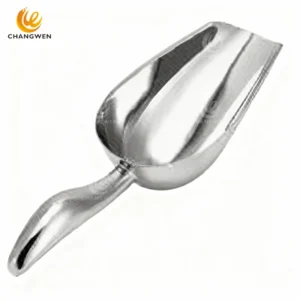
- Ice scoop (8–12 oz — NSF-rated, dedicated to ice only — never use a glass)
- Ice bucket / ice well insert (for bar-top ice access)
- Ice tongs (for premium spirits and large format ice service)
- Bottle opener (commercial crown cap — buy in multiples, these disappear)
- Wine key / waiter’s corkscrew (one per bartender)
- Draft beer pull / tap handle (matched to keg system)
- Speed pourers (see below — in bulk for full bottle lineup)
Ice, Chill, and Presentation
- Commercial ice machine (cube, nugget, or crescent — matched to volume needs)
- Ice storage bin (under-bar or back-bar — insulated)
- Ice crusher (for frozen cocktails, mojitos, juleps)
- Lewis bag + mallet (for hand-crushed ice — smaller scale)
- Ice buckets (table/bar-top service — stainless steel double-walled)
- Wine cooler / champagne bucket (for table service of wine and sparkling)
- Back-bar cooler / bottle cooler (for wine, beer, and mixers)
- Glass chiller / froster (for frosted glassware service)
Glassware — The Silent Menu
Glassware selection communicates your concept before a drink is served. Match glassware to your drink menu — don’t use the wrong glass for a signature cocktail.
Essential bar glassware by type:
| Glass Type | Capacity | Use |
|---|---|---|
| Rocks / Old Fashioned | 8–10 oz | Spirit pours, Old Fashioned, Negroni |
| Double Rocks | 12–14 oz | Premium spirit service, large format ice |
| Highball | 10–12 oz | Gin & tonic, mojito, highball cocktails |
| Collins | 12–14 oz | Tom Collins, Long Island, tall cocktails |
| Coupe | 5–6 oz | Daiquiri, Sidecar, Gimlet, classic cocktails |
| Martini / V-shaped | 6–8 oz | Martini, Cosmopolitan |
| Wine glass (red) | 14–16 oz | Red wine, Aperol Spritz |
| Wine glass (white) | 10–12 oz | White wine, rosé |
| Champagne flute | 6–8 oz | Sparkling wine, Bellini, Kir Royale |
| Pint glass | 16–20 oz | Draft beer, cider |
| Beer mug / stein | 16 oz | German-style beer service |
| Shot glass | 1–2 oz | Spirits, shooters |
| Irish coffee glass | 8–10 oz | Hot cocktails, Irish coffee |
Glass management:
- Maintain a 3× service minimum — if you seat 50, stock 150+ of each core glass
- Buy glasses with weighted or rolled base for durability
- Keep 15–20% reserve buffer for breakage
- Confirm the pattern is available for reorder before committing — discontinued glassware patterns are a common operational headache
Garnish and Prep Tools
- Cutting board (dedicated to bar prep — separate from kitchen)
- Paring knife (for garnish prep — citrus wheels, wedges)
- Citrus squeezer / juicer (for fresh juice programs)
- Julep cups (for mint julep, Moscow mule if not using mugs)
- Moscow mule mugs (copper-lined stainless — if on menu)
- Garnish tray / condiment tray (tiered, with covers — for citrus, olives, cherries, herbs)
- Cocktail picks (short and long skewers — for fruit, olives, garnishes)
- Bitters bottle / dasher bottle (for bitters service)
- Squeeze bottles (for house syrups, sauces, juices)
Cleaning and Sanitation
- Glass rinser (under-bar — mounts at bar sink — pre-rinses glasses before service)
- Bar sink (3-compartment — wash, rinse, sanitize)
- Glasswasher (commercial undercounter — essential for high-volume bars)
- Glasswasher cleaning tablets (daily use)
- Sanitizer solution and test strips
- Bar brush (for cleaning taps and speed rails)
- Keg line cleaner (for draft beer systems — clean weekly minimum)
- Non-slip floor mats (behind bar — safety compliance)
Wholesale Pour Spouts for Restaurants and Coffee Shops
Wholesale pour spouts are one of the most consistently underspecified items in bar equipment — and one of the highest-ROI purchases when bought correctly.
Why Pour Spouts Matter
Every spirit bottle behind a bar should have a pour spout fitted. Without a pour spout, bartenders pour directly from the bottle — resulting in inconsistent pours, over-pouring, and significantly higher beverage cost. A properly fitted pour spout delivers a controlled, consistent flow that:
- Reduces over-pouring by 15–30% versus uncontrolled bottle pours
- Increases pour speed — important during service rushes
- Prevents bottle contamination from backflow
- Provides a consistent bartender experience across all shifts
In a bar moving 50+ bottles per week, the difference between accurate and sloppy pours compounds into hundreds of dollars of waste monthly.
Types of Pour Spouts
Free-flow / speed pourers: Open spouts that deliver a consistent, fast flow. The most common type for high-volume bars. Bartenders measure by count (e.g., a 4-count pour = 1 oz). Available in standard and slow-flow variants. Stainless steel or chrome-plated.
Measured / metered pour spouts: Built-in valve mechanism releases a precise, pre-set volume (typically 1 oz or 1.5 oz) and then stops flow. Eliminates over-pouring entirely. Higher cost than free-flow but delivers the most accurate and consistent pours. Ideal for compliance-heavy operations or high-cost spirits.
Screened pour spouts: Free-flow spout with a fine wire screen over the opening — prevents fruit flies and contaminants from entering the bottle. Best practice for any bar keeping bottles out overnight.
What to Specify for Wholesale Pour Spout Orders
When buying pour spouts wholesale for a restaurant or bar program:
- Material: Stainless steel collar with food-grade plastic or all-stainless body — avoid chrome-only plating over base metal
- Cork size: Standard cork sizing fits most 750ml and 1L liquor bottles — verify fit for oversized bottles (some rum, tequila, and specialty spirits use non-standard necks)
- Flow rate: Medium flow (3/8″ orifice) for spirits; slow flow for syrups and oils
- Cap availability: Purchase caps for all pour spouts — cover bottles stored overnight to prevent contamination and evaporation
- Quantity: Buy minimum 2× bottle lineup — one set in use, one set being cleaned
- NSF certification: Confirm NSF compliance for food-contact use in commercial kitchens
Pour Spout Par Levels
A standard bar with 30 bottles in active service needs at minimum:
- 60 pour spouts (2 per bottle — rotation set)
- 60 pour spout caps
- 10 spare spouts for breakage and loss
At wholesale pricing, stainless steel pour spouts cost significantly less per unit than retail single purchases. Buy in case quantities (typically 24 or 48 units) for the best per-unit cost.
Café Supplies by Region: USA, UK, Australia & Beyond
Café supplies and bar supplies are available from local distributors in every major market, but sourcing strategy varies by region. Here’s what buyers in key markets need to know:
Café Supplies Wholesale USA
The US is the largest café and bar equipment market globally. Key points for coffee shop supplies wholesale USA buyers:
- NSF certification is the required standard for all food-contact supplies — always verify
- US standard voltage is 110V/60Hz — verify compatibility for any imported equipment
- The US market has strong wholesale supply infrastructure — Shopping websites, and national foodservice distributors provide broad coverage
- For independent cafés and growing chains, China factory-direct sourcing delivers the best wholesale pricing on stainless steel smallwares, glassware, and barware
- MOQ for most China wholesale stainless steel café supplies: 50–200 units; glass: 300–1,000 units
Café Supplies UK
The UK café and coffee shop market is one of the most mature in the world. Key notes:
- CE marking required for electrical equipment; food-contact materials must comply with UK food safety regulations (post-Brexit equivalent to EU food contact regulations)
- Standard voltage: 230V/50Hz — verify all electrical equipment
- Café supplies UK wholesale distributors are concentrated in London, Manchester, and Birmingham
- Specialty coffee culture is strong — barista supplies quality matters more in the UK market than in many other regions
- For café supplies wholesale at volume: consider factory-direct sourcing from established Chinese exporters with CE documentation
Café Supplies Australia: Brisbane, Adelaide, Melbourne, Perth, Sydney, NZ
Australia and New Zealand have some of the world’s most developed specialty coffee cultures. Key sourcing notes:
- Café supplies Brisbane, Sydney, Melbourne — major cities have established local wholesale distributors; regional markets (Adelaide, Perth) have fewer local options and often source nationally or internationally
- Café supplies NZ — New Zealand’s small market means many operators source from Australian distributors or directly from Asia
- Standard voltage: 230V/50Hz (Australia); 230V/50Hz (NZ) — verify all imported equipment
- Australian food safety regulations (FSANZ) apply to all food-contact smallwares — materials must be food-safe and meet Australian standards
- The Australian specialty coffee market prizes barista tool quality — tampers, frothing pitchers, and distribution tools are treated as professional investments, not commodity items
- China factory-direct sourcing works well for Australian buyers for stainless steel smallwares, but lead time (4–6 weeks via sea freight) must be factored into order planning
Bar Supplies: Regional Considerations
- Bar supplies near me searches reflect the ongoing importance of local supply relationships — for urgent restocking of high-turnover items (bar towels, pour spouts, stir sticks), local suppliers win
- Bar supplies online platforms (domestic and international) are the right channel for planned, bulk purchases — better selection and significantly lower pricing
- Bar supplies wholesale orders benefit from consolidation — buying a full bar setup or seasonal restock in a single order reduces per-unit freight cost and supplier margin
How to Source Bar & Café Supplies Wholesale
Option 1 — Local and Domestic Wholesale Suppliers
Best for: urgent restocking, specific branded items, and supplies where local technical support matters (espresso machine parts, draft beer components).
Typical domestic wholesale supply channels:
- National restaurant supply chains with commercial accounts
- Local café equipment dealers (often offer wholesale accounts for registered businesses)
- Hospitality trade shows (Restaurant & Bar Show, SCAA, HOST Milan, Fine Food Australia)
- Broadline foodservice distributors (for disposables and cleaning supplies)
Advantages: Immediate availability, established return policies, local service relationships. Disadvantages: 30–80% higher unit cost than factory-direct sourcing for most stainless steel and glassware items.
Option 2 — China Factory-Direct Wholesale
For volume buyers — multi-location café chains, bar groups, distributors, and equipment dealers — factory-direct sourcing from China delivers the best combination of quality and cost for stainless steel smallwares, glassware, barware, and café accessories.
Key Chinese manufacturing hubs for bar and café supplies:
- Guangdong (Guangzhou, Jiangmen, Chaozhou) — stainless steel barware, frothing pitchers, coffee accessories, bar tools, pour spouts, serving equipment
- Shandong (Zibo) — glassware (espresso glasses, cocktail glasses, beer glasses)
- Zhejiang (Yongkang) — kitchen gadgets, bar tools, cocktail accessories
- Guangdong (Yangjiang) — professional knives and cutting tools
What to source from China vs. locally:
| Item Category | Source from China | Source Locally |
|---|---|---|
| Stainless steel frothing pitchers | ✅ Excellent value | ⚠️ Higher cost |
| Cocktail shakers, jiggers, bar tools | ✅ Excellent value | ⚠️ Higher cost |
| Pour spouts (bulk) | ✅ Best bulk pricing | ⚠️ Much higher retail |
| Glassware (bulk orders) | ✅ Best value at volume | ⚠️ Higher cost |
| Espresso machines | ❌ Buy from established brands with local service | ✅ Better support |
| Disposables (paper cups, lids) | ✅ Best bulk pricing | ⚠️ Higher cost |
| Bar mats, rubber products | ✅ Good value | Acceptable locally |
| Urgent restocking items | ❌ Lead time too long | ✅ Immediate availability |
What to Check Before Placing a Wholesale Order
✅ Material Grade and Food Safety
All food and beverage contact items must be food-grade. For stainless steel: request documentation confirming 304 grade (18/8 or 18/10 stainless). For glass: confirm borosilicate or food-grade soda-lime. For plastic items: confirm BPA-free and food-grade certification.
✅ NSF / CE / FSANZ Certification
Confirm the applicable certification for your target market:
- US: NSF International listing number (verifiable in NSF database)
- EU / UK: CE marking on electrical items; food contact material compliance
- Australia/NZ: FSANZ food contact compliance
Request the actual certification document or listing number — not just catalog claims.
✅ Capacity and Sizing
For frothing pitchers: specify in oz (12 oz, 20 oz) and confirm spout style (standard vs. precision pointed). For glassware: specify exact capacity in oz and ml — different manufacturers measure differently. For pour spouts: confirm cork size compatibility with your bottle lineup.
✅ Sample Orders Before Bulk
Always request physical samples for:
- Frothing pitchers (check spout precision, handle comfort, steel gauge)
- Cocktail shakers (check seal, weight, tin quality)
- Glassware (check clarity, weight, base stability)
- Pour spouts (check flow rate, seal quality, cork fit)
Sample lead time from China factories: 7–15 days. This is always worth the time investment.
✅ MOQ, Lead Time, and Stock Planning
Typical wholesale MOQs for bar and café supplies from China:
- Stainless steel frothing pitchers: 50–200 units
- Cocktail shakers / bar tools sets: 50–200 units
- Pour spouts (bulk): 100–500 units
- Glassware: 300–1,000 units
- Disposable cups (paper/plastic): 1,000–5,000 units per SKU
- Bar mats: 100–200 units
Lead time: 25–40 days production + 15–25 days ocean freight. Plan ordering accordingly — for seasonal peaks (summer drinks program, holiday bar menus), order 8–10 weeks in advance.
FAQ
What are café supplies and what do they include?
Café supplies refer to all the tools, equipment, consumables, and disposables used to operate a commercial coffee shop or café — everything that isn’t a large fixed appliance. The category includes barista supplies (tampers, frothing pitchers, distribution tools), coffee accessories (filters, knock boxes, scales), glassware and cups, disposable cups and lids, cleaning supplies (espresso machine cleaner, descaling tablets), storage and organization items, and front-of-house service items. For a complete breakdown, see the coffee shop equipment list and essential coffee shop equipment checklist sections above.
Where can I find café supplies near me?
For café supplies near me, options include: local restaurant supply stores (search “restaurant supply” or “commercial kitchen supply” in your city), specialty coffee equipment dealers, hospitality trade shows, and wholesale buying clubs. Major cities — including Brisbane, Adelaide, Melbourne, Perth, Sydney (Australia), cities across the UK, and NZ — have local wholesale café supply dealers. For broader selection and better pricing, café supplies online through commercial wholesale platforms gives access to the full product range with delivery. For volume wholesale buyers, factory-direct sourcing from China delivers the lowest cost per unit.
What is the difference between bar supplies wholesale and buying retail?
Bar supplies wholesale means purchasing at commercial account pricing — typically 30–70% below retail — in case or bulk quantities, with consistent supply for regular restocking. Retail bar supply purchases (single units, consumer channels) are appropriate for home bartenders or one-off needs but are not cost-effective for commercial operations. Professional bars buy bar supplies online through commercial wholesale platforms or factory-direct for their regular inventory items. For pour spouts wholesale, the unit price difference between retail and wholesale can be 60–80% — at commercial bar volume, this adds up to significant savings annually.
What barista supplies do I need to open a café?
The barista supplies non-negotiables for opening a café are: a calibrated espresso tamper (matched to your portafilter diameter), frothing pitchers in two sizes (12 oz and 20 oz minimum — stainless steel), a barista thermometer, a precision espresso scale (0.1g resolution), a knock box, group head brushes, a distribution tool, a tamp mat, and a supply of espresso machine cleaning products (backflush detergent, descaling solution). These items are the daily-use tools that directly determine espresso quality — invest in commercial-grade versions, not consumer-grade alternatives.
What pour spouts should I buy wholesale for my restaurant or bar?
For wholesale pour spouts, the recommendation is: stainless steel free-flow speed pourers for standard spirits and high-volume bars; measured/metered pour spouts for compliance-sensitive operations or high-cost spirit programs. Buy in bulk — a minimum of 2× your bottle count so one set is always in use while one set is being cleaned. Always buy screened versions for bottles that sit overnight. Specify food-grade materials and NSF-compliant construction. At case quantity (24–48 units), stainless steel pour spouts from wholesale or factory-direct sources cost significantly less per unit than retail purchase.
Is it worth buying bar and café supplies from China wholesale?
For volume buyers — café chains, bar groups, hotel operations, and wholesale distributors — buying restaurant supply items from verified Chinese manufacturers delivers 30–50% cost savings on comparable commercial-grade products. The key conditions: verify factory status (not a trading company), request NSF/CE/food-safe material documentation, order samples before bulk, and use a pre-shipment inspection service for orders above $5,000 USD. China factory-direct is not suited for urgent small restocking (lead time is 6–10 weeks door-to-door) — maintain a local backup supplier for emergency restocking of high-turnover items.
What is the bar supplies list minimum for opening a new bar?
The absolute minimum bar supplies list for opening a new bar includes: cocktail shakers (minimum 3 Boston shaker sets), jigger set (1 oz / 2 oz, minimum 4), Hawthorne strainers (3), fine mesh strainers (2), bar spoon (3), muddler (2), mixing glass (2), speed rail (1 per station), pour spouts (2× bottle count plus caps), bottle opener (5), wine key (3 per bartender), ice scoop (2 per station, NSF-rated), ice bucket (1 per station), bar mats (1 per station), bar towels (minimum 15), core glassware (rocks, highball, coupe, pint — minimum 3× cover count each), and a glass rinser. See the complete ultimate bar equipment checklist section above for the full operational list.
Conclusion
Opening or restocking a bar or café without a complete bar supplies and café supplies checklist is the most common and most avoidable way to go over budget and under-prepare. The tools and supplies covered in this guide — from barista supplies and pour spouts wholesale to glassware and disposables — are not commodities to minimize. They are the daily infrastructure that determines service speed, drink quality, safety compliance, and customer experience, shift after shift.
The framework in this guide covers everything:
- A complete coffee shop equipment list from espresso station to disposables
- The essential barista supplies checklist for precision coffee operations
- The ultimate bar equipment checklist from cocktail tools to glassware
- Pour spout guidance for profit protection and consistent service
- Regional notes for buyers in the USA, UK, Australia (Brisbane, Adelaide, Melbourne, Perth, Sydney), and NZ
- A sourcing framework for café supplies wholesale and bar supplies wholesale — local versus factory-direct from China
Whether you’re opening your first location, restocking for a peak season, or building a wholesale restaurant supply catalog for distribution — this guide is your starting point.
We manufacture and export a complete range of commercial café supplies and bar supplies — stainless steel barware, frothing pitchers, cocktail tools, pour spouts, glassware, and serving equipment — with 20+ years of experience supplying café chains, hotel bars, and restaurant equipment distributors worldwide. Request our complete wholesale catalog and factory pricing using the contact form below.