Introduction
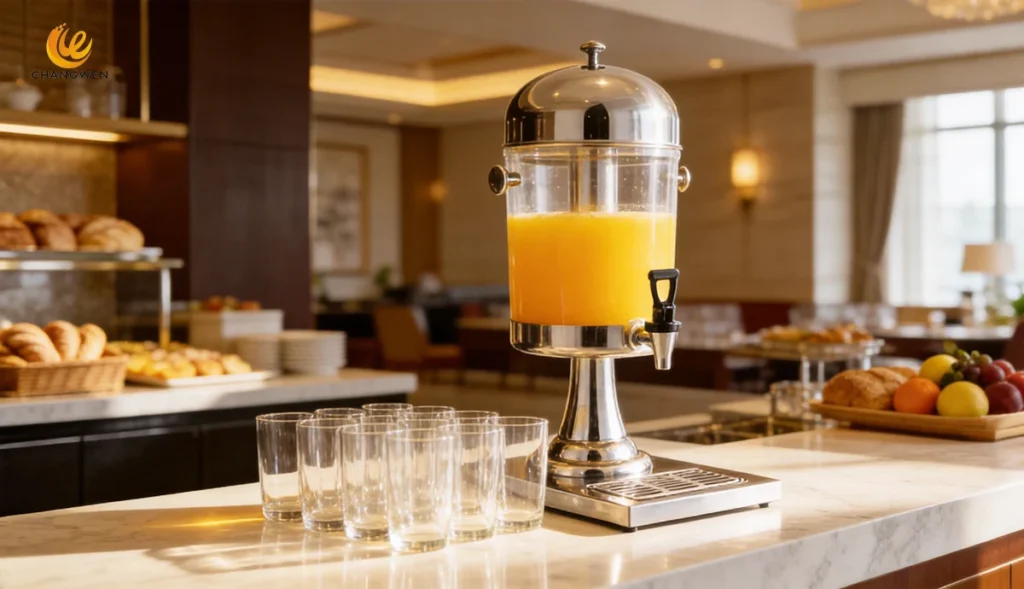
Choosing the right commercial juice dispenser can make a significant difference in your foodservice operation’s efficiency and customer satisfaction. Whether you’re running a bustling restaurant, a hotel breakfast bar, or a busy juice bar, selecting the appropriate beverage dispenser is crucial for delivering fresh, chilled drinks consistently. This comprehensive guide will walk you through everything you need to know about commercial juice dispensers, from understanding their components to making an informed purchasing decision.
A quality juice dispenser commercial setup not only streamlines beverage service but also enhances visual appeal, potentially boosting sales. With options ranging from plastic beverage dispensers to premium stainless steel beverage dispensers, understanding the distinctions will help you invest wisely in equipment that serves your business for years to come.
Key Takeaways
- Material Matters: Choose between plastic, glass, and stainless steel beverage dispensers based on durability needs, budget, and aesthetic preferences
- Capacity Planning: Select the right juice dispenser 5 gallon or larger capacity based on your daily volume requirements and peak service times
- Temperature Control: Refrigerated juice dispensers with reliable cooling systems ensure beverage quality and food safety compliance
- Easy Maintenance: Prioritize juice dispensers with removable parts and smooth surfaces for efficient cleaning and sanitation
- Smart Investment: Balance upfront costs with long-term value, considering durability, energy efficiency, and manufacturer support
What is a Commercial Juice Dispenser?
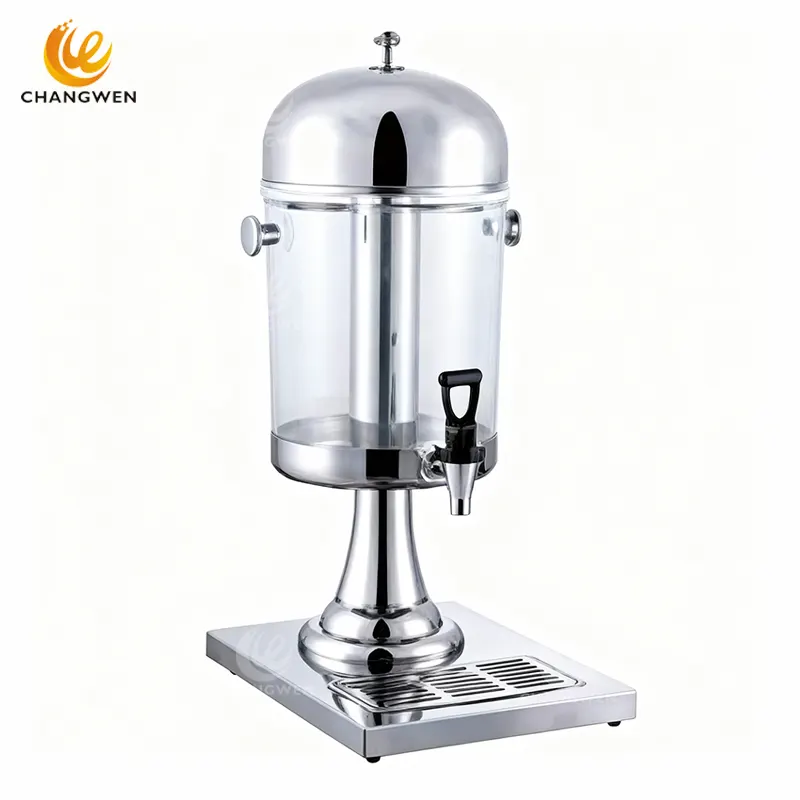
A commercial juice dispenser is a specialized foodservice appliance designed to store, chill, and dispense various beverages efficiently in high-volume settings. These juice dispenser machines are engineered to maintain consistent temperatures while allowing easy access to refreshing drinks through user-friendly spigots or taps.
Unlike residential beverage containers, a restaurant commercial juice dispenser is built to withstand continuous daily use in demanding environments. These units feature robust construction, larger capacities, and professional-grade cooling systems. A juice dispenser for restaurant applications typically handles everything from fresh-squeezed orange juice to iced tea, lemonade, and cold coffee.
Key Functions of Commercial Juice Dispensers
Modern juice dispensing systems serve multiple purposes in commercial settings:
- Temperature Maintenance: Built-in refrigeration keeps beverages at optimal serving temperatures (typically 35-40°F)
- Visual Merchandising: Transparent containers showcase colorful beverages, enticing customers and driving sales
- Portion Control: Consistent dispensing mechanisms ensure standardized serving sizes
- Hygiene Standards: Enclosed systems minimize contamination risks compared to open pitchers
- Operational Efficiency: Self-service or quick-pour designs reduce staff workload during peak hours
Common Applications
Commercial juice dispensers excel in various foodservice environments:
- Hotels and Resorts: Breakfast buffets and poolside beverage stations
- Restaurants and Cafés: Juice bars and beverage service areas
- Convenience Stores: Grab-and-go drink sections
- Catering Operations: Special events and large gatherings
- Educational Facilities: School cafeterias and dining halls
- Healthcare Settings: Hospital cafeterias and patient dining areas
- Corporate Dining: Office cafeterias and break rooms
Components of a Commercial Juice Dispenser
Understanding the key parts of your juice dispenser machine helps with operation, maintenance, and troubleshooting. Here are the essential components:
1. Container/Bowl (Hopper)
The hopper is the transparent container that holds the beverage. Most glass beverage dispensers and glass drink dispensers feature clear polycarbonate or acrylic construction, allowing customers to see the drink inside. Capacities typically range from 1 gallon to 5 gallons per bowl, with many commercial juice dispensers offering multiple bowls (1-4 tanks).
2. Refrigeration System
The cooling mechanism is housed in the base unit and maintains beverage temperature. Key components include:
- Compressor: Circulates refrigerant through the system
- Evaporator: Absorbs heat from the beverage
- Condenser: Releases heat outside the unit
- Thermostat: Controls temperature settings
3. Agitator/Mixing System
The agitator ensures beverages remain well-mixed and prevents separation. Two primary types exist:
- Paddle Circulation: Gentle mixing ideal for coffee, tea, and fresh fruit juices
- Spray Circulation: More vigorous mixing suitable for processed juices and drinks from concentrate
4. Dispensing Mechanism
The tap or spigot controls beverage flow. Quality commercial juice dispenser machines feature:
- Durable, food-grade materials
- Easy-to-operate handles
- Precise flow control to minimize spills
- Removable parts for thorough cleaning
5. Drip Tray
Located beneath the dispensing area, the drip tray catches spills and overflow, maintaining cleanliness and preventing slip hazards. Most are removable for easy cleaning.
6. Base/Housing
The base encases the refrigeration system and mechanical components while providing stability. Construction typically features:
- Stainless steel for durability and easy cleaning
- Insulation to improve cooling efficiency
- Ventilation openings for heat dissipation
- Adjustable feet for leveling
Types of Commercial Juice Dispensers
Selecting the right type of beverage dispenser depends on your specific needs, budget, and operational requirements.
By Material
| Material Type | Advantages | Disadvantages | Best For |
|---|---|---|---|
| Plastic Beverage Dispenser | • Lightweight and portable• Affordable• Available in various colors• Shatter-resistant | • Less durable than other materials• Can stain or absorb odors• May appear less premium• Shorter lifespan | Temporary events, outdoor catering, budget-conscious operations |
| Glass Beverage Dispenser | • Premium appearance• No taste transfer• Easy to clean• Stain-resistant• Elegant presentation | • Fragile and breakable• Heavier than plastic• More expensive• Requires careful handling | Upscale restaurants, boutique hotels, juice bars prioritizing aesthetics |
| Stainless Steel Beverage Dispenser | • Extremely durable• Corrosion-resistant• Professional appearance• Long service life• Hygienic and easy to sanitize | • Higher initial cost• Opaque (beverage not visible)• Can show fingerprints• Heavier | High-volume operations, commercial kitchens, establishments prioritizing durability |
| Insulated Dispenser | • Superior temperature retention• Energy-efficient• Protects against temperature fluctuations• Ideal for outdoor use | • More expensive• Bulkier design• Limited visibility of contents | Outdoor events, catering, locations with unreliable power |
By Capacity
Single-Bowl Dispensers (1-3 gallons)
- Ideal for small cafés or limited beverage offerings
- Space-efficient design
- Lower initial investment
- Suitable for testing new drink offerings
Medium-Capacity Dispensers (3-5 gallons)
- The most popular size for restaurants
- Balances capacity with footprint
- Reduces frequent refilling while managing space
- Often available with juice dispenser with stand options for better visibility
Large-Capacity Dispensers (5+ gallons)
- Essential for high-volume operations
- Often feature multiple tanks (double tank commercial juice dispenser or triple bowl options)
- Reduces staff workload during peak hours
- Requires more counter space and electrical capacity
By Cooling Method
Refrigerated Juice Dispensers
- Active cooling with electric refrigeration
- Maintains consistent temperature
- Best for extended service periods
- Higher initial cost but better performance
Non-Refrigerated Dispensers
- Relies on ice or pre-chilled beverages
- Lower purchase cost
- More portable
- Requires frequent ice replenishment
Stainless Steel Beverage Dispenser with Ice Core
- Insulated chamber holds ice to keep drinks cold
- No electricity required
- Portable and versatile
- Ice melting requires monitoring
Important Factors to Consider When Choosing a Juice Dispenser
Making the right choice requires evaluating multiple factors that align with your business needs.
1. Capacity Requirements
Consider your peak service demands:
- Low-volume operations (50-100 servings/day): 1-2 gallon capacity
- Medium-volume operations (100-300 servings/day): 3-5 gallon capacity
- High-volume operations (300+ servings/day): Multiple 5-gallon bowls or double tank commercial juice dispenser
Calculate your needs by estimating:
- Average serving size (typically 8-12 oz)
- Number of customers during peak hours
- Variety of beverages offered
- Refill frequency tolerance
2. Juice Compatibility
Different beverages have different requirements:
Fresh Juices with Pulp
- Require paddle circulation systems
- Need frequent agitation to prevent settling
- Benefit from glass or high-quality plastic containers
Processed or Concentrated Juices
- Can use spray circulation systems
- More stable consistency
- Compatible with all container materials
Cold Brew Coffee or Tea
- May stain containers over time
- Better suited for opaque containers
- Require regular deep cleaning
Thick Smoothies or Blended Drinks
- Need powerful agitation systems
- Require larger dispensing openings
- May need specialized equipment
3. Physical Dimensions
Measure your available space carefully:
Countertop Models
- Typical dimensions: 9-18″ wide, 18-24″ deep, 20-30″ tall
- Consider clearance for lid removal and cleaning
- Account for power cord placement
- Ensure adequate ventilation space
Floor Models with Stand
- Juice dispenser with stand options improve visibility
- Require stable, level flooring
- Consider traffic flow around the unit
- May need 36-48″ of vertical clearance
4. Multiple Dispensing Options
Single-Bowl Units
- Simpler operation and maintenance
- Lower initial cost
- Less counter space required
- Limited beverage variety
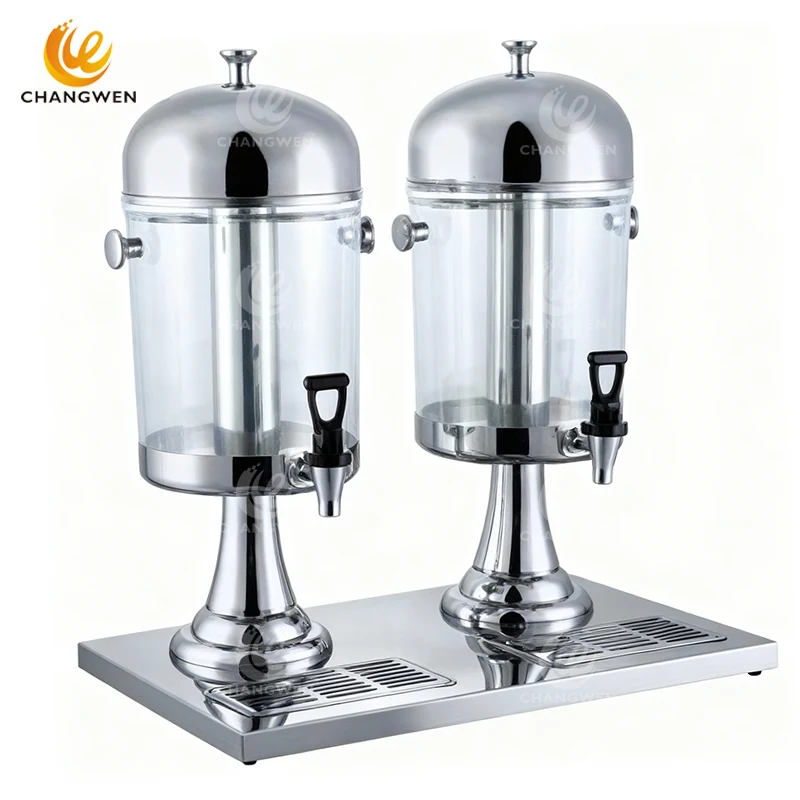
- Offer 2-4 different beverages simultaneously
- Maximize customer choice
- Better space utilization per unit
- Higher investment but greater versatility
5. Temperature Control Capabilities
Look for these features:
- Adjustable thermostat: Customize temperature for different beverages (33-40°F range)
- Digital display: Monitor temperature at a glance
- Temperature alerts: Warning systems for temperature deviations
- Energy-efficient compressors: Reduce operating costs
6. Convenient Dispensing Mechanism
The spigot design significantly impacts user experience:
- Lever-style handles: Easy one-handed operation
- Push-button designs: Precise portion control
- Automatic shut-off: Prevents overflow
- Height clearance: Accommodates various glass sizes
- Flow rate: Balances speed with control
7. Aesthetic Appeal
Your juice dispenser is often customer-facing equipment:
- Match your décor: Choose finishes that complement your interior design
- Brand consistency: Select colors and styles that reflect your brand identity
- Visual appeal: Glass beverage dispensers showcase colorful drinks attractively
- Professional appearance: Stainless steel beverage dispensers convey quality
8. Durability and Build Quality
Invest in construction that withstands daily use:
- Frame material: Stainless steel resists corrosion
- Container material: Food-grade polycarbonate or borosilicate glass
- Component quality: Commercial-grade motors and compressors
- Warranty coverage: Look for 1-3 year warranties on major components
9. Maintenance and Cleaning Requirements
Ease of maintenance directly impacts hygiene and longevity:
- Removable parts: All components touching beverage should detach easily
- Smooth surfaces: Minimize crevices where bacteria can hide
- Dishwasher-safe components: Simplify cleaning procedures
- Accessible motors and compressors: Facilitate routine maintenance
- Clear cleaning instructions: Manufacturer should provide detailed protocols
10. Total Cost of Ownership
Look beyond the purchase price:
Initial Investment
- Basic plastic models: $100-300
- Mid-range refrigerated units: $400-800
- Premium commercial systems: $1,000-3,000+
- Multi-bowl professional units: $2,000-5,000+
Operating Costs
- Energy consumption: Refrigerated models typically use 2-5 kWh per day
- Cleaning supplies: Sanitizing solutions and replacement parts
- Beverage costs: Calculate cost per serving
- Maintenance: Annual servicing fees if required
Return on Investment
- Increased beverage sales from attractive presentation
- Labor savings from self-service options
- Reduced waste from better portion control
- Customer satisfaction and repeat business
11. Features and Ease of Use
Modern juice dispenser machines offer advanced features:
- Digital controls: Programmable temperature settings
- Auto-defrost cycles: Reduce manual maintenance
- LED lighting: Illuminates beverages for better visual appeal
- Lockable lids: Security for valuable ingredients
- Wheels or casters: Mobility for cleaning or repositioning
12. Manufacturer Support
Choose brands that offer:
- Technical support: Accessible customer service
- Replacement parts availability: Common components readily available
- Training resources: Operation and maintenance guides
- Service network: Authorized repair centers in your area
- Warranty terms: Comprehensive coverage with clear claim procedures
Frequently Asked Questions (FAQ)
What is a juice dispenser?
A juice dispenser is a commercial foodservice appliance designed to store, chill, and serve beverages efficiently. It consists of one or more transparent containers that hold drinks, a refrigeration system to maintain cold temperatures, and a dispensing mechanism (spigot or tap) for easy serving. Commercial juice dispensers are built for high-volume use in restaurants, hotels, cafeterias, and other foodservice establishments where consistent beverage quality and presentation are important.
How much is a juice dispenser?
Juice dispenser prices range from $60 for basic non-refrigerated models to over $5,000 for premium commercial systems. Budget options ($60-200) work for occasional use but lack refrigeration. Mid-range units ($200-600) offer basic refrigeration and durability for small operations. Commercial-grade dispensers ($600-1,500) feature multiple bowls, better construction, and advanced controls. High-end systems ($1,500-5,000+) provide maximum capacity, premium materials, and professional features. The best value comes from matching capacity and features to your actual business needs rather than choosing the cheapest or most expensive option.
How to clean a juice dispenser?
Clean your juice dispenser daily by emptying all beverage, removing and soaking dispensing components in warm soapy water, and wiping down exterior surfaces. Weekly, perform a deep cleaning: disassemble all parts, run a vinegar-water solution (2 tablespoons vinegar per gallon) through the system, sanitize all components, and rinse thoroughly. Monthly tasks include inspecting seals and gaskets, lubricating O-rings with food-grade lubricant, and descaling if mineral buildup occurs. Always follow manufacturer instructions, use food-safe cleaning products, and ensure all parts are completely dry before reassembly. Maintaining a cleaning log helps ensure consistency and meets health department requirements.
How does a juice dispenser work?
A commercial juice dispenser works through three integrated systems. First, the refrigeration cycle uses a compressor, condenser, evaporator, and expansion valve to continuously remove heat from the beverage, maintaining temperatures between 35-40°F. Second, the circulation system keeps drinks mixed using either a paddle mechanism (gentle stirring for fresh juices) or spray system (vigorous mixing for concentrates). Third, the dispensing mechanism uses either gravity-fed flow or pump-assisted pressure to deliver beverages through a controlled spigot. A thermostat monitors temperature and cycles the compressor as needed. Modern units include digital displays and sensors to ensure consistent performance and alert operators to maintenance needs.
Are juice dispensers suitable to hold alcohol?
Yes, many commercial juice dispensers can safely hold alcoholic beverages including premixed cocktails, wine, beer, and spirits-based punches. Glass beverage dispensers and stainless steel beverage dispensers are ideal for alcohol service as they don’t react with alcohol content and prevent flavor transfer. When using plastic dispensers, verify the material is food-grade polycarbonate suitable for alcoholic beverages. Important considerations include proper liquor licensing, responsible service training, temperature control (wine and cocktails need different settings), enhanced cleaning protocols due to sugar content, and insurance liability coverage. Always check local regulations regarding self-service alcohol dispensing and implement age verification procedures.
What size juice dispenser do I need for my restaurant?
Size requirements depend on your daily beverage service volume and peak hour demands. Small cafés serving 50-100 drinks daily can use 1-2 gallon single-bowl dispensers. Medium-volume restaurants (100-300 servings/day) need 3-5 gallon capacity or multiple smaller bowls. High-volume operations (300+ servings/day) should invest in multiple 5-gallon bowls or double tank commercial juice dispensers. Calculate your needs by multiplying average serving size (8-12 oz) by peak hour customer count, then add 20% buffer capacity. Consider offering multiple beverage varieties by choosing multi-bowl units, which maximize options while minimizing counter space compared to several single-bowl units.
Can I use a juice dispenser outdoors?
Yes, juice dispensers can be used outdoors, but certain types work better than others. Insulated dispensers and stainless steel beverage dispensers with ice cores are ideal for outdoor events as they don’t require electricity and can maintain cold temperatures for hours. If using electric refrigerated dispensers outdoors, ensure they’re protected from direct sunlight, have access to weather-protected electrical outlets, and are placed on stable, level surfaces. Consider that extreme heat affects cooling efficiency—the compressor will work harder and may struggle to maintain proper temperatures above 90°F. For best results at outdoor events, use non-electric dispensers or place electric units in shaded, ventilated areas.
What’s the difference between paddle and spray circulation?
Paddle circulation uses a slow-rotating agitator to gently mix beverages, making it ideal for fresh juices with pulp, cold brew coffee, and iced tea. This gentle action prevents foam formation and maintains beverage integrity. Spray circulation pumps liquid from the bottom and sprays it back into the top of the container, creating more vigorous mixing. This system works better for processed juices from concentrate and drinks that need constant agitation to prevent separation. However, spray circulation can create excessive foam in some beverages. Choose paddle circulation for natural, fresh beverages and spray circulation for concentrates and processed drinks.
How long can juice stay in a dispenser?
Fresh-squeezed juices should be replaced every 4-6 hours for optimal taste and safety, even when refrigerated. Commercially processed juices and pasteurized beverages can typically stay in a refrigerated juice dispenser for 12-24 hours. Always follow local health department guidelines for holding times. Factors affecting juice longevity include initial temperature when loaded, dispenser’s cooling efficiency, ambient temperature, and how frequently the unit is opened or refilled. Implement a first-in-first-out (FIFO) system, label containers with fill times, and never mix fresh juice with old batches. Discard any juice that develops off-odors, unusual appearance, or has exceeded safe holding times.
Do juice dispensers use a lot of electricity?
Modern refrigerated juice dispensers are relatively energy-efficient, typically consuming 2-5 kilowatt-hours (kWh) per day. This translates to approximately $50-150 annually in electricity costs at average US rates. Energy consumption depends on several factors: ambient temperature (hotter environments require more cooling), how frequently the unit is opened, initial beverage temperature, insulation quality, and compressor efficiency. Energy-efficient models with good insulation, programmable thermostats, and high-efficiency compressors can reduce costs by 20-30%. To minimize energy use, keep units away from heat sources, maintain proper ventilation, pre-chill beverages before loading, and ensure door seals are in good condition.
Conclusion
Selecting the right commercial juice dispenser requires careful consideration of your specific operational needs, budget constraints, and long-term business goals. Whether you choose a simple plastic beverage dispenser for occasional catering or invest in a premium stainless steel beverage dispenser for high-volume service, understanding the key factors outlined in this guide will help you make an informed decision.
Remember that the best juice dispenser for your business balances capacity with space constraints, offers appropriate temperature control for your beverages, features easy-to-clean components for food safety compliance, and provides reliable performance backed by manufacturer support. A glass beverage dispenser might showcase your fresh juices beautifully in an upscale setting, while a durable double tank commercial juice dispenser could be essential for handling multiple beverage varieties during busy breakfast rushes.
By prioritizing factors like juice compatibility, maintenance requirements, energy efficiency, and total cost of ownership, you’ll find a juice dispenser machine that not only meets today’s demands but continues serving your business profitably for years to come. The right beverage dispenser becomes more than just equipment—it becomes a valuable asset that enhances customer satisfaction, streamlines operations, and contributes to your establishment’s success.
Whether you’re equipping a juice dispenser for restaurant service, setting up a hotel breakfast bar, or launching a dedicated juice bar, investing time in research and planning will pay dividends through improved efficiency, reduced waste, and happier customers enjoying perfectly chilled, freshly served beverages every time.
About This Guide: This comprehensive commercial juice dispenser buying guide is designed to help foodservice professionals make informed purchasing decisions. If you have any additional questions or require specific product recommendations, please consult Changwen Commercial Equipment Supplier. We can assess your unique operational needs and provide tailored solutions accordingly.