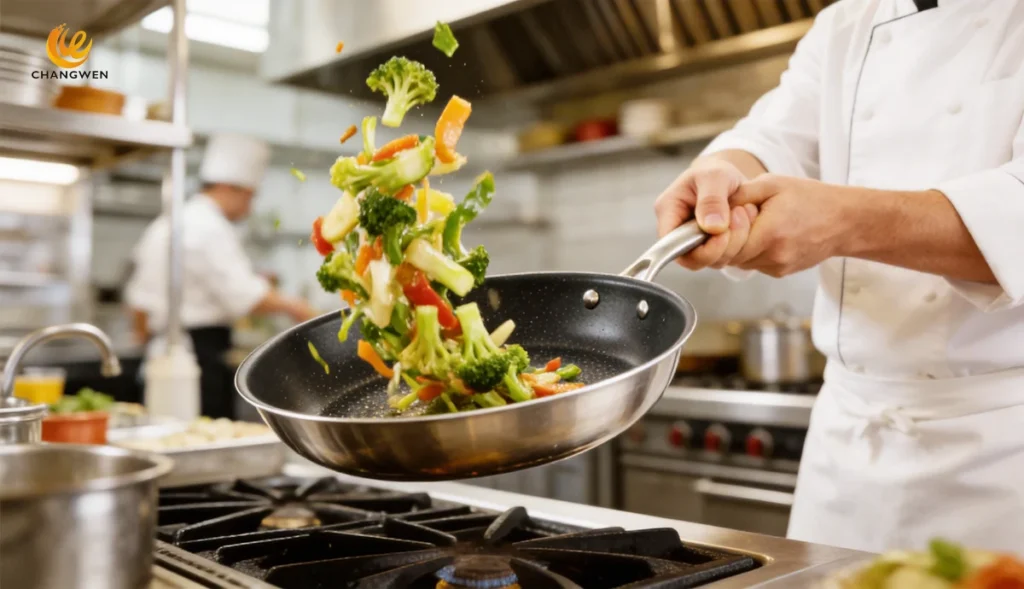
In the heart of every professional kitchen, the commercial frying pan stands as one of the most indispensable tools. From bustling restaurant kitchens to high-volume catering operations, these versatile workhorses handle countless tasks daily—searing steaks to perfection, sautéing vegetables, preparing breakfast eggs, and everything in between. Unlike residential cookware, commercial frying pans are engineered to withstand the demanding rigors of professional food service, enduring 12-hour shifts, extreme temperature fluctuations, and continuous heavy use.
Whether you’re outfitting a new restaurant, upgrading your food truck equipment, or establishing a catering business, selecting the right commercial frying pans is crucial for operational efficiency and food quality. The right choice can dramatically impact cooking speed, food consistency, energy consumption, and ultimately, your bottom line. With countless options available in materials, sizes, and designs, understanding the nuances of commercial cookware becomes essential for making informed purchasing decisions.
This comprehensive guide explores everything you need to know about commercial frying pans, from material selections and construction quality to sizing, maintenance, and purchasing considerations. We’ll help you navigate the complex world of professional cookware so you can equip your kitchen with pans that deliver exceptional performance, durability, and value.
Key Takeaways
- Material matters significantly: Stainless steel offers durability and versatility, aluminum provides excellent heat conductivity, and cast iron delivers superior heat retention
- Size selection is critical: Commercial pans range from 5-inch mini skillets to 14-inch heavy-duty options, with 10-12 inch pans being most versatile for general use
- Construction quality determines longevity: Heavy-gauge materials, secure handle attachments (welded or riveted), and professional-grade coatings ensure durability in demanding environments
- Stovetop compatibility requirements: Induction cooktops require magnetic cookware (stainless steel or cast iron), while aluminum pans need special induction-compatible bases
- Non-stick vs. natural finish: Non-stick coatings facilitate easy release and cleaning but have temperature limitations; natural finishes offer durability and high-heat capabilities
- Investment and ROI considerations: Quality commercial frying pans represent long-term investments—higher upfront costs typically translate to extended lifespan and better performance
- Proper maintenance extends lifespan: Different materials require specific care protocols; following manufacturer guidelines prevents premature wear and ensures food safety
Understanding Commercial Frying Pans vs. Restaurant Frying Pans
What Defines a Commercial Frying Pan?
Commercial frying pans, also called restaurant frying pans or professional frying pans, are specifically designed for high-volume, intensive use in food service environments. These heavy-duty frying pans feature:
Reinforced Construction
- Thicker gauge materials (typically 3mm+ for aluminum, 2mm+ for stainless steel)
- Heavy-duty handles designed for frequent lifting and maneuvering
- Commercial-grade rivets or welding that withstand constant stress
- Enhanced rim reinforcement to prevent warping
Performance Engineering
- Superior heat distribution for consistent cooking results
- Rapid heat response for fast-paced kitchen operations
- Compatibility with commercial-grade burners and high-BTU equipment
- Design optimized for volume cooking rather than aesthetic appeal
Durability Standards
- NSF certification for food safety and sanitation
- Materials that withstand commercial dishwashers
- Resistance to thermal shock from temperature extremes
- Longevity measured in years rather than months
Commercial Pan vs. Industrial Frying Pan
While often used interchangeably, these terms have subtle distinctions:
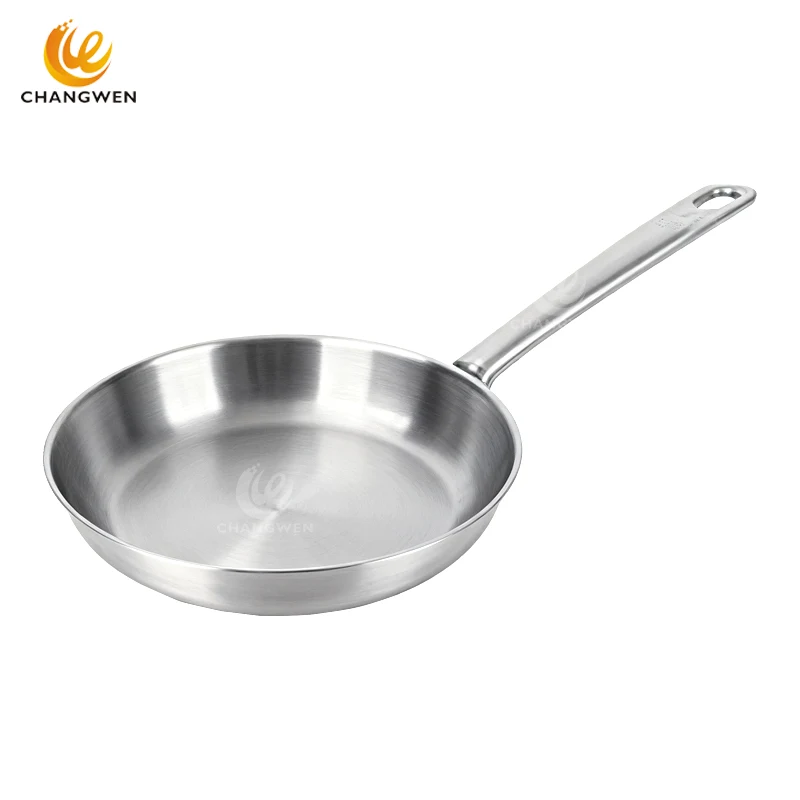
Commercial Kitchen Pans serve restaurants, hotels, cafeterias, and food service establishments. They balance durability with maneuverability, designed for chef use in varied cooking applications.
Industrial Frying Pans typically refer to even more robust equipment used in large-scale food production facilities, institutional kitchens, or manufacturing settings. These pans may feature:
- Extra-heavy gauge construction
- Specialized coatings for specific food processing applications
- Larger capacities for batch cooking
- Enhanced durability for continuous production environments
Commercial Cookware Materials: A Comprehensive Comparison
Commercial Stainless Steel Frying Pans
Stainless steel frying pans represent the gold standard in professional kitchens for their exceptional durability and versatility.
Advantages:
- Exceptional durability: Resistant to denting, warping, and corrosion
- Non-reactive surface: Safe for all ingredients, including acidic foods
- Professional appearance: Maintains polished look even after years of use
- Oven-safe construction: Withstands high oven temperatures
- Dishwasher compatible: Facilitates efficient cleaning in commercial settings
- Induction-ready: Compatible with all cooktop types
- No special maintenance: Doesn’t require seasoning or special care
Considerations:
- Heavier than aluminum alternatives
- Poor heat conductor without aluminum core or copper bottom
- Higher initial investment
- Food may stick without proper technique or fat
Best Applications:
- Searing proteins at high temperatures
- Preparing acidic sauces (tomato-based, wine reductions)
- Recipes requiring oven finishing
- High-volume operations needing consistent results
Construction Quality Indicators: Look for tri-ply or 5-ply construction where aluminum or copper cores are sandwiched between stainless steel layers. This provides the durability of stainless steel with the heat conductivity of aluminum. Quality manufacturers include Vollrath, Browne Foodservice, and Winco.
Aluminum Commercial Frying Pans
Aluminum pans dominate professional kitchens due to their outstanding heat conductivity and affordable pricing.
Advantages:
- Superior heat conductivity: Heats quickly and evenly across the cooking surface
- Lightweight design: Easier to handle during busy service
- Cost-effective: Most affordable professional cookware option
- Responsive temperature control: Quickly adjusts to heat changes
- Energy efficient: Requires less energy to heat and maintain temperature
Considerations:
- Reactive with acidic foods (can alter taste and appearance)
- Softer metal prone to denting and warping
- Not dishwasher safe (can oxidize and discolor)
- Not induction-compatible unless specially treated
- Requires more careful handling
Types of Aluminum Construction:
Standard Aluminum: Budget-friendly but prone to food sticking and reactive with acids. Best for operations with careful handling and non-acidic menus.
Hard-Anodized Aluminum: Electrochemically treated for a hard, non-reactive surface that resists scratches and corrosion. More durable than standard aluminum while maintaining excellent heat properties. Often features non-stick coatings.
Aluminum with Stainless Steel Base: Combines aluminum’s heat conductivity with a stainless steel bottom for induction compatibility. Popular choices like Browne Thermalloy pans offer best-of-both-worlds performance.
Best Applications:
- High-heat sautéing and stir-frying
- Breakfast service (eggs, pancakes, hash browns)
- Quick-cooking proteins
- Operations prioritizing speed and cost-efficiency
Cast Iron Commercial Frying Pans
Cast iron skillets offer unmatched heat retention and natural non-stick properties when properly seasoned.
Advantages:
- Exceptional heat retention: Maintains temperature even when food is added
- Natural non-stick when seasoned: No chemical coatings required
- Virtually indestructible: Can last generations with proper care
- Oven and grill safe: Versatile for stovetop-to-oven cooking
- Excellent searing capability: Creates perfect crusts on proteins
- Improves with use: Seasoning develops over time
Considerations:
- Extremely heavy (especially in larger sizes)
- Requires regular seasoning and maintenance
- Not dishwasher safe
- Slow to heat initially
- Reactive with acidic foods (unless well-seasoned)
- Can rust if not properly dried
Maintenance Requirements: Cast iron requires commitment but rewards with exceptional performance:
- Season before first use and periodically thereafter
- Clean with hot water and stiff brush (minimal or no soap)
- Dry thoroughly immediately after washing
- Apply thin oil coating after each use
- Never soak in water or put in dishwasher
Best Applications:
- Searing steaks and chops
- Cornbread and skillet desserts
- Fajita service (can go directly to table)
- High-heat blackening techniques
- Rustic presentation dishes
Carbon Steel Professional Frying Pans
Carbon steel combines cast iron’s heat retention with aluminum’s light weight, making it a favorite for wok cooking and high-heat applications.
Advantages:
- Lighter than cast iron: Easier to handle and maneuver
- Excellent heat distribution: Heats evenly across the surface
- Develops natural non-stick: Similar to cast iron when properly seasoned
- Durable construction: Resistant to warping and damage
- Quick temperature response: Faster heat adjustment than cast iron
- Oven-safe to high temperatures
Considerations:
- Requires seasoning and maintenance
- Not dishwasher safe
- Can rust without proper care
- Initial stick-prone surface before seasoning develops
- Reactive with acidic foods
Best Applications:
- Asian cuisine and wok cooking
- Stir-frying at very high temperatures
- Crepes and delicate items
- Professional searing applications
- Operations valuing traditional cooking methods
Commercial Frying Pan Sizes: Choosing the Right Diameter
Size Selection Guide
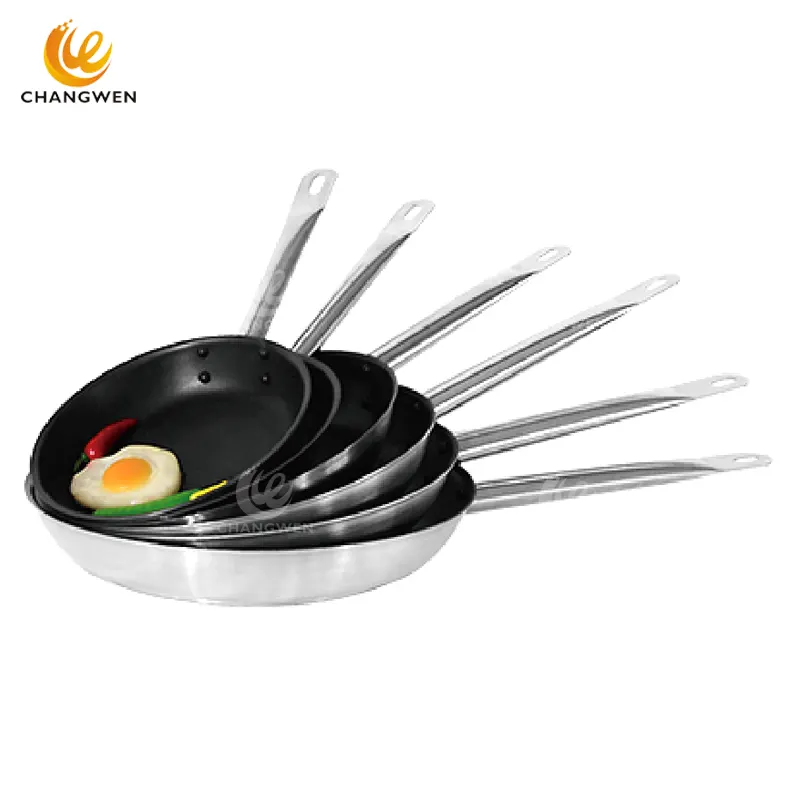
Commercial frying pans are measured by diameter, typically ranging from 5 inches to 14 inches. Selecting appropriate sizes depends on your menu, portion sizes, and cooking volume.
| Pan Size | Capacity | Best Uses | Ideal For |
|---|---|---|---|
| 5-7 inch | 1-2 servings | Individual portions, eggs, small appetizers | Breakfast diners, bistros, plating stations |
| 8-9 inch | 2-3 servings | Single entrées, omelets, small sautés | Fast-casual restaurants, food trucks |
| 10-12 inch | 3-4 servings | Most versatile size for general cooking | Full-service restaurants, hotels, catering |
| 12-14 inch | 4-6 servings | Large volume cooking, family-style service | High-volume operations, banquet facilities |
| 14+ inch | 6+ servings | Batch cooking, special events | Institutional kitchens, catering large events |
Sizing Considerations for Different Operations
Breakfast and Brunch Service:
- 8-10 inch pans for individual omelets and eggs
- 12 inch pans for pancakes and larger portions
- Small 5-7 inch pans for single eggs or appetizers
Lunch and Dinner Service:
- 10-12 inch pans as kitchen workhorses
- 12-14 inch for family-style or shared plates
- Multiple sizes for station-specific needs
Catering Operations:
- Larger 12-14 inch pans for batch cooking
- Various sizes for diverse menu items
- Consider weight when staff carries pans frequently
Food Trucks:
- 10-12 inch pans maximize limited space
- Lighter materials (aluminum) reduce physical strain
- Fewer sizes to simplify inventory
Large Commercial Frying Pans: When Size Matters
Benefits of Large Format Pans (12-14+ inches)
Large commercial frying pans excel in specific applications:
Volume Cooking Advantages:
- Prepare 4-6 portions simultaneously
- Reduce cooking cycles during peak hours
- Improve kitchen efficiency and throughput
- Minimize equipment needs per station
Operational Benefits:
- Fewer pans needed for large orders
- Better for family-style or shared plates
- Ideal for banquet and catering service
- Reduces dish washing frequency
Design Considerations: Large pans require special attention to:
- Handle strength: Must support increased weight when full
- Heat distribution: Larger surface requires better design
- Storage space: Significantly larger footprint
- Staff capability: Heavier when full—consider ergonomics
Professional Cook Pans for High-Volume Operations
High-volume kitchens often invest in commercial cooking pans specifically designed for continuous service:
- Heavy-gauge construction (3-4mm thickness)
- Reinforced handles with heat-resistant coatings
- Flat bottoms for maximum surface contact
- Professional riveting or welding at stress points
- Oven-safe to 500°F+ for versatility
Non-Stick vs. Natural Finish: Making the Right Choice
Non-Stick Commercial Frying Pans
Modern non-stick coatings have evolved significantly, offering professional-grade performance.
Types of Non-Stick Coatings:
PTFE (Teflon) Coatings:
- Most common in commercial kitchens
- Excellent food release properties
- Available in single, double, or triple layers
- Temperature limited (typically 400-450°F maximum)
Ceramic Non-Stick:
- Natural, PFOA-free alternative
- Higher heat tolerance than PTFE
- Less durable than traditional non-stick
- Requires careful handling
Hard-Anodized with Non-Stick:
- Combines aluminum durability with non-stick convenience
- More scratch-resistant than standard non-stick
- Longer lifespan in commercial environments
- Higher initial cost
Advantages:
- Minimal oil or fat required
- Easy food release and flipping
- Simplified cleaning process
- Ideal for delicate items (eggs, fish, crepes)
- Reduced sticking and burning
Limitations:
- Cannot withstand very high temperatures
- Metal utensils damage coatings
- Limited oven use
- Coating degrades over time
- Must be replaced periodically
Best Applications:
- Breakfast service (eggs, pancakes)
- Delicate fish preparations
- Healthy cooking with minimal fat
- High-turnover items needing quick release
Natural Finish Commercial Pans
Uncoated pans offer durability and high-heat capability.
Advantages:
- No temperature limitations
- Metal utensil safe
- Oven and broiler safe
- Longer lifespan
- Develops natural patina over time
- Can be restored if damaged
Technique Requirements:
- Proper preheating essential
- Adequate fat needed
- Food must be ready to release before flipping
- Requires cooking knowledge and skill
Best Applications:
- High-heat searing
- Deglazing and pan sauce preparation
- Oven-finished dishes
- Traditional cooking techniques
Commercial Frying Pan with Lid: Enhanced Versatility
Benefits of Lidded Commercial Pans
Adding a lid transforms a frying pan into a more versatile cooking vessel:
Cooking Advantages:
- Moisture retention: Keeps foods from drying out
- Faster cooking: Trapped heat reduces cooking time
- Energy efficiency: Requires less heat to maintain temperature
- Steaming capability: Adds cooking method versatility
- Finishing dishes: Complete cooking without oven use
Operational Benefits:
- Reduces splatter and kitchen mess
- Keeps food hot during holding
- Enables covered transport to serving areas
- Protects food during prep-to-service transitions
Types of Lids for Commercial Frying Pans
Stainless Steel Lids:
- Most durable option
- Oven-safe to high temperatures
- Easy to clean and sanitize
- Professional appearance
Glass Lids:
- Allow visual monitoring without removing
- Helpful for training and quality control
- More fragile than metal
- Lower oven temperature limits
Matching vs. Universal Lids: Fitted lids designed for specific pan sizes provide better seal and heat retention. Universal lids work across multiple sizes but may not fit as precisely.
Commercial Frying Pan Prices: Investment and Value
Price Ranges by Material and Quality
Commercial frying pan prices vary significantly based on materials, construction, and brand reputation.
Budget Range ($15-$40):
- Standard aluminum pans
- Basic non-stick coatings
- Simple rivet construction
- Suitable for low-volume operations or secondary pans
Mid-Range ($40-$100):
- Heavy-gauge aluminum or stainless steel
- Quality non-stick or hard-anodized finishes
- Professional construction and handles
- Balance of quality and affordability
- Best value for most operations
Premium Range ($100-$300+):
- Tri-ply or 5-ply stainless steel
- Copper-core or premium materials
- Superior craftsmanship
- Extended warranties
- Designed for high-end restaurants and intensive use
Commercial Frying Pans for Sale: Buying Considerations
When sourcing commercial cookware:
Supplier Options:
- Restaurant supply stores (in-person evaluation)
- Online foodservice equipment dealers (wider selection)
- Direct from manufacturers (bulk discounts)
- Used equipment suppliers (budget options)
What to Look For:
- NSF certification for food safety
- Manufacturer warranty terms
- Bulk pricing availability
- Replacement parts availability
- Vendor reputation and support
Cost-Saving Strategies:
- Buy sets for volume discounts
- Consider scratch-and-dent options
- Purchase quality once rather than replacing frequently
- Compare total cost of ownership, not just initial price
Specialty Commercial Frying Pans
Casserole Pans (32x16cm with Lid)
Rectangular casserole pans bridge the gap between frying pans and baking dishes:
Dimensions: 32cm x 16cm (approximately 12.6″ x 6.3″)
Features:
- Rectangular shape for efficient storage
- Deeper sides than traditional frying pans
- Often include fitted lids
- Oven-safe construction
Best Uses:
- Lasagna and baked pasta dishes
- Braised meats and vegetables
- Casseroles and gratins
- Batch cooking for meal prep
Steamer Pans (32x9cm)
While technically not frying pans, steamer inserts complement commercial frying pan systems:
Dimensions: 32cm x 9cm (approximately 12.6″ x 3.5″)
Applications:
- Vegetable steaming
- Dumplings and buns
- Fish and seafood preparation
- Healthy cooking options
System Integration: Steamer pans often stack with corresponding casserole or sauté pans, creating versatile cooking systems that maximize space efficiency.
Stainless Steel Pressure Cooker Integration
Many professional kitchens combine traditional frying pans with pressure cookers for comprehensive cooking capabilities. While pressure cookers serve different functions (rapid cooking under pressure), they complement frying pan operations:
Combined Kitchen Strategy:
- Frying pans for searing and finishing
- Pressure cookers for rapid cooking of tough cuts
- Coordinated sizes for efficient workflow
- Material compatibility for consistent results
Frequently Asked Questions
Can a stainless steel stock pot go in the oven?
Yes, most commercial stainless steel stock pots are oven-safe, typically to temperatures of 400-500°F (200-260°C), though exact limits depend on construction and handle materials.
What to Check:
- Handle material: Plastic or wood handles have lower temperature limits
- Lid construction: Ensure lids are also oven-rated
- Manufacturer specifications: Always consult product documentation
- Rivet or weld integrity: High-quality attachment points withstand oven heat
Best Practices:
- Remove plastic or silicone handle covers before oven use
- Use oven mitts when removing—handles will be extremely hot
- Avoid thermal shock by not moving directly from oven to cold surfaces
- Ensure pot is oven-safe before attempting (look for oven-safe symbols)
Temperature Guidelines:
- All-stainless construction: Usually safe to 500°F+
- Pots with welded handles: Generally higher heat tolerance
- Riveted handles: Check manufacturer specifications
- Pots with any plastic: Limited to lower temperatures (often 350-400°F)
The versatility of oven-safe stock pots allows techniques like:
- Starting soups on stovetop, finishing in oven
- Braising large cuts requiring even heat
- Reducing liquids in oven for less monitoring
- Slow-cooking dishes that benefit from surrounding heat
Which is better: aluminum or stainless steel stock pot?
The choice between aluminum and stainless steel stock pots depends on your specific needs, budget, and cooking requirements. Neither is universally “better”—each excels in different applications.
Choose Aluminum Stock Pots When:
- Budget is primary concern: Aluminum costs 40-60% less
- Heat responsiveness matters: Faster to heat and cool
- Weight is a factor: Significantly lighter for easier handling
- You cook non-acidic foods: Soups, stocks, pasta, blanching vegetables
- Energy efficiency is priority: Requires less energy to heat
Choose Stainless Steel Stock Pots When:
- Durability is essential: Lasts significantly longer
- You prepare acidic foods: Tomato sauces, wine-based dishes, pickles
- Appearance matters: Maintains professional look indefinitely
- Dishwasher use is important: Withstands commercial dishwashers better
- Induction cooking is used: Naturally induction-compatible
- Maintenance-free operation preferred: No special care required
Hybrid Solution: Many professional kitchens use both types strategically:
- Aluminum for high-volume stock production, pasta cooking, blanching
- Stainless steel for sauces, acidic preparations, premium presentations
- Aluminum with stainless bottom for best-of-both-worlds performance
Comparative Performance:
| Factor | Aluminum | Stainless Steel |
|---|---|---|
| Heat Conductivity | Excellent | Poor (unless clad) |
| Durability | Good | Excellent |
| Weight | Light | Heavy |
| Cost | Low | Medium-High |
| Maintenance | Moderate | Low |
| Reactivity | Reactive | Non-reactive |
| Induction Compatible | No (unless treated) | Yes |
Professional Kitchen Recommendation: For most commercial operations, invest in stainless steel stock pots as your primary equipment. Their longevity and versatility justify the higher initial cost. Supplement with aluminum for specific high-volume, non-acidic applications where heat response and budget matter most.
Is there a stainless steel stock pot that doesn’t stick?
While stainless steel stock pots aren’t naturally non-stick like coated cookware, proper technique and quality construction can minimize sticking significantly.
Why Stainless Steel Sticks:
- Microscopic pores in the surface trap food particles
- Direct metal-to-food contact without coating barrier
- Insufficient preheating causes proteins to bond to surface
- Inadequate fat or liquid creates direct contact
Solutions for Reducing Sticking:
1. Proper Technique:
- Preheat thoroughly: Heat pot before adding oil or food
- Use adequate fat: Thin layer of oil creates barrier
- Don’t move food prematurely: Allow proteins to release naturally
- Deglaze stuck bits: Use liquids to release browned particles (fond)
- Temperature control: Maintain appropriate heat level
2. Quality Construction Features:
Polished Interior Surfaces: Higher-quality pots feature highly polished interiors with fewer microscopic imperfections where food can lodge.
Tri-Ply or Multi-Ply Construction: Aluminum or copper cores provide even heat distribution, eliminating hot spots that cause localized sticking and burning.
Proper Gauge Thickness: Heavier gauge materials (2-3mm minimum) distribute heat evenly, preventing hot spots.
3. Coating Options:
Some manufacturers now offer stainless steel with enhanced surfaces:
- Reinforced stainless steel: Special finishing processes
- Textured patterns: Create tiny air pockets reducing contact
- Hybrid coatings: Maintain stainless durability with reduced stick
4. Maintenance Practices:
- Avoid overheating empty pots: Creates tough residue
- Clean promptly: Don’t let stuck food harden
- Use Bar Keeper’s Friend: Removes stubborn stains and restores finish
- Avoid abrasive scrubbers: Can scratch surface and increase sticking
Realistic Expectations: Stainless steel will never be as non-stick as Teflon-coated cookware. However, with proper technique, quality construction, and appropriate maintenance, sticking can be minimal and manageable. Many professional chefs prefer stainless steel’s performance characteristics despite the learning curve, as it offers superior durability, high-heat capability, and the ability to develop flavorful fond for pan sauces.
Where to buy stainless steel stock pots?
Commercial stainless steel stock pots are available through multiple channels, each offering distinct advantages:
1. Restaurant Supply Stores:
In-Person Retailers:
- Advantages: Hands-on evaluation, immediate availability, expert advice
- Examples: Local restaurant supply warehouses, commercial kitchen equipment stores
- Best for: Evaluating weight, build quality, and size before purchasing
Online Equipment Dealers:
- Advantages: Wider selection, competitive pricing, convenient delivery
- Major retailers:
- WebstaurantStore.com (extensive selection, reviews)
- KaTom.com (competitive pricing, fast shipping)
- ChefEquipment.com (professional-grade focus)
- GoFoodservice.com (comprehensive commercial selection)
- Wasserstrom.com (industry standard supplier)
2. Direct from Manufacturers:
When to Buy Direct:
- Large quantity purchases for new establishments
- Seeking specific product lines or customization
- Building relationships for ongoing supply needs
Benefits:
- Bulk pricing discounts
- Direct warranty support
- Access to full product lines
- Technical specifications and support
3. General Retailers:
4. Used Equipment Dealers:
Considerations:
- Significant cost savings (30-60% off retail)
- Inspect thoroughly for damage or excessive wear
- Verify no dents, warping, or handle issues
- Check for NSF certification marks
Where to Find:
- Local used restaurant equipment stores
- Online marketplaces (Craigslist, Facebook Marketplace)
- Restaurant auction houses
- Equipment liquidation sales
Buying Recommendations by Operation Type:
New Restaurants: Start with online commercial suppliers for best selection and pricing. WebstaurantStore and KaTom offer excellent options with detailed specifications.
Established Operations: Build relationships with local suppliers for immediate needs and ongoing support.
Budget-Conscious Buyers: Consider refurbished equipment from reputable dealers or previous-generation models.
High-End Operations: Invest in premium brands like Vollrath Tribute or All-Clad directly or through specialized suppliers.
What to Verify Before Purchase:
- NSF certification for health department compliance
- Exact capacity measurements (quart ratings)
- Handle construction and oven-safe ratings
- Lid inclusion and specifications
- Warranty terms and length
- Return policy (especially for online purchases)
- Induction compatibility if relevant
Maintenance and Care Guide for Commercial Frying Pans
Daily Maintenance Protocols
Immediate After-Use Care:
- Allow pan to cool slightly (avoid thermal shock)
- Scrape off excess food while still warm
- Wash with appropriate cleaning method for material
- Dry thoroughly immediately after washing
- Inspect for damage or coating wear
Material-Specific Care Instructions
Stainless Steel:
- Use Bar Keeper’s Friend for tough stains
- Vinegar solution removes water spots
- Avoid chlorine bleach (can cause pitting)
- Dishwasher safe but hand-washing extends life
Aluminum:
- Hand-wash only with mild detergent
- Avoid harsh abrasives
- Dry immediately to prevent oxidation
- Periodically clean with cream of tartar solution
Cast Iron:
- Clean with hot water and stiff brush
- Minimal soap (only if necessary)
- Dry thoroughly and apply thin oil layer
- Re-season when food begins sticking
Non-Stick:
- Never use metal utensils or abrasive cleaners
- Hand-wash with soft sponge
- Avoid dishwasher (degrades coating faster)
- Replace when coating shows significant wear
Storage Best Practices
- Store in dry location to prevent rust and corrosion
- Use pan protectors or cloth between stacked pans
- Hang when possible to prevent warping
- Keep lids stored separately to promote air circulation
When to Replace Commercial Frying Pans
Warning Signs:
- Warping causing uneven heating
- Handle loosening or breaking
- Non-stick coating flaking or peeling
- Significant dents affecting performance
- Corrosion or rust on cooking surface
- Hot spots causing burning in specific areas
Expected Lifespan:
- Quality stainless steel: 10-15 years
- Heavy-gauge aluminum: 5-8 years
- Cast iron: Lifetime with proper care
- Non-stick coating: 1-3 years in commercial use
Conclusion: Selecting the Right Commercial Frying Pans for Your Kitchen
Choosing commercial frying pans requires balancing multiple factors: material properties, size requirements, budget constraints, maintenance capabilities, and specific cooking applications. While no single pan suits every need, understanding the trade-offs empowers you to build a cookware collection that optimizes your kitchen’s performance.
For most professional operations, we recommend:
Essential Starter Set:
- Two 10-inch aluminum or stainless steel fry pans (daily workhorses)
- One 12-inch heavy-duty fry pan (larger portions)
- One 8-inch aluminum non-stick pan (eggs, delicate items)
- One 12-inch cast iron skillet (searing, finishing)
Material Strategy:
- Primary pans: Stainless steel or heavy-gauge aluminum for durability
- Specialty use: Non-stick for breakfast and delicate items
- High-heat applications: Cast iron or carbon steel
- Budget positions: Quality aluminum with proper care protocols
Quality Investment Philosophy: Purchase the highest quality you can afford for your most-used sizes and materials. Budget-friendly options work acceptably for secondary pans or specialty sizes used infrequently. The cost difference between replacing cheap pans annually versus investing in quality equipment that lasts 5-10 years strongly favors quality.
Remember that commercial frying pans represent tools, not just equipment. The right pans improve cooking efficiency, food quality, and kitchen morale. They reduce replacement costs, minimize frustration, and contribute directly to your operation’s success.
Evaluate your menu, cooking methods, volume requirements, and budget honestly. Then invest strategically in commercial frying pans that will serve your kitchen reliably for years to come.