The global commercial foodservice industry relies heavily on durable, hygienic equipment to maintain operational efficiency and food safety standards. When outfitting a restaurant, hotel kitchen, or catering facility, partnering with the right stainless steel commercial kitchen equipment manufacturer can mean the difference between years of reliable service and costly equipment failures. Unlike purchasing through distributors or middlemen, working directly with manufacturers offers superior customization options, competitive pricing, and quality control. This guide will help you navigate the critical factors in selecting a manufacturing partner that meets your specific operational needs.
Why Choose a Stainless Steel Commercial Kitchen Equipment Manufacturer
Working directly with a stainless steel commercial kitchen equipment manufacturer provides distinct advantages over purchasing through retail channels or distributors. The primary benefit lies in cost efficiency—eliminating intermediary markups can reduce equipment costs by 20-40% on bulk orders. Additionally, manufacturers offer customization capabilities that retail suppliers cannot match, from adjusting dimensions to fit unique kitchen layouts to incorporating specific branding elements for chain operations.
Stainless steel remains the industry standard for commercial kitchens due to its exceptional corrosion resistance, ease of cleaning, and compliance with food safety regulations. Grade 304 stainless steel, the most common food-grade material, contains 18% chromium and 8% nickel, providing excellent durability in high-moisture environments. Manufacturers who specialize in commercial applications understand the demanding nature of professional kitchens—high temperatures, constant cleaning with harsh chemicals, and heavy daily use—and engineer their products accordingly.
The manufacturer relationship also ensures quality consistency across multiple locations or expansion phases. When you establish specifications with a factory partner, they maintain detailed production records, ensuring that equipment ordered years apart maintains identical quality standards. This consistency is particularly valuable for restaurant chains, hotel groups, and catering companies operating multiple facilities.
Our Commercial Kitchen Equipment Product Range
Professional manufacturers typically offer comprehensive product lines designed to meet every commercial kitchen requirement. The range extends from food preparation equipment to storage and service solutions, all constructed from heavy-duty stainless steel.
Food Preparation Equipment forms the backbone of kitchen operations. Commercial stainless steel work tables and prep tables come in various sizes, typically with reinforced undershelves and adjustable feet for uneven floors. These tables often feature backsplashes to protect walls and marine edges to prevent spills. Manufacturers can customize table dimensions, gauge thickness (commonly 18-20 gauge tops with 20-22 gauge undershelves), and add specific features like cutting board inserts or sink bowls.
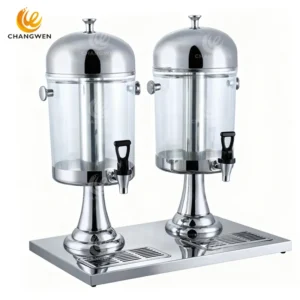
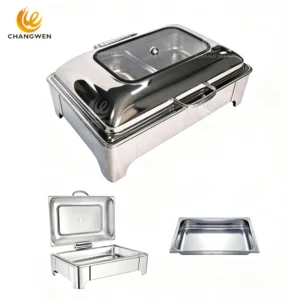
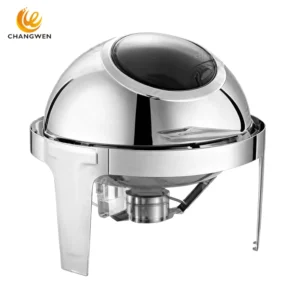
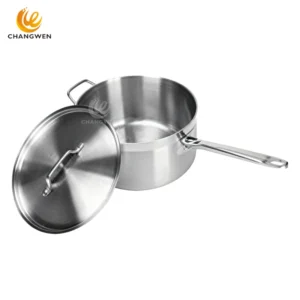
Cooking and Holding Equipment includes commercial stainless steel stock pots in capacities ranging from 20 to 200 quarts, designed with heavy-gauge construction and tri-ply bottoms for even heat distribution. Food warmers and heated holding cabinets maintain food at safe serving temperatures, critical for catering operations and buffet service. Buffet chafing dishes, available in full-size and fractional GN pan configurations, provide elegant food presentation while meeting health code requirements.
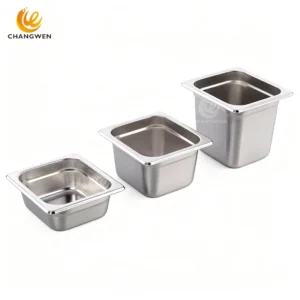
Storage Solutions encompass various shelving units, GN pans (Gastronorm pans in standard European sizes), and storage cabinets. GN pans are particularly important as they create a standardized system allowing seamless integration between preparation, cooking, holding, and service equipment. Manufacturers typically stock GN 1/1 through GN 1/9 sizes in depths ranging from 20mm to 200mm.
Sanitation Equipment includes stainless steel sinks (one, two, and three-compartment models), handwashing stations, and dish tables. These items must meet strict plumbing and health department specifications, making manufacturer expertise in local code compliance essential.
Manufacturing Capabilities & Factory Strength
The manufacturing capabilities of your chosen partner directly impact product quality, customization options, and long-term reliability. When evaluating a stainless steel commercial kitchen equipment manufacturer, several technical factors deserve close examination.
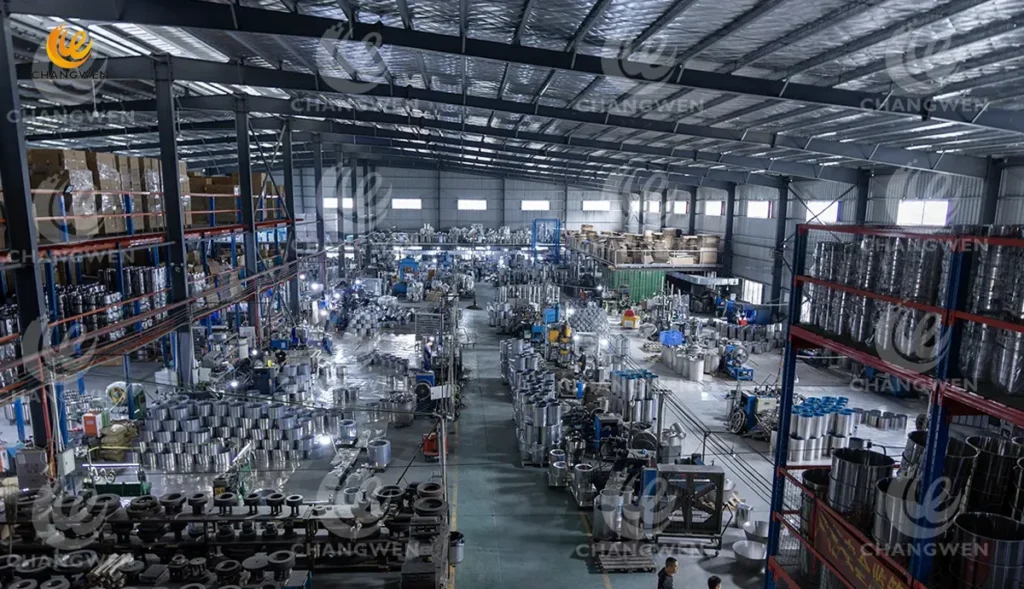
Material Sourcing and Quality Control begins with raw material selection. Reputable manufacturers source certified stainless steel from recognized mills, providing material certificates upon request. The difference between 304-grade and 201-grade stainless steel is significant—while 201 contains manganese instead of nickel and costs less, it offers inferior corrosion resistance and is unsuitable for many commercial applications. Request material composition verification to ensure you’re receiving true food-grade stainless steel.
Fabrication Technology has evolved significantly with modern laser cutting systems replacing traditional punching methods. Laser cutting provides cleaner edges, tighter tolerances (±0.5mm vs. ±2mm), and eliminates the metal stress that can lead to cracking. Advanced manufacturers employ CNC bending equipment for consistent angles and seamless welding techniques, particularly TIG (Tungsten Inert Gas) welding, which produces clean, strong joints without compromising the stainless steel’s corrosion resistance.
Thickness Standards vary by application but typically range from 0.8mm to 1.5mm for commercial equipment. Gauge measurements can be confusing—a lower gauge number indicates thicker material (14-gauge is thicker than 18-gauge). Work tables generally use 18-gauge (1.2mm) tops, while high-impact areas like pot sinks might require 14-gauge (2.0mm) construction. Experienced manufacturers will recommend appropriate thickness based on intended use rather than simply offering the cheapest option.
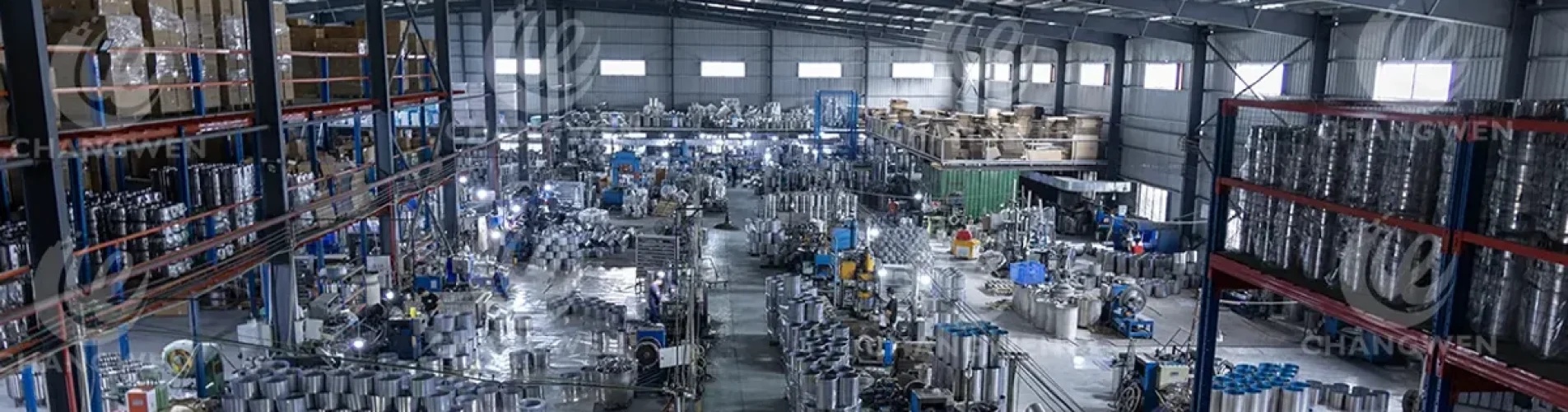
Production Capacity and Lead Times reflect a manufacturer’s operational maturity. Established factories maintain raw material inventory, allowing faster turnaround on standard items. For custom projects, typical lead times range from 15-30 days for equipment fabrication, plus shipping time. Factories with 20+ years of experience generally have streamlined production processes, reducing delays and quality inconsistencies.
Quality Inspection Protocols separate professional manufacturers from basic fabricators. Multi-stage inspection should include raw material verification, in-process dimensional checks, welding inspection, and final product testing. Some manufacturers provide inspection reports documenting measurements, load testing results, and surface finish quality. For exports, third-party inspection services like SGS or Bureau Veritas can verify quality before shipping.
OEM / ODM & Custom Solutions
For businesses seeking to differentiate their kitchen setup or maintain brand consistency across locations, OEM (Original Equipment Manufacturer) and ODM (Original Design Manufacturer) services provide valuable flexibility. Understanding the distinction helps you communicate requirements effectively: OEM means the manufacturer produces equipment to your exact specifications and designs, while ODM means they offer design services to develop custom solutions based on your functional requirements.
Branding and Logo Integration allows chain restaurants and hospitality groups to incorporate corporate identity into kitchen equipment. Manufacturers can laser-etch logos onto work surfaces, engrave branding on equipment panels, or customize door handles and trim. This branding serves practical purposes beyond marketing—it helps prevent equipment mix-ups in shared kitchen facilities and reinforces quality standards across franchise locations.
Dimensional Customization addresses the reality that commercial kitchens rarely feature perfectly standard layouts. Manufacturers can modify standard equipment dimensions to maximize space utilization in challenging floor plans. This includes creating work tables that fit precisely between existing plumbing, designing custom shelving for odd-height spaces, or fabricating corner units that utilize otherwise wasted areas. Provide detailed measurements and consider consulting with the manufacturer’s engineering team during the design phase.
Material Thickness Specification becomes crucial for operations with specific durability requirements. High-volume restaurant kitchens may require heavier-gauge construction than standard specifications, while mobile catering operations might prioritize lightweight designs for portable equipment. Manufacturers can adjust material thickness on custom orders, though this affects both cost and lead time.
Packaging and Shipping Solutions for bulk orders require specialized handling. Experienced manufacturers understand export packaging requirements, using reinforced crating for ocean freight, edge protection to prevent shipping damage, and moisture barriers for long transit times. For container shipments, they can optimize packing arrangements to maximize container capacity, reducing per-unit shipping costs.
Project-Based Supply Programs serve developers outfitting new restaurants, hotel renovations, or catering facility buildouts. Rather than piecemeal ordering, manufacturers can provide comprehensive equipment packages coordinated with construction timelines. This approach ensures all equipment arrives simultaneously, properly sequenced with installation schedules, and maintains consistent quality standards across all items.
Applications in Commercial Kitchens
Understanding the diverse applications helps clarify equipment requirements and ensures your chosen manufacturer has relevant experience in your specific industry segment.
Full-Service Restaurants demand versatile, durable equipment capable of supporting varied menus and high customer volumes. Work tables must withstand constant use for prep work, plating, and expediting. Storage solutions need to accommodate both dry goods and refrigerated items in limited space. Restaurants benefit from manufacturers who understand workflow optimization—positioning prep tables near cooking lines, ensuring adequate handwashing stations, and creating logical storage access.
Hotel and Resort Kitchens operate at a different scale, often preparing meals for hundreds or thousands of guests simultaneously. These operations require heavy-duty construction, oversized equipment dimensions, and specialized items like banquet cart storage racks and large-capacity food warmers. Hotel kitchens also frequently need aesthetically finished equipment for display cooking areas or exhibition kitchens where guests can observe preparation.
Catering Services prioritize portability and durability for off-site events. Equipment must withstand frequent transport, setup, and breakdown cycles. Catering-focused manufacturers offer features like reinforced corners, stackable designs, and integrated handles. Buffet chafing dishes, portable sinks, and collapsible work tables become essential, all requiring robust construction to survive the rigors of event catering.
Cloud Kitchens and Ghost Restaurants represent the fastest-growing segment, with operations focused exclusively on delivery orders. These facilities maximize efficiency through compact, purpose-built layouts. Manufacturers serving this market understand the need for space-efficient equipment, rapid cleaning capabilities, and modular designs that adapt as menus evolve. The compact nature of cloud kitchens often requires custom-sized equipment that standard suppliers cannot provide.
Food Courts and Quick-Service Restaurants operate in high-visibility environments where equipment appearance matters alongside functionality. Stainless steel finishes must resist fingerprints and maintain appearance despite constant cleaning. These operations also require equipment that supports fast-paced service—items like heated holding wells, rapid-access storage, and specialized prep tables designed for specific menu items.
How to Choose a Reliable Stainless Steel Commercial Kitchen Equipment Manufacturer
When selecting a manufacturing partner, buyers should evaluate more than just product images or pricing. Key factors include:
Manufacturing experience and export history
Material specifications, including thickness and stainless steel grade
Production capacity to support stable supply
Customization capability for OEM / ODM projects
Quality control standards and inspection processes
Visiting the factory, reviewing production details, or requesting detailed specifications can help buyers avoid common risks associated with low-quality suppliers.
Communication and Language Capabilities often predict partnership success. For international sourcing, manufacturers with English-speaking sales teams, detailed technical documentation, and clear communication protocols minimize misunderstandings. Request detailed quotations that specify materials, dimensions, finish options, and production timelines—vague quotations often lead to disputes. Changwen has an English- and Spanish-speaking sales team.
A Long-Term Manufacturing Partner Matters
As an experienced manufacturer, Changwen focuses on real material thickness and structural durability. Our stainless steel commercial kitchen equipment is produced using high-grade stainless steel with thickness ranging from 1.0 mm to 1.2 mm, ensuring resistance to deformation under heavy commercial use.
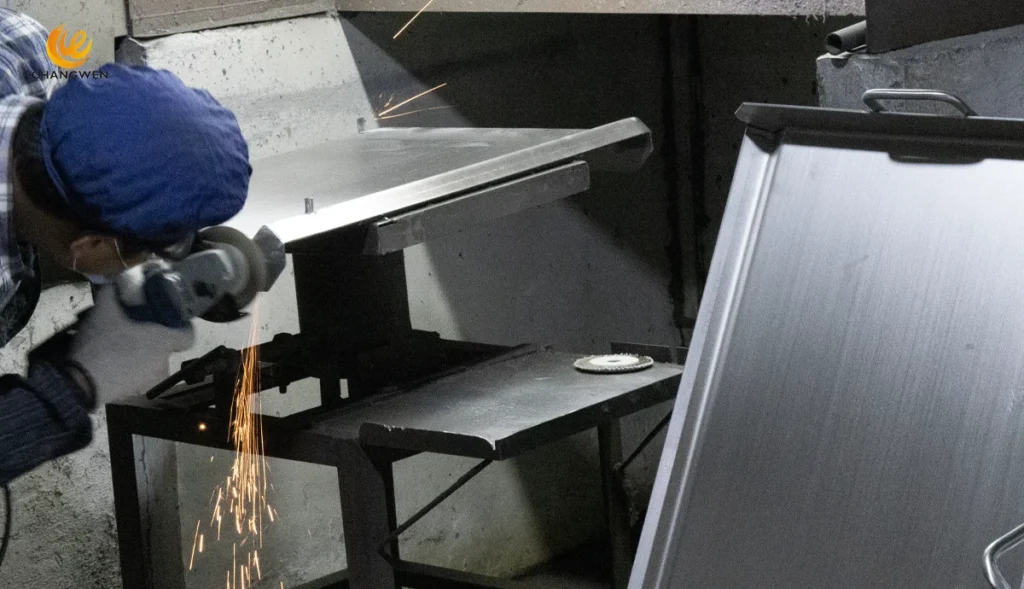
With over 20 years of manufacturing and export experience, we operate a complete production system covering raw material selection, forming, welding, polishing, and quality inspection. Each batch is inspected to ensure dimensional accuracy, surface finish, and long-term reliability in professional kitchen environments.
In commercial kitchens, equipment reliability affects daily operations and long-term profitability. Choosing the right stainless steel commercial kitchen equipment manufacturer ensures consistent quality, stable supply, and professional support as your business grows.
Whether you are sourcing equipment for a single restaurant or managing multi-location projects, working directly with a manufacturer provides the technical expertise and flexibility required in today’s competitive food service industry.
Ready to Learn More?
Choosing Changwen means working directly with a factory that understands commercial kitchen demands. We support OEM / ODM customization, stable bulk supply, and long-term cooperation for wholesalers, distributors, restaurant groups, and project contractors.
If you are looking for a reliable stainless steel commercial kitchen equipment manufacturer, contact us to receive our catalogue or discuss your project requirements. Our team is ready to support your business with professional manufacturing solutions and long-term cooperation.