Whether you’re running a food truck, preparing meals at a camping site, or catering an outdoor event, a single burner propane stove delivers the power and portability you need. Unlike electric stoves that tie you to power outlets, propane burners offer true cooking freedom—fast heat, reliable performance, and the flexibility to cook anywhere.
For wholesale buyers, distributors, and business owners, choosing the right propane stove supplier means finding a balance between durability, power output, and cost-efficiency. In this guide, we’ll explore everything you need to know about single burner propane stoves, from key features to commercial applications, helping you make an informed purchasing decision.
What Is a Single Burner Propane Stove?
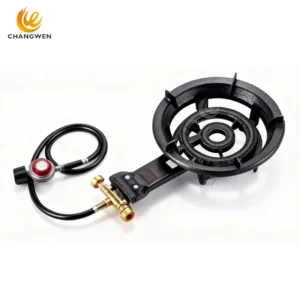
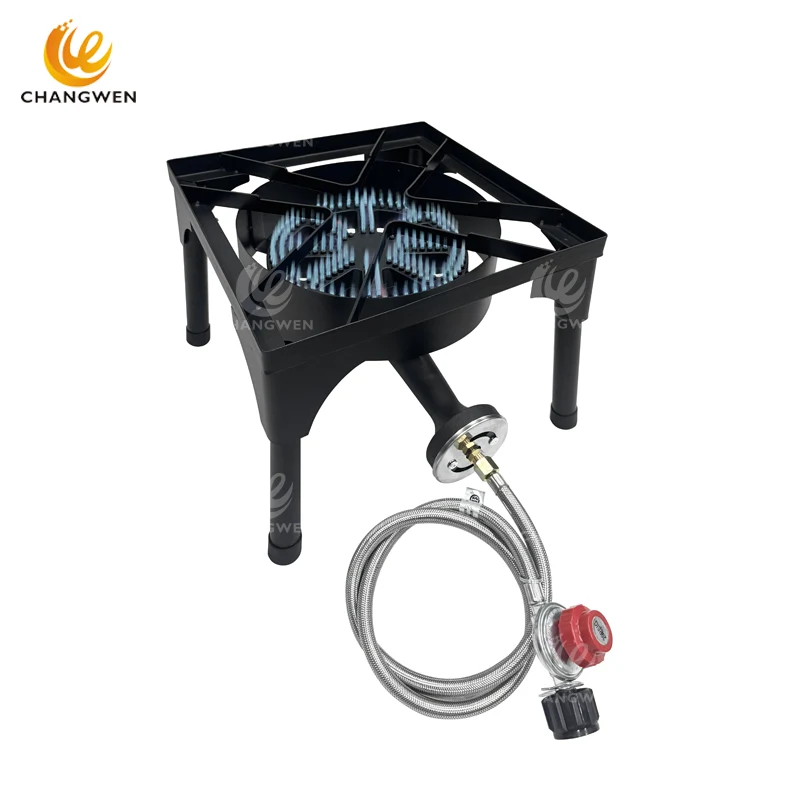
A single burner propane stove is a portable gas-powered cooking device designed for high-heat cooking in outdoor, commercial, and emergency settings. It consists of a single burner head connected to a propane gas cylinder through a pressure regulator and valve system.
How It Works
The stove operates by releasing propane gas from a cylinder through a control valve. The gas mixes with air and ignites at the burner, producing a concentrated flame that heats cookware placed on the grate. Most models feature adjustable flame control, allowing users to regulate heat from low simmer to high boil.
Key Components
- Burner Head: Where combustion occurs, typically made from cast iron or brass
- Control Valve: Regulates gas flow and flame intensity
- Pressure Regulator: Ensures consistent gas pressure for stable flames
- Support Grate: Holds cookware, usually constructed from cast iron or steel
- Housing/Frame: Provides structural support, made from steel or stainless steel
Difference from Multi-Burner Stoves
Unlike multi-burner camp stoves, single burner models offer:
- Greater portability: Lighter weight and more compact
- Higher BTU per burner: Concentrated power for faster cooking
- Lower cost: More affordable for specific use cases
- Easier maintenance: Fewer parts to clean and service
Single burner propane stoves are the professional’s choice when maximum heat output and reliability matter more than cooking multiple dishes simultaneously.
Main Features of a Single Burner Propane Stove
High Heat Output for Fast Cooking
Commercial-grade single burner propane stoves typically deliver between 100,000 to 200,000 BTU (British Thermal Units), significantly higher than residential stovetops (8,000-15,000 BTU). This intense heat allows for:
- Rapid water boiling (5 gallons in under 10 minutes)
- High-temperature stir-frying and searing
- Fast recovery time between cooking batches
- Efficient large-pot cooking for catering operations
The high BTU output makes these stoves ideal for commercial applications where cooking speed directly impacts productivity and profit.
Durable Steel Body with Stable Support
Professional single burner stoves feature heavy-duty construction designed to withstand daily commercial use:
Material Construction:
- Steel frame: Powder-coated or painted finish for corrosion resistance
- Stainless steel option: Premium models offer rust-proof construction
- Cast iron grate: Excellent heat retention and durability
- Reinforced legs: Wide-stance design prevents tipping
Stability Features:
- Low center of gravity for large pot support
- Adjustable feet for leveling on uneven surfaces
- Wind guards to protect flame in outdoor conditions
- Heat-resistant rubber feet to protect surfaces
Commercial-grade stoves are built to handle heavy pots (up to 50+ lbs when full) without wobbling or instability.
Easy Connection to Propane Gas Cylinder
Most single burner propane stoves connect to standard propane cylinders through a simple coupling system:
Compatible Cylinder Sizes:
- 20 lb (standard BBQ tank) – most common for commercial use
- 30 lb to 100 lb tanks – for high-volume operations
- Quick-connect fittings available for rapid tank changes
Connection Features:
- Standard POL or QCC fittings
- Built-in pressure regulator (typically 10-30 PSI output)
- Brass connectors for leak-resistant seal
- Safety shut-off valve
The connection process takes less than a minute, requiring no tools in most cases. High-quality regulators ensure consistent performance even as tank pressure decreases.
Portable and Easy to Store
Despite their powerful output, single burner propane stoves maintain excellent portability:
Typical Dimensions:
- Weight: 15-30 lbs (without gas cylinder)
- Footprint: 16″ x 16″ to 24″ x 24″
- Height: 10″-18″
Portability Features:
- Carrying handles on frame
- Detachable legs for compact storage
- Stackable design for transport
- Protective cases available for some models
This portability allows food service operators to:
- Transport stoves between event locations
- Store multiple units efficiently
- Deploy additional cooking capacity as needed
- Quickly set up temporary kitchens
Suitable for Outdoor and Commercial Use
Single burner propane stoves are engineered for demanding environments:
Weather Resistance:
- Wind-resistant burner design maintains flame in breezy conditions
- Outdoor-rated materials resist moisture and temperature extremes
- Enclosed burner options for maximum wind protection
Commercial Durability:
- Continuous operation capability (8+ hours daily)
- Heavy-duty valves rated for thousands of cycles
- Heat-resistant components withstand prolonged high-temperature use
- Easy-to-clean surfaces for health code compliance
Safety Certifications:
- CSA (Canadian Standards Association) approved
- UL (Underwriters Laboratories) listed
- CE certification for European markets
- ETL certification available on premium models
These certifications ensure the stove meets safety standards for commercial food service operations.
Applications
Single burner propane stoves serve diverse commercial and outdoor cooking needs:
Outdoor Camping and Picnic Cooking
For commercial outdoor recreation providers:
- Scout camps: Cooking for large groups in remote locations
- Guided expeditions: Portable cooking for multi-day trips
- Rental equipment: Durable stoves for vacation cabin rentals
- Event organizers: Cooking stations for outdoor gatherings
The combination of portability and power makes these stoves ideal when electricity is unavailable but serious cooking capacity is required.
Food Trucks and Street Food Stalls
Single burner propane stoves are essential equipment for mobile food vendors:
Common Applications:
- Seafood boils and lobster cooking
- Stir-fry and wok cooking stations
- Deep-frying operations
- Soup and stew preparation
- Tamale steamers and large-pot cooking
Advantages for Food Trucks:
- Lower equipment cost than built-in commercial ranges
- Flexibility to add/remove burners based on menu
- Easy replacement if equipment fails
- Portable for outdoor festival setups
Many successful food truck operators use 2-4 single burner stoves instead of traditional commercial ranges, providing cooking flexibility at lower cost.
Catering Preparation
Professional caterers rely on single burner propane stoves for:
On-Site Cooking:
- Wedding receptions and outdoor events
- Corporate functions and festivals
- Temporary kitchen setups
- Cooking demonstrations
Prep Kitchen Use:
- Large-batch sauce preparation
- Stock and soup making
- Blanching and par-cooking vegetables
- Seafood boils for events
The ability to deploy multiple burners allows caterers to scale cooking capacity precisely to event size.
Emergency Cooking
Beyond commercial use, these stoves provide critical backup cooking capability:
- Disaster preparedness: Restaurants maintaining emergency cooking capacity
- Power outages: Backup for electric commercial kitchens
- Remote locations: Camps, research stations, construction sites
- Institutional kitchens: Schools and facilities with backup cooking plans
A single burner propane stove with adequate fuel supply can maintain food service during extended power failures.
Backyard Cooking and Home Brewing
Enthusiasts and small-scale producers use single burner stoves for:
- Home brewing: Boiling large volumes of wort
- Canning and preserving: Processing large batches
- Outdoor parties: Seafood boils, clam bakes, crawfish boils
- BBQ competition prep: Pre-cooking and sauce preparation
The high BTU output accomplishes tasks impossible on residential stoves.
Why Choose a Propane Single Burner Stove?
When comparing cooking fuel options, propane offers distinct advantages for commercial and outdoor applications:
Faster Heating
Heat Output Comparison:
- Propane single burner: 100,000-200,000 BTU
- Electric portable burner: 1,500-1,800 watts (≈5,000-6,000 BTU)
- Standard residential electric stovetop: 1,200-3,000 watts (≈4,000-10,000 BTU)
Real-World Performance:
- Boil 5 gallons of water: Propane 8-12 minutes, Electric 40-60 minutes
- Heat large pot for stir-frying: Propane reaches temperature in 2 minutes, Electric 10-15 minutes
- Recovery time between batches: Propane immediate, Electric 5-10 minutes
For commercial operations where time equals money, propane’s superior heat output dramatically increases throughput and reduces customer wait times.
No Electricity Required
Complete independence from electrical infrastructure provides:
Operational Freedom:
- Cook in locations without power access
- Eliminate electrical infrastructure costs for temporary setups
- Avoid circuit overload issues in older buildings
- Continue operations during power outages
Cost Savings:
- No electrical panel upgrades required
- No dedicated circuits needed
- Eliminates electrician installation costs
- Reduces facility electrical demand charges
Food trucks and outdoor vendors particularly benefit from freedom from generator dependence or electrical hookup requirements.
Lower Operating Cost
Fuel Cost Comparison (based on 100,000 BTU/hour operation):
- Propane: $1.50-2.50 per hour (at $2.50-3.00 per gallon)
- Electricity: $3.00-5.00 per hour (at $0.12-0.15 per kWh)
- Natural gas: $0.80-1.20 per hour (where available)
Additional Economic Benefits:
- Lower equipment purchase cost than electric commercial ranges
- Minimal maintenance requirements
- Long service life (10+ years with proper care)
- Easy and inexpensive replacement parts
For high-volume operations running 6-8 hours daily, the fuel cost savings of propane versus electricity can exceed $3,000-5,000 annually per burner.
More Flexible Use Environment
Propane stoves adapt to virtually any cooking environment:
Indoor Use (with proper ventilation):
- Commercial kitchens
- Warehouse and industrial spaces
- Garage and workshop areas
- Well-ventilated prep kitchens
Outdoor Use:
- Parks and recreation areas
- Parking lots and street locations
- Beach and waterfront venues
- Remote wilderness areas
Temperature Performance:
- Operates reliably in cold weather (with proper propane blend)
- Functions in hot conditions without thermal shutdown
- Unaffected by humidity
This versatility allows a single piece of equipment to serve multiple locations and use cases, maximizing return on investment.
How to Choose the Right Single Burner Propane Stove
Selecting the optimal propane stove for your business requires evaluating several key factors:
Burner Power (BTU)
BTU Range Guide:
60,000-100,000 BTU – Light Commercial/Heavy Residential
- Small food operations
- Moderate-volume cooking
- Occasional commercial use
- Best for: Small cafes, farmers market vendors
100,000-150,000 BTU – Standard Commercial
- Most food trucks and street vendors
- Catering operations
- Medium-volume restaurants
- Best for: Taco trucks, sandwich shops, catering prep
150,000-200,000+ BTU – High-Output Commercial
- High-volume seafood boils
- Rapid stir-frying operations
- Large-pot applications
- Best for: Seafood restaurants, Asian cuisine, crawfish boils
Selection Tip: Choose 20-30% more BTU capacity than your minimum requirement to ensure adequate performance as equipment ages and to accommodate unexpected high-demand situations.
Material Thickness
Frame and Body Construction:
Standard Grade:
- 18-20 gauge steel frame
- Adequate for light-to-moderate use
- Lower cost entry option
- 3-5 year expected lifespan with proper care
Commercial Grade:
- 14-16 gauge steel frame
- Heavy-duty construction for daily use
- Resists warping and damage
- 7-10 year expected lifespan
Premium Grade:
- 12 gauge steel or stainless steel construction
- Maximum durability for harsh environments
- Corrosion-resistant finish
- 10+ year lifespan
Burner and Grate:
- Cast iron grates: Best heat retention and durability
- Heavy-gauge steel grates: Good performance, lighter weight
- Brass or cast iron burner heads: Superior longevity
Consideration: Material quality directly correlates with total cost of ownership. Higher initial investment in heavier-gauge construction pays dividends through extended service life and reduced replacement frequency.
Stability of the Stand
A stable base is critical for safe commercial operation:
Base Design Features:
Leg Configuration:
- Wide stance (18″-24″ base width for 16″ burner)
- Low center of gravity design
- Cross-bracing for additional rigidity
Leg Construction:
- Welded legs (strongest)
- Bolted legs with lock nuts (serviceable)
- Adjustable feet for leveling
Weight Capacity:
- Minimum 50 lb cooking load capacity
- 75-100 lb capacity for large-pot applications
Stability Testing: Test stove stability by:
- Placing maximum expected pot weight on grate
- Gently pressing down on pot edge
- Verifying no wobble or tipping tendency
- Checking that all legs maintain ground contact
Safety Tip: Never use a stove that shows any instability with loaded cookware, as tip-overs can cause serious burns and fire hazards.
Safety Valve System
Commercial propane stoves should incorporate multiple safety features:
Essential Safety Components:
Pressure Regulator:
- Maintains consistent gas pressure (10-30 PSI)
- Prevents flame flare-ups from pressure spikes
- CSA or UL approved regulators required
Control Valve:
- Heavy-duty brass construction
- Smooth, precise flame control
- Full shut-off capability
- Rated for 50,000+ cycles
Safety Shut-Off:
- Excess flow valve stops gas if hose ruptures
- Thermal shut-off on premium models
- Flame failure device (on enclosed burner models)
Additional Safety Features:
- Wind guard to prevent flame blow-out
- Heat-resistant valve knobs
- Clear gas flow indicators
- Safety chain for cylinder securing
Regulatory Compliance: Ensure the stove meets local fire codes and health department requirements:
- NSF certification for food service use
- UL/CSA approval for commercial installation
- AGA certification for gas appliances
Compatibility with Propane Cylinders
Connection Types:
Standard POL Fitting:
- Traditional threaded connection
- Left-hand threads (reverse threading)
- Requires wrench for installation
- Common on older equipment
QCC (Quick-Connect Coupling):
- Hand-tightened, tool-free connection
- Modern standard for propane appliances
- Built-in safety check valve
- Required on cylinders manufactured after 2002
Quick-Disconnect Fittings:
- Rapid cylinder changes without tools
- Common on food truck installations
- Allows easy switching between backup cylinders
Hose Length and Material:
- Standard: 24″-36″ high-pressure hose
- Material: CSA-approved rubber or stainless steel braided
- Longer hoses available (up to 20 feet) for cylinder placement flexibility
Cylinder Size Compatibility: Most single burner stoves work with standard propane cylinders:
- 20 lb (4.7 gallon) – runs approximately 10-20 hours at full output
- 30 lb (7 gallon) – runs approximately 15-30 hours
- 40 lb to 100 lb – for permanent installations or high-volume use
Multiple Cylinder Setups: Some commercial operations use dual-cylinder systems with automatic switchover valves, ensuring uninterrupted operation when one tank empties.
Conclusion
A single burner propane stove is a practical, economical, and versatile cooking solution for outdoor and commercial use. Its portability, strong heating performance, and flexible application make it an essential product for many buyers worldwide.
For businesses looking for stable supply, OEM customization, and long-term cooperation, choosing a professional manufacturer is the best decision.
Manufacturer Supply Advantage
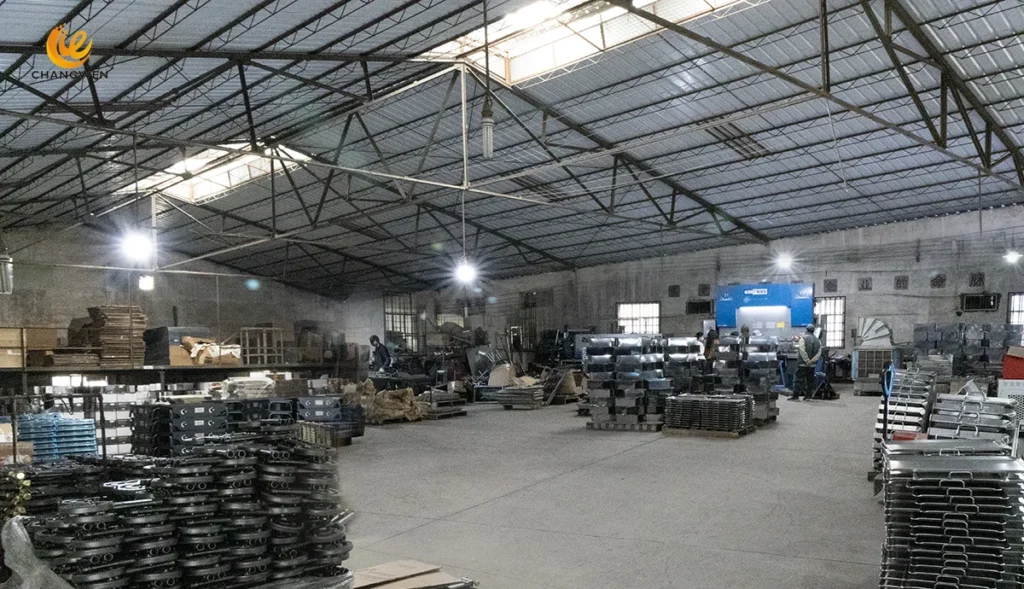
As a professional stainless steel and commercial kitchen equipment manufacturer, Changwen provides reliable single burner propane stoves for wholesalers, distributors, and OEM partners worldwide.
We offer:
Factory direct pricing
Stable quality control
OEM / private label service
Strong production capacity
Export experience
single burner propane stove manufacturer
Ready to Source Your Single Burner Propane Stoves?
If you are looking for a reliable single burner propane stove manufacturer, Changwen is ready to support your business with professional products and stable supply. Contact us today to get the latest catalog and quotation.