Introduction
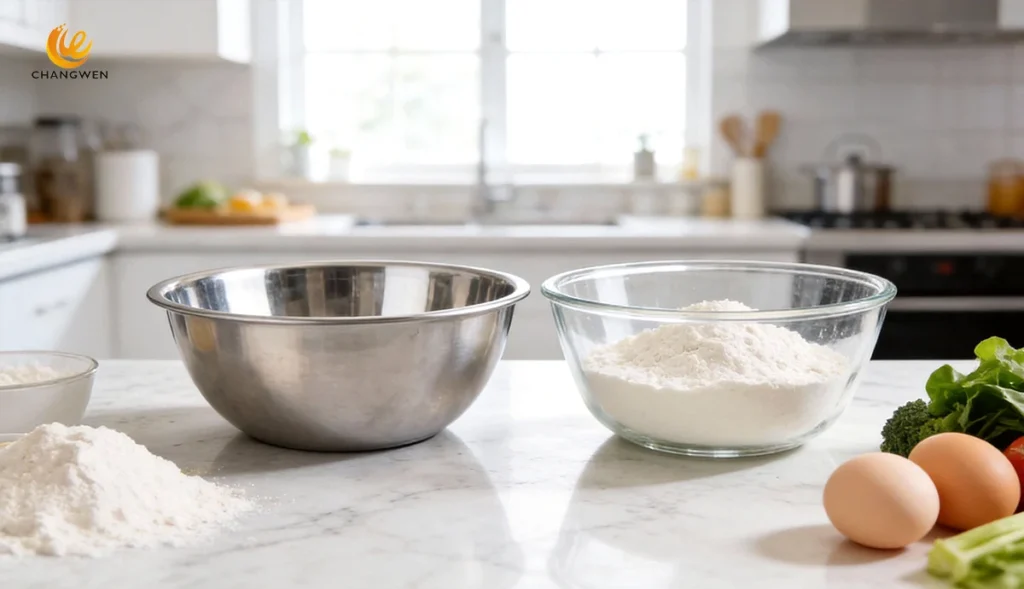
The humble mixing bowl stands as one of the most essential tools in any kitchen, yet choosing between stainless steel and glass options can feel surprisingly complex. Whether you’re whipping cream, tossing salad, marinating meat, or mixing cookie dough, the material of your mixing bowl significantly impacts your cooking experience, food safety, and long-term value.
Professional chefs overwhelmingly prefer stainless steel mixing bowls for their durability and versatility, while home bakers often gravitate toward glass for its microwave compatibility and aesthetic appeal. But which material truly deserves a place in your kitchen? This comprehensive guide examines every aspect of stainless steel versus glass mixing bowls, helping you make an informed decision based on your specific cooking needs, budget, and kitchen workflow.
We’ll explore the advantages and limitations of each material, compare specific features like lids, handles, and spouts, review the best stainless steel mixing bowls on the market, and answer the most common questions cooks have about these indispensable kitchen tools.
Key Takeaways
- Stainless steel mixing bowls excel in durability, temperature versatility, and professional applications– they’re lightweight, non-reactive, and nearly indestructible
- Glass mixing bowls offer microwave safety and visual transparency– ideal for monitoring fermentation, melting ingredients, and aesthetic presentation
- A stainless steel mixing bowl set provides the best valuefor most kitchens, covering all size needs with long-lasting construction
- Temperature tolerance matters– stainless steel handles both freezing and stovetop use (double boiler), while glass works in microwaves but can shatter with thermal shock
- Weight considerations impact daily use– stainless steel’s lightweight design reduces fatigue during extended mixing, while glass bowls feel more stable but can be cumbersome
- Specialized features like lids, handles, and spoutsdramatically improve functionality – prioritize these when selecting your mixing bowl collection
- Hybrid approach works best– most experienced cooks maintain both materials, using stainless steel for general prep and glass for specific microwave applications
- Investment quality varies– premium stainless steel mixing bowls last decades, while glass bowls risk breakage despite careful handling
Understanding Mixing Bowl Materials
Stainless Steel Mixing Bowl Construction
A quality stainless steel mixing bowl features food-grade stainless steel (typically 18/8 or 18/10 composition) formed through deep drawing or spinning processes that create seamless, one-piece construction. The numbers indicate chromium and nickel content – 18/10 stainless steel contains 18% chromium and 10% nickel, providing excellent corrosion resistance and a non-reactive surface that won’t affect food flavors.
Gauge Thickness
Stainless steel thickness impacts durability and performance:
- Thin gauge (22-24 gauge): Lightweight and economical but prone to denting
- Medium gauge (20-22 gauge): Standard for quality mixing bowls, balancing durability and weight
- Heavy gauge (18-20 gauge): Professional-grade thickness resisting dents and warping
Premium bowls like the best stainless steel mixing bowls from commercial manufacturers use heavier gauges that maintain shape even with vigorous mixing or when knocked against countertops.
Mirror vs. Satin Finish
- Mirror polish: Highly reflective finish that’s easy to clean but shows fingerprints and minor scratches
- Satin/brushed finish: Matte appearance hiding wear while maintaining professional appearance over years of use
Glass Mixing Bowl Construction
Glass mixing bowls utilize tempered soda-lime glass or borosilicate glass formed through molding processes. The tempering process strengthens glass through controlled heating and rapid cooling, making it more resistant to thermal and mechanical stress than regular glass.
Tempered Soda-Lime Glass
The most common material for glass mixing bowls with lids, tempered soda-lime glass offers:
- Good thermal shock resistance (though not immune)
- Affordable manufacturing costs
- Adequate durability for normal kitchen use
- Microwave and dishwasher safety
Borosilicate Glass
Premium option featuring superior thermal properties:
- Exceptional thermal shock resistance
- Withstands extreme temperature changes
- Thinner walls while maintaining strength
- Higher cost but longer lifespan
Material Comparison: Core Differences
| Feature | Stainless Steel | Glass |
| Weight | Lightweight, reduces fatigue | Heavy, feels stable but cumbersome |
| Durability | Nearly indestructible, resists dents | Breakable, chips on edges |
| Temperature Range | Freezer to stovetop (double boiler) | Freezer to microwave/oven |
| Reactivity | Non-reactive with all foods | Non-reactive with all foods |
| Visibility | Opaque – can’t see contents | Transparent – monitor mixing |
| Maintenance | Easy cleaning, no staining | Can stain from turmeric, beets |
| Noise Level | Louder when utensils contact | Quieter operation |
| Longevity | Decades with proper care | Risk of breakage over time |
Advantages of Stainless Steel Mixing Bowls
Unmatched Durability and Longevity
The primary advantage of stainless steel mixing bowl sets lies in their exceptional durability. Unlike glass bowls that shatter when dropped or chip along edges, stainless steel withstands impacts, falls, and daily kitchen abuse without compromise. Professional kitchens exclusively use stainless steel precisely because bowls must survive the rigors of high-volume service, dishwashing cycles, and occasional mishaps.
A quality stainless steel mixing bowl purchased today will likely outlast your kitchen renovation, serving you reliably for 20-30 years or more. The material doesn’t degrade, stain permanently, or lose functionality over time – minor dents might occur but rarely affect performance.
Lightweight and Ergonomic
Weight becomes critically important during extended mixing sessions. A large stainless steel mixing bowl 8 qt capacity weighs significantly less than an equivalent glass bowl, reducing arm fatigue when whisking egg whites, kneading dough, or mixing heavy batters.
This lightweight characteristic also makes stainless steel bowls easier to:
- Maneuver when transferring ingredients
- Pour batters or liquids with one hand
- Store in upper cabinets without risk
- Handle when full of ingredients
Extreme Temperature Versatility
Stainless steel tolerates temperature extremes that would shatter glass:
Freezer Use: Chill bowls for whipping cream, freeze pre-mixed ingredients, or use for ice cream bases without risk of cracking.
Stovetop Applications: Create double boilers by placing a stainless steel mixing bowl over simmering water, perfect for:
- Melting chocolate gently
- Making hollandaise and other emulsified sauces
- Tempering eggs
- Preparing custards
Rapid Temperature Changes: Transfer directly from freezer to room temperature or from ice bath to warm water without thermal shock concerns.
Non-Reactive Surface
The chromium oxide layer naturally forming on stainless steel creates a completely non-reactive surface. This means you can:
- Marinate acidic foods (citrus, vinegar, wine) without metallic flavors
- Mix any ingredients without chemical reactions
- Store prepared ingredients safely
- Avoid discoloration from turmeric, beets, or other pigmented foods
Easy Maintenance and Cleaning
Stainless steel’s smooth, non-porous surface cleans effortlessly:
- Food doesn’t adhere stubbornly
- Dishwasher safe with no special care requirements
- No risk of staining or odor absorption
- Simple soap and water restore original appearance
- Occasional polishing maintains mirror finish
Space-Efficient Nesting
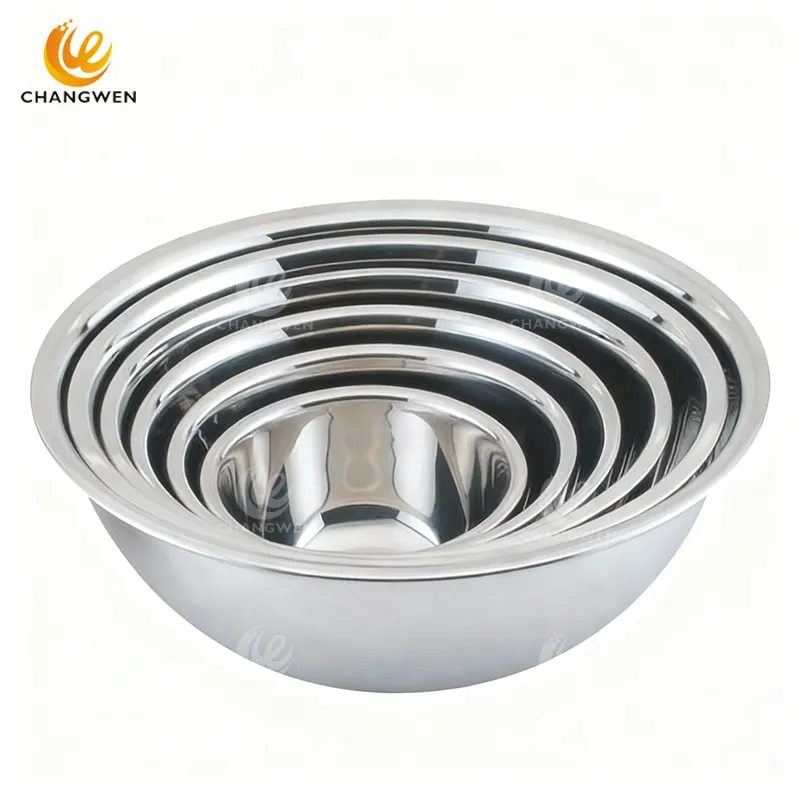
Most stainless steel mixing bowl sets feature graduated sizes designed to nest perfectly inside each other. A comprehensive 5-6 piece set occupies minimal cabinet space while providing every size you’ll need, from small 1-quart bowls for whisking eggs to large 8-quart bowls for bread dough.
Specialized Stainless Steel Mixing Bowl Features
Stainless Steel Mixing Bowl with Lid
A stainless steel mixing bowl with lid transforms basic bowls into versatile storage containers. Fitted lids provide:
Food Storage Benefits
- Marinate proteins directly in mixing bowls
- Store prepped ingredients in the refrigerator
- Transport dishes to potlucks without separate containers
- Keep mixed batters fresh until baking time
Mess Prevention
- Cover stand mixer bowls when not in use
- Protect contents from airborne contaminants
- Prevent splattering when shaking/mixing with lid secured
Airtight vs. Splash Covers
Not all lids are equal. Stainless steel mixing bowl set with lids typically includes:
- Plastic snap-on lids: Airtight seal for storage, BPA-free construction
- Silicone stretch lids: Flexible covers fitting multiple bowl sizes
- Stainless steel lids: Matching metal construction, though less common
Premium sets like stainless steel mixing bowls with lids from quality manufacturers include fitted lids for each bowl size, maximizing versatility.
Stainless Steel Mixing Bowl with Spout
A stainless steel mixing bowl with spout features an integrated pour spout that facilitates:
Precision Pouring
- Transfer batters into baking pans without drips
- Pour pancake batter onto griddles with control
- Drizzle dressings or sauces accurately
- Minimize cleanup from spills
Professional Applications
- Candy making requiring controlled pouring
- Sauce preparation needing precise plating
- Baking operations where accuracy matters
The spout design typically includes a tapered lip on one side, though some premium models offer bilateral spouts for ambidextrous use.
Stainless Steel Mixing Bowl with Handle
A stainless steel mixing bowl with handle provides secure grip during:
- Vigorous whisking or stirring
- Pouring heavy batters or doughs
- Transferring hot contents (when used as double boiler)
- Single-handed operation while adding ingredients
Handle Design Variations
Welded handles: Permanently attached metal handles offering maximum durability and oven/stovetop safety.
Riveted handles: Mechanical attachment providing secure grip with easy cleaning around connection points.
Silicone-wrapped handles: Heat-resistant coating on metal handles for comfortable grip when handling warm bowls.
Stainless Steel Mixing Bowl with Handle and Spout
The ultimate convenience feature, a stainless steel mixing bowl with handle and spout combines both elements for professional-grade functionality. This configuration excels for:
- Bakers frequently transferring batters
- Cooks preparing sauces and gravies
- Anyone valuing precision and control
- Professional and high-volume home cooking
While slightly more expensive, the convenience justifies the cost for serious cooks.
Advantages of Glass Mixing Bowls
Microwave Compatibility
The singular advantage glass holds over stainless steel: microwave safety. Glass mixing bowls with lids enable:
Direct Microwave Heating
- Melt butter or chocolate directly in the bowl
- Warm ingredients to specific temperatures
- Reheat prepared mixtures
- Proof yeast dough in warm environments
Microwave-to-Mix Workflow
- Warm milk for bread recipes
- Soften cream cheese for frosting
- Melt ingredients then mix without transferring
For cooks heavily reliant on microwave techniques, this single feature can justify keeping glass bowls despite stainless steel’s advantages.
Visual Transparency
Seeing contents clearly offers practical benefits:
Monitoring Mixtures
- Observe fermentation bubbles in sourdough starters
- Watch layering in parfaits or trifles
- Monitor separation in dressings requiring re-emulsification
- Track color changes during mixing
Presentation Appeal
- Serve salads directly in attractive glass bowls
- Display layered desserts
- Present dips and sauces at table
- Showcase colorful ingredient combinations
Non-Reactive and Non-Staining (Mostly)
Like stainless steel, glass provides completely non-reactive surfaces safe for acidic foods. However, unlike stainless steel’s immunity to staining, glass can develop permanent discoloration from:
- Turmeric and curry spices
- Beet juice and red cabbage
- Tomato-based sauces (with prolonged exposure)
- Certain food dyes
These stains don’t affect food safety but can make bowls look dingy over time.
Stable Base During Mixing
Glass bowls’ substantial weight provides stability advantages:
- Won’t shift during vigorous mixing
- Stays planted when using electric mixers
- Resists movement when stirring thick doughs
- Provides secure base for one-handed operation
This stability particularly benefits bakers working with stand mixers or hand mixers where bowl movement creates frustration.
Limitations and Considerations
Stainless Steel Disadvantages
No Microwave Use The dealbreaker for microwave-dependent cooks – stainless steel cannot be used in microwaves. Metal reflects microwaves, potentially damaging the appliance and creating fire hazards.
Opaque Surface You can’t see contents without looking inside, requiring:
- Removing covers to check progress
- Estimating volumes visually from outside
- Using transparent containers for fermentation monitoring
Temperature Conduction While stainless steel’s temperature versatility is advantageous, the material conducts heat and cold quickly:
- Bowls become very cold when chilled (uncomfortable to hold)
- Heat transfers from warm contents to exterior
- Requires pot holders when used as double boiler
Noise Factor Metal utensils against stainless steel create louder sounds than glass – a minor consideration but noticeable in open kitchens or noise-sensitive environments.
Glass Mixing Bowl Limitations
Fragility and Breakage Risk
The fundamental limitation: glass breaks. Despite tempering, glass mixing bowls:
- Shatter when dropped on hard floors
- Chip along edges from impacts
- Crack from thermal shock (extreme temperature changes)
- Break when knocked against countertops or sinks
Even careful users experience breakage over time, making glass bowls consumable rather than lifetime purchases.
Weight and Ergonomics
Large glass mixing bowls become cumbersome:
- Difficult to handle when full
- Cause arm fatigue during extended mixing
- Challenging for those with limited strength
- Require two-handed maneuvering
Thermal Shock Sensitivity
While tempered glass handles reasonable temperature changes, extreme shifts cause cracking:
- Freezer to boiling water
- Oven to cold countertop
- Microwave to ice bath
Borosilicate glass offers superior thermal shock resistance but costs significantly more.
Storage Space
Glass bowls don’t nest as efficiently as stainless steel due to thicker walls and less precise manufacturing tolerances. A glass mixing bowl set occupies more cabinet space than equivalent stainless steel.
Choosing the Right Mixing Bowl Set
Size Considerations
Both materials come in standard size ranges, but capacity needs should drive your selection:
Small Bowls (1-2 quarts)
- Whisking individual eggs
- Mixing small-batch dressings
- Holding prepped ingredients (mise en place)
- Melting butter or chocolate
Medium Bowls (3-4 quarts)
- Mixing cake or cookie batters
- Tossing side salads
- Marinating single proteins
- General mixing tasks
Large Bowls (5-6 quarts)
- Mixing bread dough
- Tossing large salads for gatherings
- Marinating multiple proteins
- Mixing large-batch recipes
Extra-Large Bowls (8+ quarts)
- Batch cooking and meal prep
- Large family gatherings
- Rising bread dough
- Mixing ingredients for multiple recipes
A stainless steel mixing bowl 8 qt capacity handles the largest tasks while remaining manageable due to lightweight construction. The equivalent glass bowl at this size becomes unwieldy.
Stainless Steel Mixing Bowl Set Recommendations
Budget-Friendly Options ($20-$40)
Entry-level stainless steel mixing bowl sets include 3-5 pieces covering basic needs. These typically feature:
- Thinner gauge stainless steel (22-24 gauge)
- Basic nesting design without lids
- Standard rim without pour spouts
- Adequate for occasional home use
Mid-Range Quality ($40-$80)
The sweet spot for most home cooks, offering:
- Medium gauge construction (20-22 gauge)
- 5-6 piece comprehensive sets
- Often includes lids or can purchase separately
- Some models feature measurement markings
- Improved finish quality and durability
Premium Professional ($80-$150+)
Best stainless steel mixing bowls for serious cooks:
- Heavy gauge construction (18-20 gauge)
- Precision manufacturing with perfect nesting
- May include specialized features (handles, spouts)
- Commercial-quality construction
- Lifetime warranties
Practical Applications: Which Material When?
When Stainless Steel Excels
Everyday Mixing and Prep
- General recipe mixing
- Whisking eggs and dry ingredients
- Tossing salads
- Coating proteins with flour or breadcrumbs
Temperature-Critical Applications
- Double boiler methods
- Chilling bowls for whipped cream
- Freezing prepared mixtures
- Rapid cooling of cooked ingredients
High-Volume Cooking
- Batch preparation
- Large gatherings requiring multiple bowls
- Commercial or professional cooking
- Situations where durability matters
Active Kitchens
- Households with children
- Busy commercial kitchens
- Environments where breakage risk is high
- Cooks who prefer lightweight tools
When Glass Provides Advantages
Microwave-Dependent Recipes
- Melting chocolate or butter in microwave
- Warming ingredients quickly
- Proofing yeast dough in microwave
- Recipes relying on microwave techniques
Visual Monitoring Required
- Sourdough starter maintenance
- Fermentation observation
- Layered presentations
- Teaching cooking to children (seeing process)
Serving and Presentation
- Table-ready salad bowls
- Displaying layered desserts
- Serving dips and appetizers
- Aesthetic-focused occasions
Specialty Baking
- Recipes specifying microwave melting
- Precise visual mixing requirements
- Situations where appearance matters
The Hybrid Approach: Best of Both Worlds
Most experienced cooks maintain both materials, using each for its strengths:
Core Stainless Steel Collection
- Comprehensive stainless steel mixing bowl set (5-6 pieces) for everyday use
- Include stainless steel mixing bowls with lids for storage versatility
- Consider one large stainless steel mixing bowl with handle and spout for specialized tasks
Supplementary Glass Bowls
- 2-3 glass mixing bowls with lids in medium sizes for microwave use
- One large glass bowl for serving and presentation
- Tempered or borosilicate construction for durability
This hybrid approach costs more initially but provides optimal flexibility while minimizing the limitations of either material.
Care and Maintenance
Stainless Steel Mixing Bowl Care
Daily Cleaning
- Wash with warm, soapy water and soft sponge
- Rinse thoroughly to remove soap residue
- Dry immediately to prevent water spots
- For stubborn residue, soak in warm water before scrubbing
Removing Discoloration
- White vinegar removes water spots and mineral deposits
- Baking soda paste eliminates stubborn stains
- Commercial stainless steel polish restores mirror finish
- Bar Keeper’s Friend for deep cleaning
Dishwasher Use Stainless steel bowls are dishwasher safe, though hand washing:
- Maintains mirror finish longer
- Prevents potential handle loosening (on bowls with handles)
- Extends overall lifespan
Storage Best Practices
- Nest bowls completely dry to prevent moisture spots
- Store inverted to prevent dust accumulation
- Separate with paper towels if stacking different materials
- Keep lids nearby but separate to maintain organization
Glass Mixing Bowl Care
Handling and Storage
- Store glass bowls where they won’t be knocked by heavier items
- Avoid stacking glass on glass without protective layers
- Never store when wet (water between nested bowls causes suction)
- Check edges periodically for chips indicating replacement need
Cleaning Precautions
- Allow hot bowls to cool before washing (thermal shock risk)
- Use non-abrasive sponges to prevent scratching
- Remove stains with baking soda paste or specialized glass cleaner
- Dishwasher safe but hand wash extends life
Thermal Shock Prevention
- Avoid extreme temperature changes
- Don’t place hot glass on cold surfaces
- Allow oven-heated bowls to cool gradually
- Preheat oven when using glass bowls for warming
Frequently Asked Questions
Are stainless steel or glass mixing bowls better?
Stainless steel mixing bowls are objectively better for most cooking applications due to superior durability, lighter weight, extreme temperature versatility, and professional-grade longevity. However, glass bowls offer unique advantages in microwave compatibility and visual transparency.
For most home cooks, a comprehensive stainless steel mixing bowl set should form the foundation of your mixing bowl collection, supplemented by 2-3 glass mixing bowls with lids specifically for microwave use and presentation purposes. This hybrid approach captures the benefits of both materials while minimizing their respective limitations.
The “better” choice ultimately depends on your cooking style—microwave-dependent cooks may prefer glass, while those valuing durability and versatility should choose stainless steel.
Can you put stainless steel mixing bowls in the oven?
Yes, stainless steel mixing bowls are oven-safe to high temperatures (typically 500°F/260°C or higher), making them versatile for warming ingredients, proofing bread dough, or baking certain recipes directly in the bowl.
Important considerations:
- Verify your specific bowl’s oven rating (check manufacturer specifications)
- Bowls with plastic or silicone-wrapped handles may have lower temperature limits
- Use oven mitts—metal handles become extremely hot
- Avoid sudden temperature changes to prevent warping
Common oven applications:
- Warming bowls for whipping cream
- Proofing bread dough in warm oven
- Baking certain desserts (bread pudding, cobblers)
- Keeping ingredients warm before serving
Glass mixing bowls are also typically oven-safe (verify specific product ratings), though they require more careful handling regarding thermal shock.
Why do chefs prefer stainless steel mixing bowls?
Professional chefs overwhelmingly prefer stainless steel mixing bowls for several critical reasons:
Durability in High-Volume Environments: Commercial kitchens cannot afford frequent bowl replacement from breakage. Stainless steel withstands the rigors of professional service—multiple daily uses, commercial dishwashers, occasional drops, and general abuse without failure.
Weight and Ergonomics: Chefs spend hours daily mixing, whisking, and preparing ingredients. Lightweight stainless steel reduces fatigue during extended shifts compared to heavy glass alternatives.
Temperature Versatility: Professional cooking frequently requires temperature manipulation—chilling bowls for whipped cream, creating double boilers for sauces, or rapidly cooling ingredients. Stainless steel handles all these applications safely.
Hygiene and Sanitation: Non-porous stainless steel surfaces clean effortlessly and resist bacterial growth, critical for food safety in commercial settings. The material tolerates harsh commercial sanitizers and high-temperature dishwashers without degradation.
Efficiency: Chefs value tools that don’t slow workflow. Stainless steel’s durability, easy cleaning, and versatile application eliminate variables that glass’s fragility and limitations introduce.
Cost-Effectiveness: While quality stainless steel bowls cost more initially, their decades-long lifespan provides far better return on investment than repeatedly replacing broken glass bowls.
Can stainless steel mixing bowls go in the microwave?
No, stainless steel mixing bowls cannot go in the microwave under any circumstances. Metal reflects microwaves rather than allowing them to pass through, causing:
- Arcing (electrical sparks) that can damage the microwave
- Fire hazards from extreme arcing
- Uneven or no heating of food
- Potential microwave malfunction or destruction
This fundamental limitation represents stainless steel’s primary disadvantage compared to glass mixing bowls with lids, which are microwave-safe.
Alternatives for Microwave Needs:
- Maintain separate glass bowls specifically for microwave use
- Transfer ingredients to microwave-safe containers when needed
- Use stovetop or double boiler methods instead of microwave
- Invest in a small glass mixing bowl set supplementing your stainless steel collection
How do you clean stained stainless steel mixing bowls?
Despite stainless steel’s stain resistance, discoloration occasionally occurs from mineral deposits, heat, or certain foods:
For Water Spots and Mineral Deposits:
- Fill bowl with equal parts white vinegar and water
- Let sit for 15-20 minutes
- Scrub with soft sponge
- Rinse and dry thoroughly
For Stubborn Stains or Discoloration:
- Make a paste of baking soda and water (3:1 ratio)
- Apply paste to stained areas
- Let sit for 10-15 minutes
- Scrub gently with non-abrasive sponge
- Rinse thoroughly and dry
For Deep Cleaning and Polishing:
- Use Bar Keeper’s Friend or similar oxalic acid cleaner
- Apply with damp sponge in circular motions
- Rinse extremely thoroughly (residue affects food flavor)
- Dry and buff with microfiber cloth
Prevention Tips:
- Dry bowls immediately after washing
- Avoid prolonged contact with acidic foods
- Don’t leave standing water in bowls
- Store completely dry
What size mixing bowl do I need?
The ideal mixing bowl collection includes multiple sizes covering different applications:
Essential Three-Bowl Minimum:
- Small (1.5-2 quarts): Eggs, small batches, ingredient prep
- Medium (3-4 quarts): Standard baking recipes, salads for 2-4
- Large (5-6 quarts): Bread dough, large salads, marinating
Comprehensive Five to Six-Bowl Collection:
- Extra-small (1 quart): Individual portions, melting butter
- Small (2 quarts): Whisking eggs, small dressings
- Medium-small (3 quarts): Single cake batters, small salads
- Medium (4-5 quarts): Most baking recipes, general mixing
- Large (6-7 quarts): Bread dough, large batches
- Extra-large (8+ quarts): Bulk preparation, large gatherings
A stainless steel mixing bowl set typically includes graduated sizes covering this range. For most home cooks, a 5-piece set provides adequate coverage without excessive redundancy.
Size Selection Factors:
- Household size (larger families need bigger bowls)
- Cooking frequency and volume
- Storage space available
- Baking vs. cooking focus (bakers need more size variety)
- Entertainment frequency (large gatherings require oversized bowls)
Do stainless steel mixing bowls rust?
Quality stainless steel mixing bowls should not rust under normal kitchen use. The chromium in stainless steel creates a passive oxide layer protecting against corrosion. However, rust can occur in specific circumstances:
Causes of Rust on Stainless Steel:
- Prolonged exposure to salt water or chlorides
- Contact with carbon steel (transferring rust)
- Low-quality stainless steel with inadequate chromium content
- Damage to the protective oxide layer
Preventing Rust:
- Dry bowls thoroughly after washing
- Avoid prolonged contact with salt or chlorinated water
- Don’t store wet or in humid environments
- Use quality 18/8 or 18/10 stainless steel
- Clean promptly after use with acidic or salty foods
Removing Minor Rust Spots:
- Create paste of baking soda and water
- Apply to rust spots
- Scrub gently with soft cloth
- For stubborn rust, use white vinegar or lemon juice
- Rinse thoroughly and dry completely
If rust persists or spreads, the bowl likely uses inferior stainless steel and should be replaced with quality construction.
Conclusion
The stainless steel versus glass mixing bowl debate doesn’t require choosing one material exclusively—the optimal solution combines both, leveraging each material’s unique strengths. For the foundation of your mixing bowl collection, invest in a comprehensive stainless steel mixing bowl set with lids featuring quality construction, graduated sizes, and thoughtful features like handles or spouts based on your cooking style.
The best stainless steel mixing bowls provide decades of reliable service, handling everything from vigorous mixing to double boiler techniques to frozen storage without complaint. Their lightweight construction reduces fatigue, professional-grade durability withstands kitchen mishaps, and versatile temperature tolerance accommodates any cooking technique except microwaving.
Supplement this stainless steel foundation with 2-3 glass mixing bowls with lids specifically for microwave applications and serving presentations where transparency enhances the experience. This hybrid approach costs slightly more initially but provides complete functionality while minimizing each material’s limitations.
Whether you select a basic stainless steel mixing bowl 8 qt as your primary workhorse, build a graduated set covering every size need, or create a comprehensive collection mixing both materials, prioritize quality construction over quantity. A smaller collection of well-made bowls outperforms drawers full of mediocre options that crack, dent, or frustrate with poor performance.
Choose wisely, care for your bowls properly, and they’ll serve as reliable kitchen partners for decades—mixing, storing, serving, and enabling the culinary creativity that transforms ingredients into memorable meals.