Read time: 11 min
Introduction
There is a moment in the life of every manufacturer that changes everything.
For us, it happened in the third year of production. A buyer sent back a shipment of our early stainless steel tortilla presses with a simple note: “The plates warp after two weeks of restaurant use. Please advise.”
We could have blamed the buyer. We could have said the presses were used incorrectly. We could have offered a discount and moved on.
Instead, we took every returned unit apart. We measured. We tested. We argued across the factory floor about what was actually wrong. We discovered the plate thickness was technically within the range we had specified — but that specification was wrong. Not dishonestly wrong. Just inadequately thought through. We had been making presses that met a number on paper rather than presses that met the real conditions of a commercial kitchen.
That returned shipment is the reason our stainless steel tortilla presses are built the way they are today.
This article is the story of how a stainless steel tortilla presses manufacturer actually makes a press that earns the word “premium” — from the raw material selection that most buyers never think to ask about, through the semi-finished components that reveal everything about quality before a single finished unit ships, to the finished product standards we apply before anything leaves this building.
It is also a practical guide for wholesale buyers, restaurant equipment distributors, and food service operators who want to know the difference between a press that survives a commercial kitchen and one that simply looks like it will.
Key Takeaways
- 304 stainless steel (18/8 — 18% chromium, 8% nickel) is the only food-safe, corrosion-resistant material appropriate for a commercial tortilla press. 201-grade stainless steel looks identical and costs less but corrodes under acidic masa and commercial cleaning cycles within 12–24 months.
- Plate thickness is the single most important manufacturing specification. At Changwen, press plates are a minimum of 8mm thick for the standard commercial range — significantly thicker than the 4–5mm plates common in budget-tier products. Thicker plates resist warping under the thermal cycling of commercial kitchen environments.
- Surface flatness tolerance determines whether every tortilla a press produces is consistently round and even. Our plates are machined to a flatness tolerance of ±0.1mm. Plates pressed without machining finishing can run at ±0.5mm or worse — invisible to the eye, obvious in every tortilla.
- Square tortilla presses are specifically designed for flour tortilla and flatbread applications requiring a rectangular shape. They are not a substitute for round comales in traditional corn tortilla production — they serve a genuinely different culinary function.
- Our OEM and ODM programs for stainless steel tortilla presses are available from 800 units for standard configurations with branding, and from 2000 units for custom plate dimensions or proprietary handle designs.
Why Stainless Steel — and Why It Has to Be the Right Stainless Steel
A buyer once asked us: “Why not just use regular steel and paint it? It would cost half as much.”
It is a fair question. The answer is not simply “food safety” — although that is part of it. The answer is about what happens to that material in a real kitchen, across hundreds of uses, thousands of presses, and two years of daily commercial operation.
The Chemistry of a Commercial Kitchen
A tortilla press comes into contact with masa — corn or wheat dough mixed with water, sometimes lime (calcium hydroxide), sometimes salt. The pH of corn masa sits around 6.5–7.0; the lime-treated masa used in nixtamalization can have surface pH of 8–9. After pressing, the plates are cleaned — with water, with mild detergents, sometimes with commercial cleaning products in busy restaurant environments.
Bare carbon steel in this environment forms rust within weeks. Painted steel chips, and chipped paint contaminates food. Aluminum reacts with the alkaline lime treatment and leaches metal ions into the masa.
Only stainless steel forms the passive chromium oxide layer that seals the surface against both the food chemistry and the cleaning chemistry. But not all stainless steel is equal in this regard.
304 vs. 201 Stainless Steel: The Grade That Changes Everything
304 stainless steel (also expressed as 18/8) contains 18% chromium and 8% nickel. The chromium is what forms the passive layer. The nickel is what stabilizes the austenitic crystal structure and gives the alloy its corrosion resistance in wet, slightly acidic, or slightly alkaline environments.
201 stainless steel substitutes manganese for most of the nickel — reducing material cost significantly while maintaining a similar surface appearance. The result is a steel that looks identical to 304 in photographs, in product listings, and in the first weeks of use. The difference appears at month 8 or month 12, when rust begins forming at the edges of the press plates, at the hinge pin, at the handle attachment weld — exactly where moisture and food residue collect most aggressively.
Every stainless steel tortilla press we produce uses confirmed 304-grade steel throughout — plates, hinge, handle frame, and all contact surfaces. We provide the Mill Test Certificate for the steel coil used in each production batch. Not because every buyer asks for it. Because it should be the standard.
Raw Materials: Where Every Press Begins
The press starts before any cutting, forming, or welding takes place. It starts at the steel selection stage — and this is where the character of the finished product is decided.
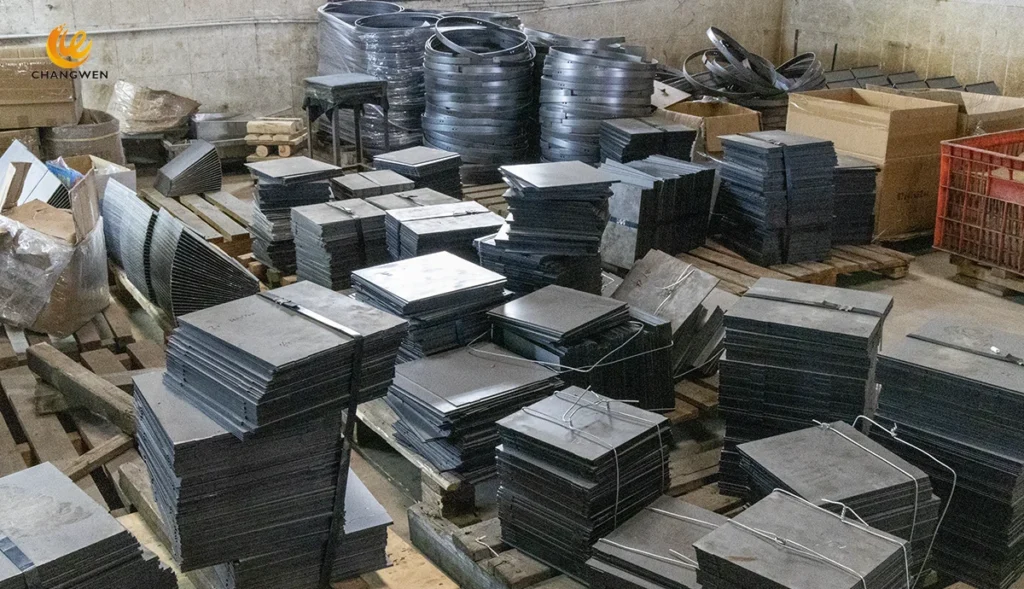
The Steel Coil
Our press plates begin as 304 stainless steel coil, sourced from verified Chinese steel mills with documented QC programs. Before any coil enters production, we verify:
- Chemical composition: Mill Test Certificate confirming chromium ≥18%, nickel ≥8%, carbon ≤0.08%
- Surface condition: Uniform No. 2B mill finish (cold-rolled, lightly annealed), consistent across the full coil width
- Thickness tolerance: ±0.05mm on the declared thickness — because a coil that varies in thickness produces plates that vary in thickness, and plates that vary in thickness produce tortillas that vary in thickness
This verification step is not dramatic. It does not produce visible results. But it is the difference between a press built on confirmed material and one built on assumption — and in manufacturing, assumption is how quality problems begin.
The Hinge Pin Material
The hinge is the mechanical heart of a tortilla press. It pivots through thousands of open-and-close cycles over the life of the press, under the force of pressing and under the weight of the upper plate resting in the open position.
We use 304 stainless steel hinge pins with a minimum diameter of 8mm for standard commercial presses. The pin sits in precision-bored hinge brackets that maintain alignment through the full range of motion. Undersized or poorly aligned hinge pins produce presses that rock during use — creating uneven pressure across the plate surface and inconsistent tortilla thickness from front to back.
The Handle Material
The press handle is the force delivery mechanism. A lever acting on the upper plate, it determines how much mechanical advantage the operator has — how easily even, consistent pressure is applied across the full plate surface.
Our handles are formed from 304 stainless steel rod, bent and welded to a geometry that provides approximately 3:1 mechanical advantage — meaning the operator applies roughly one-third of the actual pressing force to the plate. This is the difference between a press that feels effortless and one that feels like hard work after thirty tortillas.
Semi-Finished Production: Precision Before Assembly
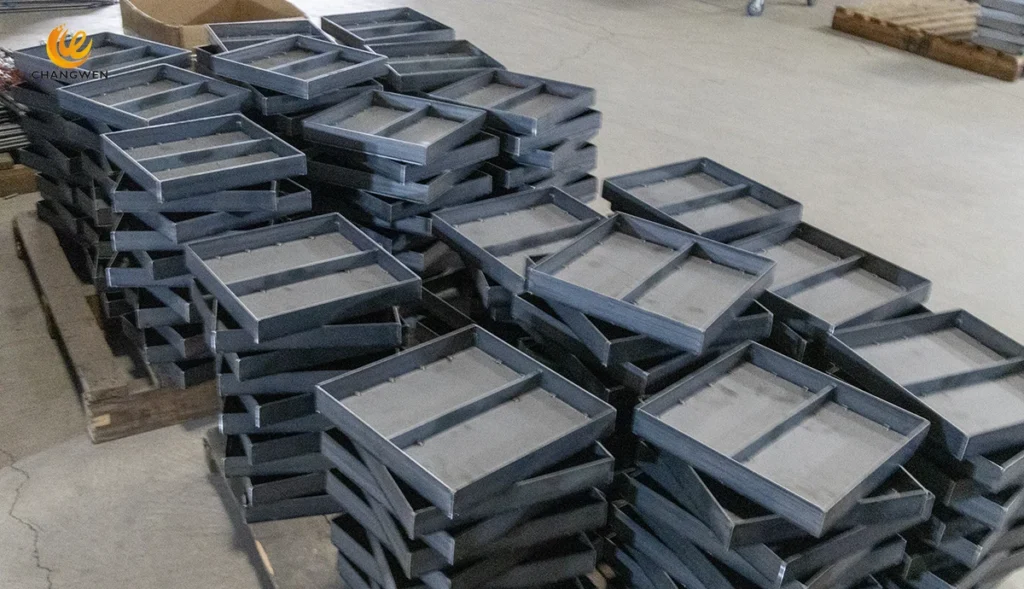
The semi-finished stage is where the raw material becomes something recognizable — and where most quality differences between manufacturers are decided.
Plate Cutting and Shaping
Steel coil sections are cut to press plate blanks using precision laser cutting or water jet cutting. Laser cutting produces edges accurate to ±0.1mm — important because the plate edges determine the finished diameter or side length of the tortilla.
For our square tortilla press plates specifically, laser cutting is the only appropriate method. The four corners must be genuinely square (90° ± 0.5°) for the pressed flour tortilla to emerge with consistent rectangular geometry. Mechanically punched square blanks can run at 90° ± 2–3° — which is visible in the finished product as slightly irregular corners.
Plate Machining (The Step Most Manufacturers Skip)
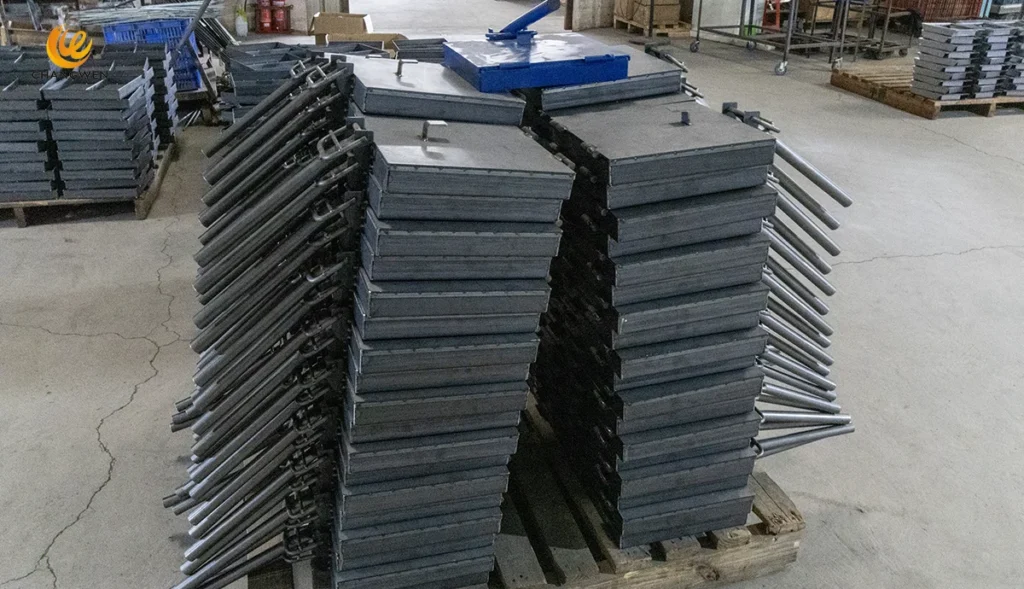
After cutting, plates go through surface grinding and machining to achieve flatness tolerance of ±0.1mm across the full plate surface.
This step costs time and money. Many budget-tier stainless steel tortilla presses manufacturers skip it — the plate as cut is “flat enough” in a general sense, and the visual difference from an unmachined plate is imperceptible. The functional difference, however, is significant.
A plate with ±0.5mm flatness variation produces tortillas that are 0.5mm thicker in some areas than others. At a 3mm tortilla thickness, that is a 16% variation in thickness. For a restaurant producing 500 tortillas per service, that variation means inconsistent cooking times, inconsistent portion weights, and inconsistent texture. The press machine is the source of the inconsistency, but the food pays the price.
Hinge Bracket Fabrication and Boring
The hinge brackets are cut from heavy-gauge 304 stainless plate, formed to angle, and then precision-bored for the hinge pin. The bore tolerance is ±0.05mm — tight enough that the pin fits without play, but not so tight that it creates friction that stiffens the hinge action.
A hinge with play in the pin produces a press that rocks slightly during pressing — shifting the upper plate laterally and creating off-center tortillas. A hinge with a press-fit pin requires significant force to operate and fatigues quickly. The tolerance is the engineering. The engineering is the quality.
Handle Forming
Handles are bent on a CNC tube bender to a programmed geometry that is consistent across every unit in a production run. The bend radius, the handle angle, and the handle length are all controlled to ±1mm. This produces handles that are functionally and visually consistent — which matters when the buyer is ordering 200 units for a restaurant chain’s equipment program.
Finished Product: What Leaves Our Factory vs. What Most Buyers Accept
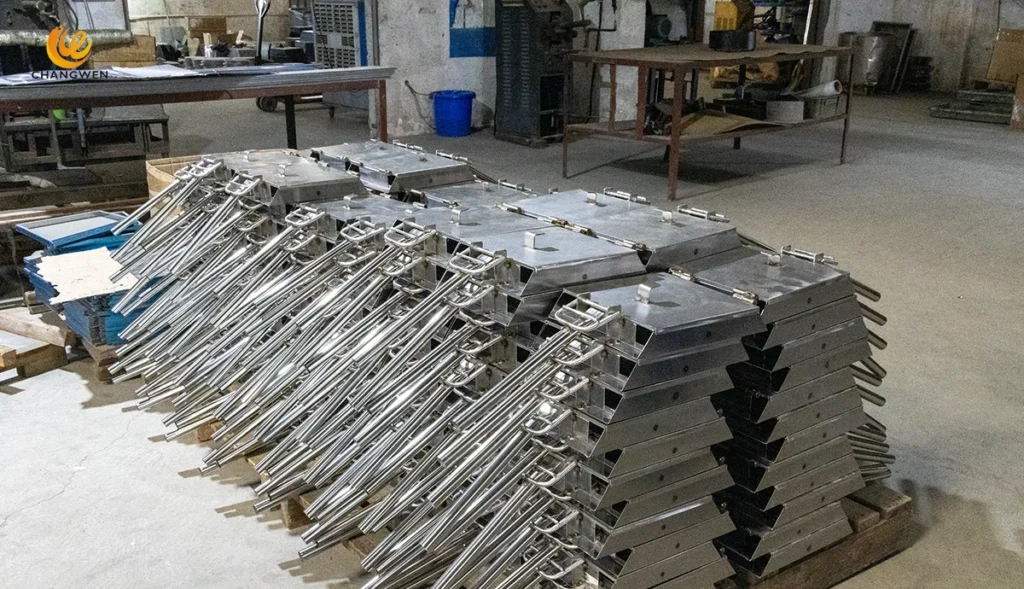
Assembly, finishing, and quality inspection are the last line of defense between a good product and a good-looking product with hidden problems.
Assembly and Welding
The press is assembled with the hinge pin installed between the lower plate frame and the upper plate frame, the handle welded to the upper plate, and all joints ground smooth and polished flush.
Every weld on a stainless steel tortilla press is a potential failure point if it is not done correctly. The handle-to-upper-plate weld is under mechanical stress every time the press is used. We specify full-penetration TIG welding on all structural joints — not MIG spot welding, which is faster but produces a smaller weld cross-section and lower fatigue life.
After welding, all weld points are ground flush and polished to No. 4 brushed finish — no exposed weld bead, no rough edge that could harbor bacteria or catch food particles.
Surface Finishing
The finished press surface is brushed to a consistent No. 4 finish (Ra 0.8–1.6 μm) on all exterior surfaces. This is the standard commercial kitchen surface specification: smooth enough to clean easily, textured enough to resist visible fingerprint marks, visually consistent across the full surface.
The press plate faces — the actual food-contact surfaces — receive additional polishing to Ra 0.4–0.8 μm. This smoother surface reduces masa adhesion during pressing, making the peel step easier without requiring plastic liner sheets for most applications.
Quality Inspection Protocol
Before any finished press is packaged, every unit passes through a seven-point inspection:
- Plate flatness check: Precision straightedge across both plates, both directions — any deviation above ±0.15mm is rejected
- Hinge function: 20 open-close cycles with load applied — zero rocking, smooth consistent motion
- Handle alignment: Handle centerline within ±1mm of plate centerline — ensures balanced pressing force
- Weld integrity: Visual inspection under magnified lighting — no visible porosity, incomplete fusion, or undercut
- Surface finish: Consistent No. 4 finish across all surfaces, no machining marks or inconsistent areas
- Dimensional verification: Plate diameter (round) or side dimensions (square) measured — ±1mm of specification
- Weight verification: Each unit weighed — weight within ±3% of specification confirms material gauge was maintained
Any unit that fails any of these checks is pulled from the production batch. Not downgraded or sold as a second. Pulled.
Round vs. Square Tortilla Press: The Overlooked Decision
Most buyers assume a tortilla press is a round thing that makes round tortillas. This is correct for corn tortillas — but it is not the complete picture for modern commercial kitchens.
Round Tortilla Press: The Traditional Standard
A round press plate produces a round tortilla — the traditional form for corn tortillas, quesadillas, tostadas, and the entire vocabulary of traditional Mexican corn-masa cuisine. Standard round commercial sizes run from 20cm (8 inches) to 50cm (20 inches) for large-format production.
The round press is the correct default for any operation primarily producing corn tortillas. The circular plate geometry distributes pressing force evenly from the center outward, producing consistent thickness across the diameter. It is the oldest form of the press for good reason: it works perfectly for its intended application.
Square Tortilla Press: The Underestimated Option
A square tortilla press produces a square or rectangular tortilla — specifically useful for flour tortilla applications, flatbread production, and certain commercial wrap and burrito formats where a rectangular shape is more efficient than round.
Here is why the square tortilla press is not just a novelty: when a round tortilla is folded into a burrito, the circular geometry creates thick overlapping folds at the ends and thin coverage in the middle. A rectangular flour tortilla folds flat — full coverage from end to end, consistent wall thickness throughout the wrapped product. For restaurants where burrito presentation and structural integrity matter, the square tortillas produced by a square press are functionally superior to round ones.
Square tortilla press sizes in standard commercial range: 20×20cm, 25×25cm, 30×30cm, and 20×30cm (rectangular format for dedicated burrito and wrap production).
The manufacturing requirement for a square tortilla press is higher precision than for round — four corners all at 90°, four sides all equal length, and true flat surface across the plate to ensure uniform thickness all the way to the corners. A plate that is flat at center but slightly convex at corners produces tortillas that are thin at the edges and thicker at center — obvious in the finished wrap.
OEM and Wholesale: How We Work With Buyers
Changwen is a stainless steel tortilla presses manufacturer that works with wholesale buyers, restaurant equipment distributors, and private-label cookware brands worldwide.
Standard OEM with Branding
For buyers who want their brand on a proven commercial press without custom tooling investment: we produce standard round and square tortilla press configurations with your logo applied via laser engraving, custom packaging design, and set composition of your choice. Minimum order: 800 units per configuration. Production lead time: 25–35 days. Sample lead time: 7–10 days.
Custom OEM Programs
For buyers who need non-standard plate dimensions, proprietary handle shapes, or custom surface treatment specifications: we develop to your brief. Custom plate dimensions require new pressing tooling ($1,500–$4,000 depending on configuration). Custom handle molds run $2,000–$6,000. All tooling is paid for by the buyer and belongs to the buyer. Minimum order for custom tooling programs: 500 units. Development timeline: 8–14 additional weeks before production begins.
What We Provide as Standard Documentation
Every wholesale order ships with:
- Mill Test Certificate confirming 304 stainless steel grade
- NSF/LFGB food contact compliance documentation
- ISO 9001 quality management certificate
- Pre-shipment inspection report (commissioned on orders above 100 units)
We do not offer documentation as an optional add-on. It is the minimum standard for anyone selling into commercial food service channels.
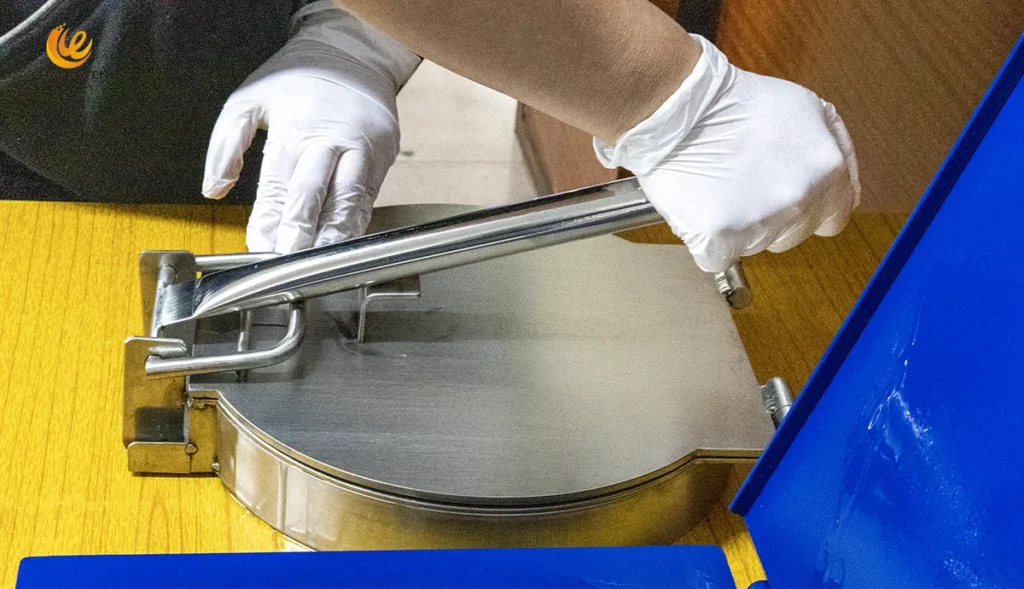
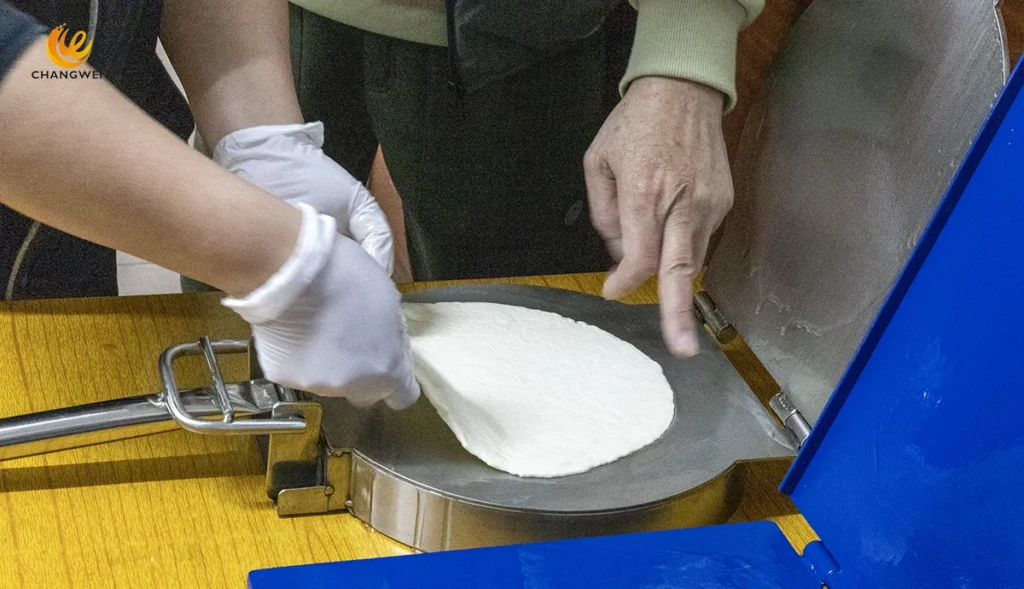
Why This Matters to Distributors and Restaurant Operators
If you are a restaurant equipment distributor, here is the commercial reality:
A stainless steel tortilla press that fails within 18 months of commercial use is not just a product problem — it is a customer relationship problem. The restaurant operator who bought from you does not see a manufacturing defect. They see a supplier who sold them something that did not hold up. That experience costs you future orders worth far more than the margin on the original sale.
If you are a restaurant operator buying directly:
A press that warps, a hinge that rocks, a plate surface that pits and corrodes — these are not abstract quality failures. They are daily friction in a kitchen that cannot afford it. Every pressed tortilla that comes out uneven, every press action that requires extra force, every plate that has to be cleaned around corroded spots — these are real operational costs.
The difference between a press built to the specifications in this article and one built to the minimum tolerable standard is not a dramatic price difference at the factory level. It is 30–40% of the final retail price, at most. Against the operational cost of failure — the replacement cost, the service disruption, the customer experience damage — the premium for a correctly built press is not a cost. It is insurance.
FAQ
What stainless steel grade should a commercial tortilla press be made from?
A commercial tortilla press should be made from 304 stainless steel (18/8 — 18% chromium, 8% nickel minimum). 304 grade is non-reactive with masa, lime, and commercial cleaning agents, resists corrosion under daily use and washing, and meets NSF food contact standards for commercial kitchen equipment. 201-grade stainless steel looks identical to 304 but has lower chromium and nickel content, resulting in corrosion at welds and plate edges within 12–24 months of commercial use. Always request a Mill Test Certificate confirming steel grade before purchasing commercial kitchen equipment in bulk.
What is the difference between a round and square tortilla press?
A round tortilla press produces round tortillas — the standard form for corn tortillas, traditional quesadillas, and most Mexican masa-based preparations. A square tortilla press produces square or rectangular tortillas, specifically suited for flour tortilla applications where the rectangular geometry improves the efficiency and structural consistency of folded products like burritos and wraps. Square tortillas fold flat with full-surface coverage, while round tortillas create overlapping folds at the ends. For operations focused on corn tortilla production, a round press is the standard choice. For commercial burrito and wrap production, a square tortilla press in the correct dimensions is the functionally superior option.
How thick should the plates be on a commercial stainless steel tortilla press?
For commercial kitchen use, press plates should be a minimum of 8mm thick in 304 stainless steel. Thicker plates (8–12mm) resist thermal deformation during the heat cycling of commercial kitchen environments, maintain flatness under repeated pressing loads, and have a longer functional lifespan than thinner plates (4–6mm common in budget products). Plate flatness tolerance is equally important: plates machined to ±0.1mm flatness produce consistent tortilla thickness across the full diameter; plates pressed without machining can vary by ±0.5mm or more, producing visible thickness inconsistency in the finished tortilla.
What is the minimum order for a branded stainless steel tortilla press from Changwen?
The minimum order for standard round or square tortilla press configurations with OEM branding (laser-engraved logo, custom packaging) is 100 units per configuration. Custom plate dimensions or proprietary handle designs require new tooling and a minimum order of 500 units to amortize the tooling investment. Sample orders of 3–10 units are available prior to bulk commitment at near-cost pricing. Production lead time for standard OEM programs is 25–35 days from deposit receipt; custom programs with new tooling require 8–14 additional development weeks.
What certifications does Changwen provide with commercial tortilla press orders?
Every commercial wholesale order from Changwen ships with a Mill Test Certificate confirming 304 stainless steel grade, NSF/LFGB food contact compliance documentation, and ISO 9001 quality management system certificate. Pre-shipment inspection reports from third-party inspection firms are commissioned as standard on orders of 100+ units. These documents are provided as a standard part of every order — not as optional additions — because they are the minimum required documentation for commercial food service distribution in North American and European markets.
Conclusion
We did not set out to tell a manufacturing story. We set out to fix a problem that a returned shipment revealed to us, and we have been fixing it systematically ever since.
The stainless steel tortilla press is a deceptively simple tool. Two plates, a hinge, a handle. Press down, lift, peel. Repeat 500 times a service. What makes one press worth significantly more than another — and worth significantly more to your business over a three-year period — is not visible in a photograph. It lives in the Mill Test Certificate for the steel, in the flatness tolerance of the machined plates, in the bore tolerance of the hinge bracket, in the weld penetration depth on the handle attachment.
None of these things are glamorous. None of them appear in consumer marketing. All of them determine whether your press is still performing correctly in year three or whether you are ordering replacements in year two.
As a stainless steel tortilla presses manufacturer, we believe the most honest thing we can tell you is this: the press that costs less at the point of purchase usually costs more over the life of your kitchen. We make our case with the Mill Test Certificates, the flatness tolerances, and the seven-point inspection protocol — not with the price.
If that sounds like the kind of manufacturer you want to work with, we would be glad to send you samples.