Read time: 13 min
Introduction
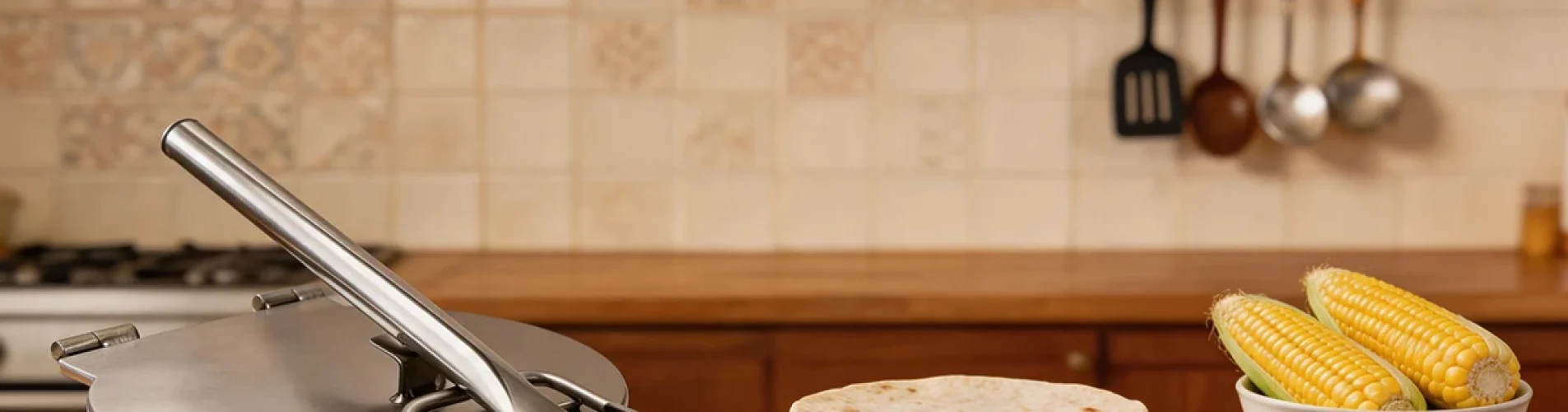
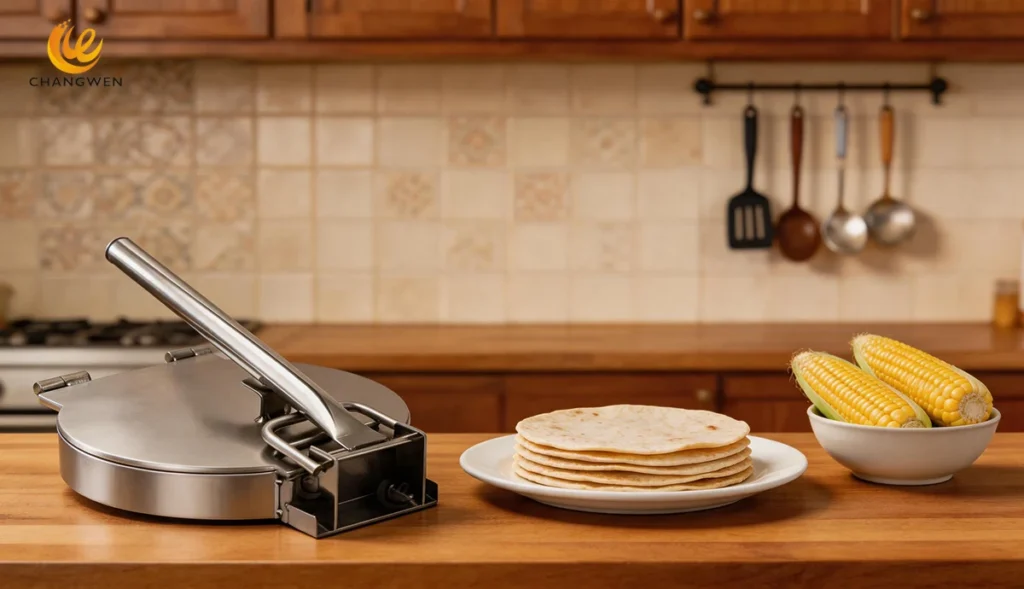
There is a reason the Mexican tortilla press — called tortilladora or prensa para tortillas in Spanish — has looked essentially the same for centuries.
It works perfectly.
Two flat plates, a hinge, a handle. Apply pressure, get a perfectly round, even disc of masa. Peel it off, throw it on a hot comal, done in 30 seconds. For anyone who has tried making corn tortillas without a press — patting masa by hand until it is sort of round, sort of thin, sort of consistent — the first time you use a proper tortilla press is revelatory.
But not all tortilla presses are equal. The gap between a thin, flimsy aluminum press that makes thick, uneven rounds and a well-engineered cast iron or heavy steel press that cranks out perfect 6-inch corn tortillas all day is enormous. And if you are buying for a restaurant, a taqueria, a food truck, or a high-volume catering operation, the choice between a manual hand press and a commercial tortilla press machine changes the entire production equation.
This guide covers every decision — material, size, type, shape, commercial vs. home use, and where to source tortilla press manufacturers in China for wholesale buying programs. No brand promotion, no filler. Just the complete buying framework.
Key Takeaways
- A Mexican tortilla press (prensa para tortillas or tortilladora) is a hinged two-plate tool used to flatten masa (corn dough) or flour dough into even, round tortilla shapes before cooking on a comal or griddle.
- Material is the most important specification: Cast iron produces the most consistent pressure and longest lifespan. Heavy-gauge aluminum is lighter and faster to clean. Stainless steel is the correct commercial specification for food safety compliance. Avoid thin or lightweight aluminum — it warps under pressure.
- Size determines tortilla diameter: 6-inch press → 5–5.5″ tortillas (street tacos). 8-inch press → 6–7″ tortillas (standard tacos, quesadillas). 10-inch press → 8–9″ tortillas (large quesadillas, burritos, wraps). 12–16-inch press → large flour tortillas.
- The best tortilla press for most home cooks is an 8-inch cast iron model — heavy enough to apply even pressure with minimal effort, sized right for most corn tortilla applications.
- Square tortilla presses are specifically designed for flour tortillas and flatbreads that will be cut into squares or folded into rectangular wraps — not the standard choice for round corn tortillas.
- Commercial tortilla press machines (electric heated presses) press and cook simultaneously, producing 200–1,200 tortillas per hour — the only viable format for high-volume restaurant and catering production.
- Tortilla press manufacturers in China — primarily in Guangdong (Jiangmen, Chaozhou) and Zhejiang — supply the global wholesale market with cast iron, aluminum, and stainless steel tortilla presses at factory-direct pricing.
What Is a Mexican Tortilla Press? History, Design, and Function
The Word and Its Roots
In Spanish, a tortilla press is called a prensa para tortillas or simply tortilladora. The word tortilla itself is the diminutive of torta (cake) — “little cake.” Mexican tortillas are specifically made from nixtamalized corn masa — corn that has been treated with an alkaline solution (nixtamalization) and then ground into dough.
How a Tortilla Press Works
The mechanical principle is straightforward. Two flat circular (or square) plates are connected by a hinge on one side and a handle on the other. A ball of masa is placed between the plates, the top plate is closed and pressed down with the handle, and the masa spreads evenly in all directions — constrained by the circular plate edges — into a uniformly thick disc.
The key advantages over hand-pressing:
- Even thickness throughout: Hand-pressed tortillas are thicker in some areas, thinner in others. A press with properly aligned plates produces consistent thickness edge to edge.
- Consistent diameter: Every tortilla is the same size — critical for portion control in commercial settings.
- Speed: An experienced tortillero with a press produces 10–15 tortillas per minute. Hand-pressing takes 3–4× longer.
- Less skill required: The press standardizes the process, making consistent tortillas accessible to anyone regardless of experience.
Corn vs. Flour Tortilla Press Requirements
Corn tortilla masa is made from masa harina (nixtamalized corn flour) mixed with water to a soft, pliable consistency. It presses easily and does not require oil on the plates.
Flour tortilla dough is made from wheat flour, fat (lard or shortening), salt, and water. It is more elastic than corn masa and springs back when pressed — requiring slightly more force, and sometimes slightly more resting time before pressing to relax the gluten.
The same press handles both, but size requirements differ: corn tortillas are typically smaller (5–7 inches); flour tortillas are often larger (8–12+ inches), requiring a larger press for the bigger sizes.
Tortilla Press Materials: Cast Iron vs. Aluminum vs. Steel
This is the specification decision with the largest performance impact.
Cast Iron: The Performance Standard
Why cast iron produces the best tortillas: Mass and weight. A cast iron press at 8 inches typically weighs 6–10 pounds. This weight means the plates themselves apply significant downward pressure even before you push the handle — and the handle provides additional mechanical leverage. The result: even, consistent pressure across the full plate surface with minimal effort.
Consistency advantage: Heavier cast iron plates flex less under pressure than aluminum. Flex in the plates means uneven thickness across the tortilla. A rigid cast iron plate stays flat throughout the press stroke.
Heat retention note: Cast iron retains heat from the kitchen environment — if you are pressing near a hot comal, the plates warm slightly, which some practitioners say improves masa release. This is debated; the effect is minor.
Seasoning requirement: Raw cast iron requires seasoning before use (explained in the Maintenance section). Pre-seasoned models are available and are ready to use immediately after rinsing.
Disadvantages: Heavier (matters in high-volume commercial use where presses are moved frequently), requires hand washing and periodic re-seasoning, can rust if stored wet.
Best for: Home cooks making corn tortillas regularly; small taquerias; anyone who wants the best performance from a manual press.
Heavy-Gauge Aluminum: Lightweight and Practical
The case for aluminum: Significantly lighter than cast iron (typically 2–4 pounds for an 8-inch model). Easier to handle for extended pressing sessions. Faster to clean — a quick rinse and wipe. No seasoning required.
The critical qualifier — gauge matters enormously: The quality gap between aluminum tortilla presses is almost entirely determined by material thickness (gauge). A well-made aluminum press with thick, rigid plates performs similarly to cast iron for most home applications. A thin, lightweight aluminum press bends under pressure, creating uneven tortillas and failing hinge mechanisms within months.
How to evaluate aluminum quality: Hold the lower plate and apply significant downward pressure at the center with your thumb. Good aluminum does not flex perceptibly. Poor aluminum flexes visibly. If the press can be purchased in person, this test takes 5 seconds.
Disadvantages: Lower-quality models are widespread and perform poorly. Cannot develop the same even pressure as cast iron at equivalent thickness. Surface coating can scratch.
Best for: Cooks who prioritize lightweight handling; moderate-frequency home use; buyers who are confident in the specific model’s plate thickness.
Carbon Steel: The Commercial Middle Ground
Carbon steel tortilla presses offer a performance profile between aluminum and cast iron: heavier than aluminum (better pressure), lighter than cast iron (more manageable), naturally develops a patina with use, and responds to seasoning the same way as cast iron.
Less common in mass-market retail than cast iron or aluminum, but widely used in commercial kitchen environments where weight and durability both matter.
Best for: Commercial taqueria use where multiple presses are in continuous operation; buyers who want cast iron performance at reduced weight.
Stainless Steel: The Commercial Food Safety Choice
Stainless steel (304 grade) tortilla presses are the correct specification for commercially licensed food service operations:
- NSF food contact compliant
- Dishwasher safe
- No seasoning required
- Corrosion resistant under daily commercial cleaning
Trade-off: Stainless steel’s lower thermal mass compared to cast iron means slightly less intrinsic pressure evenness on very thin-plate designs. Commercial stainless presses compensate with heavier plate thickness and precision machining.
Best for: Commercial restaurants and taquerias under health code inspection; operations using commercial dishwashers; any food service environment with NSF compliance requirements.
Material Quick Reference
| Material | Weight | Performance | Maintenance | Best Use |
|---|---|---|---|---|
| Cast iron | Heavy (6–10 lbs) | Excellent | Season + hand wash | Home, small commercial |
| Heavy aluminum | Light (2–4 lbs) | Good (if thick) | Easy, dishwasher | Home, moderate use |
| Carbon steel | Medium (4–7 lbs) | Very good | Season + hand wash | Commercial taqueria |
| Stainless steel | Medium-heavy | Excellent | Dishwasher safe | Commercial, NSF required |
| Thin aluminum | Light | Poor | N/A | Avoid |
Size Guide: 6-Inch to 16-Inch and Everything In Between
Press diameter determines maximum tortilla size — though the finished tortilla is always smaller than the press plate diameter (typically 1–1.5 inches smaller due to the dough not fully reaching the edges of larger plates).
Size Reference Chart
| Press Diameter | Tortilla Diameter | Primary Use |
|---|---|---|
| 6 inch (15cm) | 4.5–5 inch | Mini tacos, appetizer-size, children’s portions |
| 7 inch (18cm) | 5.5–6 inch | Street-style corn tacos (standard Mexico City size) |
| 8 inch (20cm) | 6–7 inch | Standard tacos, quesadillas, most corn tortilla applications |
| 10 inch (25cm) | 8–9 inch | Large quesadillas, small burritos, thicker flour tortillas |
| 12 inch (30cm) | 10–11 inch | Large flour tortillas, burrito size |
| 14–16 inch (35–40cm) | 12–14 inch | Commercial large flour tortillas, restaurant-scale |
The Practical Size Decision
For most home cooks: An 8-inch press covers 90% of corn tortilla applications. Standard taco and quesadilla tortillas in the 6–7 inch range are the most common use case.
For street taco production (authentic Mexico City style): A 7-inch press produces the smaller corn tortillas typical of street taco service — served two per taco, approximately 5.5 inches finished.
For flour tortillas: Flour tortillas are larger by tradition. Burrito-size flour tortillas require a 12-inch+ press. For mixed corn/flour operations, a 10-inch press is the most versatile single choice.
For commercial production: Size selection is driven by menu specification — what diameter tortilla does your dish require, and is that consistent with a single press size across your menu?
Types of Tortilla Presses: Manual, Electric, and Commercial Machine
Manual Tortilla Press (Hand Press)
The traditional form. Two plates, a hinge, a handle. Press by hand, peel off the tortilla, cook on a comal.
Throughput: An experienced operator produces approximately 10–20 tortillas per minute with a manual press — achievable with practice. For home use and small restaurant prep, this is more than sufficient.
Advantages: Simple, durable, no electricity, inexpensive, easy to maintain.
Limitations: Operator-dependent consistency; throughput is limited by human press speed; operator fatigue in extended high-volume sessions.
Best for: Home cooking, small taquerias, prep kitchens, any operation making up to approximately 200 tortillas per hour.
Electric Heated Tortilla Press (Tortilla Grill)
An electrically heated dual-plate press that simultaneously presses and cooks the tortilla. Place a masa ball, close the press, wait 25–40 seconds, open — the tortilla is pressed and par-cooked or fully cooked depending on the model and dwell time.
Throughput: 100–400 tortillas per hour depending on model and dwell time.
Advantages: Combines pressing and cooking in one step; consistent temperature and pressure; reduces operator skill requirement; faster than manual press + comal workflow.
Limitations: Requires electricity; higher equipment cost; cooking temperature is not independently adjustable on all models; cleaning is more involved than a manual press.
Best for: Medium-volume commercial operations, food trucks with limited comal space, operations where speed and consistency are more critical than traditional comal cooking character.
Commercial Tortilla Press Machine (Industrial)
High-output commercial tortilla press machine systems — automated or semi-automated pressing, cooking, and conveying equipment designed for continuous production.
Throughput: 200–1,200+ tortillas per hour depending on the system.
Types:
- Hydraulic press machines: High-pressure uniform compression across large plate areas. Used for consistent thickness in commercial tortilla manufacturing.
- Conveyor-belt press systems: Dough portions are pressed and conveyed through a heating zone, emerging as finished cooked tortillas. Full automation possible.
- Roller-type machines: Dough passes between rollers that progressively thin it to specification. Common in large commercial tortilla production.
Best for: Commercial tortilla manufacturers, large taquerias serving 500+ covers per service, food service operations where tortilla production is a primary production activity rather than a supporting function.
The Best Tortilla Press for Every Use Case
Best Tortilla Press for Home Cooking
What to buy: 8-inch cast iron manual press, pre-seasoned if available.
Why: The weight of a cast iron press delivers even pressure without significant downward force from the handle — making consistently thin, even corn tortillas achievable immediately, without technique development. An 8-inch plate handles standard corn tortilla sizes perfectly.
What to avoid: Thin aluminum presses that flex under pressure — the most common quality failure in budget manual presses.
Best Tortilla Press for a Small Taqueria (Under 200 Tortillas/Service)
What to buy: 8-inch or 10-inch heavy carbon steel or cast iron press; or heavy-gauge stainless steel for NSF compliance.
Why: Manual press throughput is sufficient at this volume. The cast iron or carbon steel construction handles continuous use without plate deflection. If health code inspections require NSF-compliant surfaces, specify stainless steel.
Setup: Multiple presses (2–3) running simultaneously allows one operator to maintain continuous tortilla production without rest gaps.
Best Tortilla Press for a High-Volume Taqueria or Restaurant (200–500+ Tortillas/Service)
What to buy: Electric heated tortilla press (tortilla grill) — heavy commercial grade, stainless steel construction.
Why: At this volume, manual press throughput becomes a bottleneck. An electric press producing 150–300 tortillas per hour with consistent temperature and pressure allows one operator to supply a full-service line.
Best Tortilla Press for Mexico City-Style Street Tacos
What to buy: 7-inch cast iron press, producing 5.5-inch finished tortillas.
Why: Authentic Mexico City street tacos (tacos de canasta, tacos al pastor, etc.) use smaller corn tortillas — typically served in pairs per taco. A 7-inch press produces the correct size. The cast iron construction ensures even, thin tortillas.
Square Tortilla Press vs. Round: When Shape Matters
Most tortilla presses are round — designed for the round corn and flour tortillas of traditional Mexican cooking. But square tortilla presses exist and have specific applications.
When a Square Tortilla Press Makes Sense
Flour tortillas for folded applications: Square plates produce tortillas that fold into rectangular shapes more naturally than round tortillas — useful for wraps, rectangular burritos, and square quesadillas where consistent edge-to-edge coverage matters.
Flatbread applications: Square presses are used for roti, naan, pita, and other flatbreads where a rectangular shape is the desired form. The same press that handles flour tortillas can produce consistent flatbread shapes.
Commercial uniform portioning: In foodservice operations where portion control and presentation consistency matter, square tortillas can fill a wrap or flatbread format more efficiently than round tortillas (less waste at the corners of rectangular presentations).
When Square Makes No Sense
For corn tortillas: round is the correct and only traditional form. A square corn tortilla is not standard in traditional Mexican cooking. For authentic tacos, quesadillas, enchiladas, and most traditional corn applications, a round press is the correct tool.
How to Use a Tortilla Press Correctly
The Plastic Liner — The Step Most People Miss
Before pressing masa, line both plates with a plastic barrier that prevents sticking. The most common materials:
- Cut zip-lock bag: A standard zip-lock bag cut open on three sides creates two plastic sheets that sit between the masa and the plates. The standard method in Mexican home kitchens.
- Parchment paper: Works well; slightly more expensive than zip-lock bags.
- Reusable silicone sheets: Available as accessories with some tortilla presses; durable and easy to clean.
Do not skip the liner. Pressing masa directly onto an unseasoned or poorly seasoned plate creates sticking problems that make removing the tortilla difficult and damage the masa.
The Complete Press Sequence for Corn Tortillas
Step 1: Masa ball sizing Roll a ball of masa approximately 1.5 inches in diameter (about 30–35 grams) for a standard 6-inch corn tortilla. Uniform ball size = uniform tortilla size.
Step 2: Center placement Place the masa ball slightly toward the hinge side of the lower plate (not dead center). This accounts for the mechanical leverage of the handle pressing harder at the front.
Step 3: Close and press Lower the top plate. Apply the handle firmly but not with maximum force — the first press produces a thick disc. Apply handle pressure smoothly, not with a single impact.
Step 4: Release and rotate Lift the top plate. Rotate the tortilla 180 degrees (still on the liner). Close and press again. This second press corrects any thickness unevenness from the first press.
Step 5: Peel and cook Peel the tortilla off the liner (the liner peels off the tortilla, not the reverse — hold the liner and let gravity separate them). Transfer immediately to a hot comal or griddle at 375–400°F (190–204°C).
Cooking the Pressed Tortilla
- First side: 30–45 seconds until the edge begins to look dry and slightly opaque
- Flip: Second side 30 seconds
- Final flip: Back to first side — at this point, a well-made corn tortilla will puff slightly as steam forms between the two cooked sides. The puff is the visual confirmation that the tortilla is done.
- Total cooking time: 60–90 seconds per tortilla on a properly heated comal
Seasoning and Maintenance
Cast Iron and Carbon Steel Seasoning
New cast iron tortilla presses are typically sold either pre-seasoned or requiring initial seasoning before use.
Initial seasoning (for unseasoned presses):
- Wash with hot water and dish soap — this is the only time you use soap on cast iron
- Dry completely over heat (stovetop or oven at 200°F/93°C) to evaporate all moisture
- Apply a very thin coat of high smoke-point oil (grapeseed, vegetable, or flaxseed) to all surfaces
- Heat until the oil smokes and the surface darkens (oven at 450°F/232°C for 1 hour, or on stovetop until smoking)
- Allow to cool; repeat 2–3 times for a durable initial seasoning
After each use:
- While still warm, wipe with a dry cloth or paper towel
- Apply a very thin coat of oil to all surfaces
- Store dry — moisture causes rust
Rust removal: Surface rust (not structural damage) is removed with steel wool under warm water, then re-seasoned from step 3 above.
Aluminum Press Maintenance
- Rinse with warm water; mild soap acceptable on coated models
- Dry completely before storage
- Do not use in a commercial dishwasher unless specifically rated for it — harsh alkaline detergents damage aluminum
- No seasoning required
Stainless Steel Maintenance
- Dishwasher safe (304 stainless steel)
- No seasoning required
- Store dry to prevent water spots (cosmetic only on 304 stainless)
Tortilla Press Machine: Commercial and High-Volume Options
For operations where tortilla production is a primary activity — high-volume taquerias, commercial tortilla manufacturers, institutional food service — a manual press is insufficient. Commercial tortilla press machines handle the production math.
Manual Press Production Capacity Reality
One operator with a manual press produces approximately 600–900 tortillas per hour with practice. Sustaining this rate through a full service (2–3 hours) is physically demanding. For most operations above 300 tortillas per service, additional press stations or electric press equipment is required.
Electric Commercial Tortilla Press — Specification Guide
For commercial electric tortilla grills and heated presses:
| Specification | Standard Range | Why It Matters |
|---|---|---|
| Plate temperature | 300°F–450°F (150–232°C) | Determines cooking time and char |
| Plate size | 8″–16″ diameter | Tortilla size range |
| Throughput | 100–400/hour | Service volume capacity |
| Pressure mechanism | Spring-loaded / pneumatic | Even pressure quality |
| Material | Stainless steel + cast aluminum plates | NSF compliance + durability |
| Power | 110V or 220V | Kitchen electrical requirements |
Industrial Tortilla Production Systems
For commercial tortilla manufacturers producing thousands of units per day:
- Hydraulic press systems: 500–2,000 tortillas per hour. Uniform hydraulic pressure ensures completely consistent thickness regardless of masa hydration variation.
- Conveyor systems with rolling press: High-speed continuous production. Appropriate for dedicated tortilla production facilities.
Sourcing a Tortilla Press Manufacturer in China
For wholesale buyers, restaurant equipment distributors, and private-label programs, Chinese tortilla press manufacturers offer factory-direct pricing that is typically 35–55% below domestic distributor pricing.
Where China’s Tortilla Press Manufacturing Is Located
Jiangmen and Chaozhou (Guangdong Province): The primary hub for cast iron and stainless steel kitchen tool manufacturing. Most cast iron tortilla press production for the global wholesale market originates here.
Yongkang (Zhejiang Province): Hardware and kitchen tool manufacturing — aluminum and carbon steel tortilla presses.
What to Specify for a Wholesale Tortilla Press Order
A complete specification for a tortilla press manufacturer in China should include:
- Material: cast iron / carbon steel / aluminum / stainless steel 304 — specify
- Plate diameter: in millimeters (more precise than inches for manufacturing)
- Plate thickness: minimum specification (e.g., “plates minimum 6mm cast iron”)
- Handle length: total length in mm; handle material and finish
- Hinge specification: pivot pin material and diameter
- Surface treatment: pre-seasoned / natural raw / painted / electroplated
- Maximum pressing force rating
- Packaging: individual box, multi-unit master carton, nested packing options
- Certification requirements: NSF (US), LFGB (EU food contact), FDA (US food contact), CE
Factory Verification Essentials
Apply the standard verification framework:
- Live video factory tour showing casting/stamping equipment
- Material documentation: Mill Test Certificate for cast iron grade (if specified)
- Certification listing numbers verified in official databases (nsf.org for NSF)
- Physical samples evaluated for plate flatness (zero warping), hinge alignment, and press evenness before bulk order
MOQ Reference
| Product Type | Typical MOQ |
|---|---|
| Standard cast iron round press (8″) | 100–500 units |
| Standard aluminum round press | 200–1,000 units |
| Custom size or configuration | 500–2,000 units |
| Private label with custom packaging | 500–2,000 units |
FAQ
What is a Mexican tortilla press called in Spanish?
A Mexican tortilla press is called a prensa para tortillas or tortilladora in Spanish. Prensa means “press” and tortilladora is the agent noun for the device that makes tortillas. In some Mexican regional dialects, it may also be called simply la prensa. In commercial kitchen contexts, the term tortilladora sometimes refers specifically to automated tortilla-making machines.
What is the best size tortilla press to buy?
The best tortilla press size depends on your tortilla application. For standard corn tacos and quesadillas: an 8-inch press producing 6–7-inch finished tortillas covers most home and small-restaurant needs. For authentic Mexico City-style street tacos (smaller tortillas served in pairs): a 7-inch press. For large flour tortillas (burritos, large wraps): 10-inch or 12-inch. If you can only buy one size, an 8-inch press is the most versatile choice.
What is the difference between a round and square tortilla press?
A round tortilla press is the standard format for corn tortillas and most flour tortillas in Mexican cooking — producing the traditional circular shape. A square tortilla press produces square or rectangular flatbreads and is used for flour tortilla applications where a rectangular shape serves the final dish better (rectangular wraps, some commercial flatbread formats). For authentic corn tortillas and traditional Mexican cooking, a round press is the correct choice. Square presses are a specialty tool.
Is cast iron really better than aluminum for a tortilla press?
For performance: yes, cast iron’s heavier mass applies more even pressure across the plate with less effort from the handle, and rigid cast iron plates deflect less than aluminum under pressure — producing more consistent thickness. However, the quality gap between well-made aluminum and cast iron narrows significantly with plate thickness. A thick, well-cast aluminum press performs similarly to cast iron for home use. Thin aluminum presses — the most common budget option — flex under pressure and produce uneven tortillas. Cast iron is the safer choice when evaluating an unfamiliar press, because weight is self-evidencing in a way that aluminum plate thickness is not.
How many tortillas can you make per hour with a manual tortilla press?
An experienced operator with a manual tortilla press produces approximately 600–900 tortillas per hour under sustained effort. This rate requires: pre-portioned masa balls, a properly heated comal running simultaneously, and practiced press-peel-cook technique. At more realistic training rates for kitchen staff, 300–500 tortillas per hour per operator is a practical planning figure. For volumes above this, additional press stations or commercial electric tortilla press equipment is required.
Where can I find a tortilla press manufacturer in China for wholesale orders?
China’s tortilla press manufacturers are concentrated in Guangdong Province (Jiangmen and Chaozhou for cast iron and stainless steel) and Zhejiang Province (Yongkang for aluminum and hardware tools). B2B sourcing platforms (Alibaba, Made-in-China) provide initial access to suppliers. For verification, request a live factory video call, material documentation (Mill Test Certificate for cast iron), and physical samples before placing any bulk order. Factory-direct wholesale pricing from verified Chinese manufacturers is typically 35–55% below domestic distributor pricing at commercial quantities from 100–500 units per SKU.
Conclusion
The Mexican tortilla press is one of the most elegant tools in any kitchen — ancient in concept, perfectly optimized for a single function, and significantly better at that function than any improvised alternative.
The decision framework is clear:
Material: Cast iron for best manual press performance. Heavy-gauge aluminum for lightweight convenience at moderate use. Carbon steel for the commercial taqueria balance of performance and weight. Stainless steel 304 for NSF-compliant commercial kitchen use.
Size: 8-inch for most corn tortilla applications. 7-inch for Mexico City-style street tacos. 10–12-inch for large flour tortillas and burrito-size production.
Type: Manual for home and small-volume commercial. Electric heated press for medium-volume service. Commercial tortilla machine for high-volume production.
Shape: Round for all traditional corn tortilla and most flour tortilla applications. Square for rectangular flatbread and wrap formats.
For wholesale buyers: Factory-direct sourcing from verified Chinese tortilla press manufacturers in Guangdong and Zhejiang delivers the best combination of specification control, pricing, and production capability.
Changwen manufacture and supply commercial-grade tortilla presses — 304 stainless steel, in round and square formats, from 6-inch to 16-inch, with custom OEM and private label programs — factory-direct for Kitchenware brand owners, kitchenware wholesalers, restaurant equipment distributors, kitchen supply wholesalers, and commercial kitchen operators.