Introduction
In any commercial kitchen, the prep table stands as the command center where culinary operations begin. From chopping vegetables to assembling signature dishes, the right kitchen prep tables can dramatically transform your workflow efficiency, food safety compliance, and staff productivity.
The market for commercial prep tables has evolved significantly, offering solutions ranging from basic stainless steel prep tables to sophisticated food prep tables with storage featuring integrated refrigeration, multiple drawer systems, and mobile configurations. Whether you operate a high-volume restaurant, bustling café, catering business, or food truck, understanding the options available—from restaurant prep tables with shelves to specialized stainless steel prep tables with drawers, and versatile prep tables with wheels—is essential for making an investment that serves your operation for decades.
This comprehensive guide walks you through everything you need to know about selecting, installing, and maintaining commercial prep tables. You’ll discover how different configurations support various cuisines and workflows, learn about material grades and construction quality indicators, understand essential features from NSF certification to weight capacity, and master the decision-making process that matches your specific operational needs with the perfect prep table solution.
Whether you’re outfitting a brand-new kitchen, upgrading aging equipment, or expanding your capabilities, this guide provides the practical knowledge and professional insights you need to make confident purchasing decisions that will enhance your kitchen’s performance for years to come.
Key Takeaways
- Commercial prep tables are essential workstations that combine food preparation surfaces with integrated storage solutions, dramatically improving kitchen efficiency and workflow organization
- Stainless steel prep tables dominate commercial kitchens due to superior durability, corrosion resistance, and ease of cleaning—with 304-grade steel recommended for high-moisture environments and 18-gauge thickness providing optimal strength-to-cost ratio
- Storage configurations vary to match operational needs: restaurant prep tables with shelves offer bulk ingredient storage, stainless steel prep tables with drawers provide organized tool access, and food prep tables with storage integrate multiple solutions for space efficiency
- Prep tables with wheels provide mobility for flexible kitchen layouts, catering operations, food trucks, and easy cleaning access—featuring heavy-duty locking casters rated for loaded table weight
- NSF certification is critical for health department compliance, insurance requirements, and quality assurance—verify certification before purchasing for commercial use
- Proper sizing prevents workflow problems: measure available space including clearances (36″ behind, 42-48″ in front), standard heights are 34-36 inches, depths 24-30 inches, and lengths 48-96 inches for most applications
- Gauge thickness directly impacts durability: 18-gauge steel (0.0478″) offers good balance for standard use, 16-gauge (0.0598″) provides heavy-duty strength for equipment-intensive stations
- Weight capacity varies significantly: basic tables support 300-500 lbs, medium-duty 500-800 lbs, heavy-duty 800-1,200+ lbs—always add 25-30% safety margin to calculated needs
What is a Restaurant Prep Table?
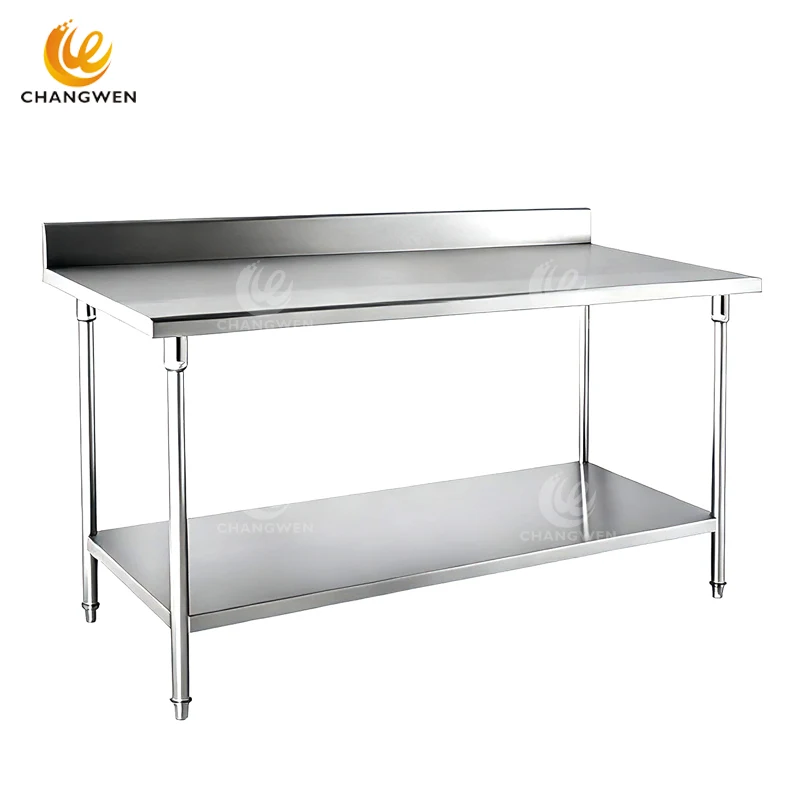
A restaurant prep table is a specialized commercial kitchen workstation engineered specifically for food preparation tasks. Unlike general-purpose work tables, prep tables feature food-safe surfaces (typically stainless steel), integrated storage solutions (shelves, drawers, refrigeration), and construction that meets strict health department standards.
The Difference Between Prep Tables and Work Tables
Restaurant Prep Tables:
- Purpose-built for direct food contact
- NSF-certified food-safe materials
- Integrated storage (shelves, drawers, cabinets)
- Designed for easy sanitization
- Meet health department requirements
Work Tables:
- General-purpose surfaces
- May not be food-safe certified
- Simpler construction
- Lower cost but limited functionality
Core Functions
Food Preparation Surface: The primary workspace for chopping, dicing, portioning, assembling, plating, and all prep activities requiring clean, durable, food-safe surfaces.
Ingredient Organization: Integrated storage keeps ingredients within arm’s reach—undershelves for bulk items, drawers for utensils, refrigerated compartments for perishables, and pan rails for assembly-line efficiency.
Workflow Optimization: Strategic placement between refrigeration and cooking stations reduces staff movement, prevents bottlenecks, and creates ergonomic workspaces that minimize fatigue.
Food Safety Compliance: Non-porous surfaces resist bacteria, rounded corners facilitate cleaning, seamless construction prevents contamination, and NSF-certified materials ensure regulatory compliance.
Types of Kitchen Prep Tables
Understanding different prep table configurations helps you match equipment to your specific operational needs.
Standard Stainless Steel Prep Tables
Description: Basic commercial tables featuring flat stainless steel work surfaces with one undershelf for storage. These versatile workhorses handle general food preparation across all kitchen types.
Best For:
- General prep work
- Equipment stands
- Budget-conscious operations
- Versatile multi-purpose stations
Specifications:
- Surface: 18-gauge or 16-gauge stainless steel
- Heights: 34-36 inches
- Sizes: 24″D x 48″L to 30″D x 96″L
- Capacity: 300-600 lbs
- Price: $200-$800
Advantages: Most affordable option, versatile functionality, easy maintenance, no specialized training required.
Limitations: Limited storage, no temperature control, basic features only.
Restaurant Prep Table with Shelves
Description: Enhanced stainless steel prep tables featuring multiple undershelves (1-3 levels) for maximum storage capacity without sacrificing floor space. These tables are ideal for operations requiring extensive ingredient organization.
Best For:
- High-volume kitchens
- Operations with extensive ingredient lists
- Bakeries storing equipment
- Space-limited kitchens
Storage Configurations:
Single Undershelf:
- Basic storage level
- Holds mixing bowls, small equipment
- Capacity: 150-300 lbs
- Price: +$50-150 vs. basic table
Double Undershelves:
- Mid-tier storage solution
- Organize by frequency of use
- Capacity: 300-500 lbs total
- Price: +$100-250
Three-Tier Shelving:
- Maximum storage density
- Separate categories (hot/cold, proteins/produce)
- Capacity: 450-600 lbs total
- Price: +$150-400
Organization Benefits:
- Ingredient bins organized by station needs
- Small appliances accessible underneath
- Backup supplies readily available
- Cleaning supplies separated from food
Design Considerations:
- Shelf material: Solid vs. wire (ventilation vs. stability)
- Adjustability: Fixed vs. adjustable height
- Accessibility: Open sides for easy cleaning
- Load distribution: Balance weight across levels
Stainless Steel Prep Table with Drawers
Description: Specialized prep tables incorporating drawer systems for organized storage of utensils, tools, and small items requiring quick access during service. These tables significantly reduce time spent searching for tools.
Best For:
- Line cook stations
- Garde manger stations
- Pastry and baking areas
- High-organization environments
Drawer Configurations:
Single Full-Width Drawer:
- One drawer spanning table length
- Depth: 4-6 inches
- Capacity: 50-75 lbs
- Price: +$150-400
- Use: Complete tool set for one station
Double Stacked Drawers:
- Two vertically stacked drawers
- Each depth: 3-5 inches
- Capacity: 75-125 lbs total
- Price: +$250-600
- Use: Separate tools by shift or category
Triple Drawer Systems:
- Three vertically stacked drawers
- Each depth: 3-4 inches
- Capacity: 90-150 lbs total
- Price: +$400-900
- Use: Maximum organization for high-volume stations
Organizational Advantages: Professional kitchens report 5-10 minutes saved per shift per station through organized drawer systems—substantial efficiency gains when multiplied across operations.
Construction Quality:
- Ball-bearing glides: Premium, smooth operation, 50,000+ cycles
- Roller glides: Budget option, adequate for light use
- Full-extension: Access entire drawer interior
- Welded stainless boxes: Most durable and sanitary
Prep Table with Wheels
Description: Prep tables mounted on heavy-duty casters enabling easy movement to different locations or locked positioning during use. These mobile tables provide unmatched flexibility for dynamic kitchen operations.
Best For:
- Catering operations (transport to events)
- Food trucks (reconfigure layouts)
- Kitchens requiring deep cleaning access
- Multi-purpose spaces
- Seasonal operations
Caster Specifications:
Size Options:
- 3-inch: Light-duty, smooth floors only, 200-400 lbs capacity
- 4-inch: Standard commercial, 400-800 lbs capacity (most common)
- 5-inch: Heavy-duty, rough floors, 800-1,200+ lbs capacity
Wheel Materials:
- Polyurethane: Non-marking, quiet, ideal for tile/sealed concrete
- Hard Rubber: Very durable, handles weight well, some marking
- TPR: Balance of properties, versatile option
Locking Mechanisms:
- Foot-activated brake locks: Stop wheel rotation
- Total locks: Stop rotation AND swivel (most secure)
- Minimum 2 wheels locked, recommended all 4 when working
Mobility Advantages:
- Flexible kitchen reconfiguration
- Easy floor cleaning underneath
- Multi-location use (prep area to plating)
- Event catering transport
- Seasonal deployment and storage
Safety Considerations:
- Verify all locks function reliably
- Check weight limits before loading
- Distribute weight evenly
- Train staff on proper locking procedures
- Match wheel type to flooring
Price Impact: +$100-300 vs. stationary tables
Food Prep Table with Storage
Description: Integrated systems combining multiple storage solutions—shelves, drawers, cabinets, and sometimes refrigeration—into comprehensive workstations that maximize functionality while minimizing kitchen footprint.
Best For:
- Small kitchens maximizing space
- Stations requiring diverse storage
- All-in-one solutions
- New kitchen buildouts
Common Configurations:
Drawer + Shelf Combo:
- Top drawer for tools
- Undershelf for bulk items
- Space-efficient design
- Price: $500-$1,200
Cabinet + Shelf Combo:
- Enclosed cabinet for dry goods
- Open shelf for equipment
- Hidden storage option
- Price: $600-$1,500
Refrigeration + Storage:
- Refrigerated prep surface
- Cold cabinet below
- Ambient undershelf
- Price: $1,800-$5,000+
Space Optimization: Food prep tables with storage replace multiple separate pieces, saving 30-50% floor space compared to individual components.
Customization Options:
- Number and size of drawers
- Shelf configurations
- Cabinet door styles
- Refrigerated vs. ambient sections
- Cutting board inserts
- Sink integration
Commercial Prep Table Materials and Construction
Understanding materials and construction quality ensures you select tables that perform reliably for decades.
Stainless Steel Grades
304 Stainless Steel (18-8):
Composition:
- 18% chromium, 8% nickel
- Excellent corrosion resistance
- Superior formability
Best For:
- High-moisture environments
- Near sinks and dishwashers
- Coastal locations (salt air)
- Premium installations
Cost: 15-25% premium over 430 grade
430 Stainless Steel:
Composition:
- 16-18% chromium
- No significant nickel
- Good corrosion resistance
- Magnetic
Best For:
- Dry prep areas
- Budget-conscious operations
- Low-moisture environments
Cost: Most economical stainless option
Gauge Thickness
Lower gauge numbers = thicker, stronger steel:
18-Gauge (0.0478 inches):
- Standard commercial duty
- Weight capacity: 300-600 lbs
- Good balance of strength/cost
- Most common specification
16-Gauge (0.0598 inches):
- Heavy-duty commercial
- Weight capacity: 600-1,200 lbs
- Superior dent resistance
- 20-35% price premium
14-Gauge (0.0747 inches):
- Industrial strength
- Weight capacity: 1,200+ lbs
- Maximum durability
- 40-60% price premium
Construction Quality Indicators
Welding:
- TIG welding: Premium, strongest joints, most sanitary
- MIG welding: Standard, adequate for most applications
- Spot welding: Budget, avoid for food surfaces
Reinforcement:
- Gussets: Triangular braces at corners (critical for strength)
- Cross-bracing: Horizontal supports between legs
- Channel legs: Rectangular vs. round tubing (stronger)
Adjustable Feet:
- Bullet feet: 1-2 inch height adjustment
- Essential for leveling on uneven floors
- Health code requirement (6″ floor clearance)
NSF Certification
What It Means: Third-party verification that equipment meets strict public health standards for:
- Food-safe materials
- Easy-to-clean design
- Corrosion resistance
- Structural integrity
Why It Matters:
- Health department compliance (often legally required)
- Insurance requirements
- Quality assurance
- Higher resale value
Verification:
- Look for NSF mark on specs
- Check NSF website database
- Verify model-specific certification
Essential Features to Consider
Height and Ergonomics
Standard Heights:
- 34 inches: Light commercial, average staff 5’4″-5’10”
- 36 inches: Professional standard (most common)
- Custom: 30-40 inches (special order)
Ergonomic Formula: Standing elbow height – 4 to 6 inches = Ideal work surface height
Task-Specific Heights:
- Detail work: 32-34 inches (plating, pastry)
- Heavy work: 34-36 inches (chopping, kneading)
- Assembly: 33-36 inches (sandwiches, salads)
Backsplash Options
Purpose:
- Wall protection from splashes
- Food safety barrier
- Easier cleaning than wall junction
- Professional appearance
Heights:
- 4 inches: Standard, most common
- 6 inches: Enhanced protection
- 8-10 inches: Maximum protection
Construction:
- Integral: One-piece with tabletop (most sanitary)
- Attached: Welded or bolted separately
Weight Capacity
Calculate Required Capacity:
- Table weight (60-150 lbs)
- Equipment weight (mixers, slicers, etc.)
- Supplies and ingredients
- Work in progress
- Add 25-30% safety margin
Capacity Ranges:
- Light-duty: 300-500 lbs
- Medium-duty: 500-800 lbs
- Heavy-duty: 800-1,200+ lbs
Specialized Features
Cutting Board Inserts: Removable HDPE or wood cutting surfaces, typically 12″x18″ to 24″x36″
Pan Slides: Horizontal channels for drying sheet pans, 10-20 pan capacity
Electrical Outlets: Integrated power for small appliances (requires professional installation)
Overhead Shelving: Additional storage 18-24 inches above table surface
How to Choose the Right Prep Table
Step 1: Assess Your Menu and Workflow
Menu Analysis:
- High-volume assembly (sandwiches, salads) → Refrigerated prep table
- Pizza/Italian → Wide cutting board, pan rails
- Fine dining → Standard table with drawer organization
- Bakery → Ample surface area, possible marble insert
Workflow Mapping:
- Sketch kitchen layout
- Identify bottlenecks
- Determine optimal placement
- Minimize steps between stations
Step 2: Measure Your Space
Critical Measurements:
- Floor space (length x width)
- Doorway clearances (delivery access)
- Ceiling height (overhead constraints)
- Utility access (electrical, plumbing)
Clearance Requirements:
- Behind table: 36″ minimum
- Front workspace: 42-48″
- Side access: 24-30″
- Floor clearance: 6″ (health code)
Standard Sizes:
- Depth: 24″, 30″, or 36″
- Length: 48″, 60″, 72″, 96″
- Height: 34″ or 36″ (standard)
Step 3: Determine Essential Features
Storage Needs:
- Shelves? (How many levels?)
- Drawers? (How many? What size?)
- Refrigeration? (Type and capacity?)
- Sink? (Basin size and configuration?)
Mobility:
- Need wheels for catering/food truck?
- Reconfigure layout frequently?
- Easy cleaning access required?
Special Requirements:
- Backsplash height
- Cutting board integration
- Electrical outlets
- Custom dimensions
Step 4: Budget Considerations
Price Ranges:
- Basic stainless table: $200-$800
- Table with shelves: $300-$1,200
- Table with drawers: $500-$1,800
- Refrigerated tables: $1,500-$6,000+
- Mobile tables: Add $100-300
Budget Strategies:
- Tight budget: Start basic, add storage later
- Adequate budget: Integrated solutions, refrigeration
- Premium: Heavy-duty construction, customization
Total Cost of Ownership:
- Economy table: 5-10 year lifespan
- Standard table: 10-15 years
- Premium table: 15-25+ years
ROI Calculation: Premium $1,200 table / 20 years = $60/year = $0.16/day Better than replacing $400 table every 7 years
Step 5: Verify Compliance
Requirements to Check:
- Health department NSF certification rules
- Local clearance specifications
- Insurance equipment mandates
- Landlord/building restrictions
Installation and Setup
Pre-Delivery Preparation
Verify Space Ready:
- Floor clean, level, and structurally sound
- Utilities accessible (electrical, plumbing if needed)
- Adequate ventilation (refrigerated tables)
- Delivery path clear and measured
Clearance Planning:
- Measure doorways (width and height)
- Check hallways and turns
- Verify elevator capacity if applicable
- Clear obstacles from route
Assembly Instructions
Basic Table Assembly:
- Attach legs to tabletop (upside down)
- Install undershelves on brackets
- Attach adjustable bullet feet
- Add drawers and test operation
- Flip upright carefully (2+ people)
Refrigerated Tables:
- Often pre-assembled
- Remove shipping materials
- Install removable shelving
- Position cutting boards
- Allow 24 hours upright before plugging in
Leveling and Positioning
Leveling Process:
- Position near final location
- Place 4-foot level front-to-back
- Adjust rear bullet feet until level
- Place level side-to-side
- Adjust left/right feet
- Recheck both directions
Why Leveling Matters:
- Drawers operate properly
- Refrigeration compressors function correctly
- Liquids drain properly
- Prevents rocking and tipping
Electrical Connection (Refrigerated)
Safety: Hire licensed electrician if uncertain
Steps:
- Verify power requirements (110V or 220V)
- Plug into appropriate outlet (no extension cords)
- Turn unit on
- Set thermostat (typically 38-40°F)
- Allow 4-6 hours to reach temperature
Final Checks
Before Use:
- Clean entire table (remove residues, films)
- Sanitize with food-safe sanitizer
- Test all functions (drawers, refrigeration)
- Verify stability (no wobbling)
- Train staff on proper use
FAQ
What is the difference between a prep table and a work table?
A prep table is specifically designed for food preparation with NSF-certified food-safe surfaces (typically stainless steel) and often includes integrated storage like shelves, drawers, or refrigeration. Work tables are general-purpose surfaces that may not meet food safety certifications. For commercial kitchens, prep tables are required as they comply with health department standards and are designed for direct food contact.
Do I need NSF certification for my commercial prep table?
In most commercial applications, yes. NSF certification verifies equipment meets strict public health standards for materials, design, and construction. Many health departments legally require NSF-certified equipment, and your commercial insurance may mandate it. Always verify local health department requirements before purchasing, as regulations vary by jurisdiction.
What gauge stainless steel is best for restaurant prep tables?
For most commercial applications, 18-gauge stainless steel offers the best balance of durability and cost for prep tables. Upgrade to 16-gauge if your table will support heavy equipment (mixers, slicers) or experience very heavy use. Avoid 20-gauge for commercial use—it dents too easily. The thicker the steel (lower gauge number), the more durable and expensive the table.
Should I choose 304 or 430 grade stainless steel?
Choose 304 stainless steel for high-moisture environments (near sinks/dishwashers), coastal locations with salt air, and premium installations requiring maximum durability. It costs 15-25% more than 430 but offers superior corrosion resistance. Choose 430 for dry prep areas, budget-conscious operations, and low-moisture environments. For most commercial kitchens, 304 is the better long-term investment.
How do I choose the right size prep table for my kitchen?
Measure your available space carefully, allowing for adequate clearances: 36 inches minimum behind the table for staff passage, 42-48 inches in front for working space, and 24-30 inches on sides for access to adjacent equipment. Standard prep table sizes are 24-30 inches deep and 48-96 inches long. Consider your menu and workflow—high-volume operations need larger surfaces while compact kitchens may require smaller or mobile configurations.
Are prep tables with wheels worth the extra cost?
Prep tables with wheels are worth the investment for catering operations (transport to events), food trucks (reconfigure layout), shared commercial kitchens (multi-use spaces), or operations needing regular deep cleaning access. Wheels add $100-300 but provide invaluable flexibility. Ensure you choose heavy-duty locking casters (4-5 inch diameter) rated for your table’s loaded weight. For permanent fixed stations in traditional restaurants, stationary tables are more cost-effective.
Can I put heavy equipment on any prep table?
No—every prep table has a maximum weight capacity based on construction (steel gauge, leg diameter, gussets, cross-bracing). Calculate total weight including table, equipment, ingredients, supplies, and add a 25-30% safety margin. Match to tables rated for your needs: light-duty (300-500 lbs), medium-duty (500-800 lbs), or heavy-duty (800-1,200+ lbs). Never exceed manufacturer’s specified weight limit.
How often should I clean my stainless steel prep table?
Clean and sanitize after each use (multiple times per shift for high-volume kitchens). Weekly deep cleaning includes moving the table to clean underneath, polishing stainless steel, and inspecting for damage. Monthly maintenance involves tightening hardware, lubricating drawers, and comprehensive inspection. For refrigerated prep tables, clean condenser coils weekly and schedule professional service every 6-12 months.
What’s the best way to prevent rust on stainless steel prep tables?
Never use chlorine bleach or cleaners containing chlorides—these cause pitting and corrosion. Avoid steel wool or abrasive scrubbers that scratch the protective surface. Always dry thoroughly after cleaning (water spots can lead to rust). Don’t let steel pots sit on the surface for extended periods. If rust appears, treat immediately with baking soda paste. Apply stainless steel polish to create a protective barrier.
Do I need a backsplash on my restaurant prep table?
If your prep table is positioned against a wall, a backsplash is highly recommended and may be required by health codes. The backsplash (typically 4-10 inches high) protects walls from splashes, prevents contamination from wall surfaces, and creates a sanitary barrier easier to clean than the wall-table junction. Standard 4-6 inch backsplashes suit most applications. Island-positioned tables don’t require backsplashes.
How long do commercial prep tables last with proper maintenance?
With proper maintenance, quality stainless steel prep tables last 15-25+ years in commercial use. Economy-grade tables may only last 5-10 years. Refrigerated prep tables typically last 10-15 years, with compressors often requiring replacement after 7-10 years. Tables with drawers may need drawer glide replacement every 5-7 years in heavy use. Investing in 16-gauge, NSF-certified tables from reputable manufacturers provides the best long-term value.
What’s better: restaurant prep table with shelves or drawers?
It depends on what you’re storing. Restaurant prep tables with shelves are ideal for bulk ingredient storage, mixing bowls, small appliances, and backup supplies—offering higher weight capacity per level (150-300 lbs per shelf). Stainless steel prep tables with drawers excel at organizing tools and utensils, keeping items clean and immediately accessible, but with lower weight capacity (30-75 lbs per drawer). Many operations benefit from food prep tables with storage that combine both shelves and drawers for maximum versatility.
Conclusion
Selecting the right restaurant prep table represents a critical investment in your commercial kitchen’s efficiency, food safety compliance, and long-term operational success. Whether you choose a basic stainless steel prep table, a comprehensive food prep table with storage, a mobile prep table with wheels, or a specialized refrigerated configuration, understanding the features, specifications, and maintenance requirements ensures you make an informed decision that serves your operation for decades.