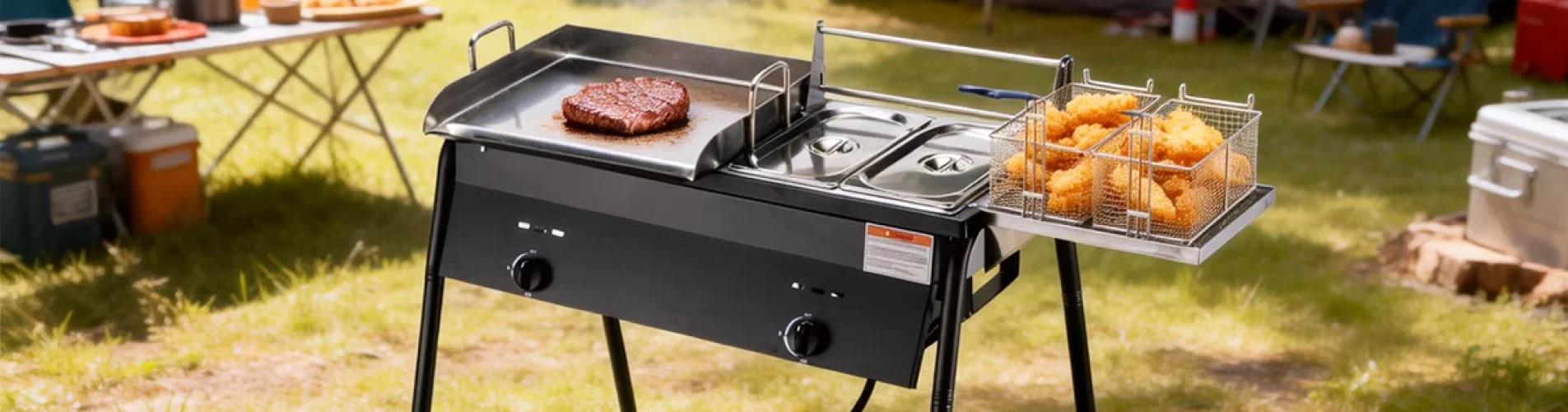
Whether you’re running a commercial food operation, catering outdoor events, or perfecting your backyard cooking game, an outdoor propane deep fryer delivers the power and versatility you need. From crispy fish fries to perfectly golden turkey, these robust cooking tools have become essential equipment for anyone serious about outdoor frying. This comprehensive guide covers everything from choosing the best outdoor propane deep fryer to mastering safety protocols and maintenance practices.
What Is an Outdoor Propane Deep Fryer?
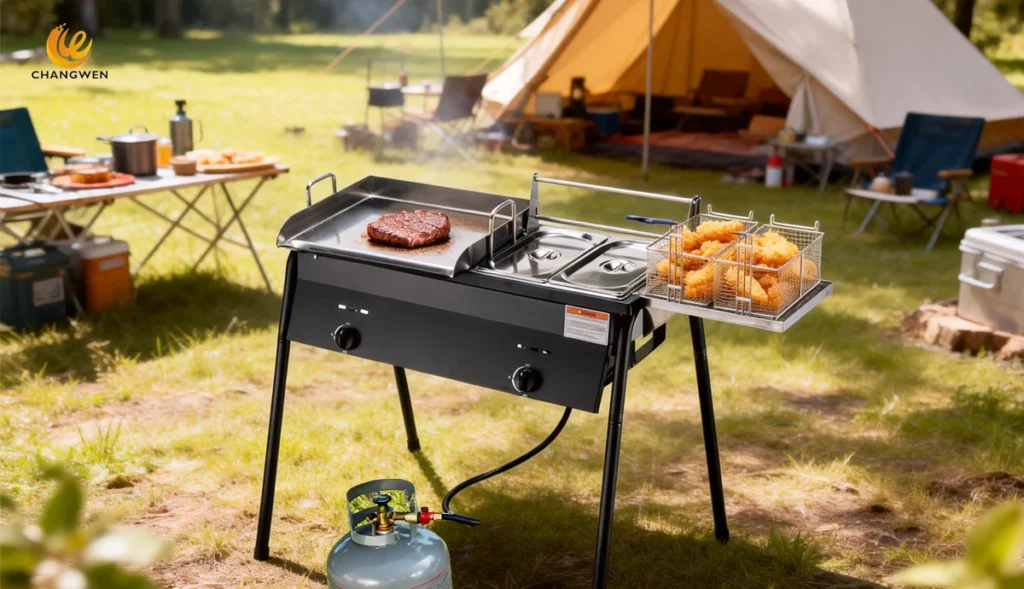
A propane deep fryer outdoor is a specialized cooking appliance designed specifically for frying large quantities of food in open-air settings. Unlike indoor electric fryers, these gas-powered units use liquid propane (LP) fuel to generate intense heat, allowing them to reach and maintain optimal frying temperatures quickly and efficiently.
The typical outdoor propane deep fryer features a heavy-duty burner system mounted on a stable frame or cart, topped with a large-capacity cooking pot. Most models include frying baskets, temperature gauges, and safety features specifically engineered for outdoor use. The propane fuel source provides exceptional portability—you can set up your frying station anywhere from a restaurant patio to a festival booth, completely independent of electrical outlets.
What sets a gas propane deep fryer outdoor apart from indoor alternatives is its robust construction and powerful heating capability. These units are built to withstand outdoor conditions while delivering consistent performance in various weather scenarios. The open-air design naturally ventilates cooking fumes and heat, eliminating the ventilation challenges associated with indoor deep frying.
Types of Outdoor Propane Deep Fryers
Understanding different fryer types helps you select the model that best matches your cooking needs and operational requirements.
Portable propane deep fryer units offer maximum flexibility for mobile operations. These compact designs typically feature lightweight construction with handles or wheels for easy transportation. Food truck operators, catering businesses, and tailgating enthusiasts favor portable models for their convenience. Despite their mobility, quality portable units still deliver impressive heating power and capacity for serving crowds on the go.
Commercial outdoor propane deep fryer models represent the workhorse category designed for high-volume professional applications. Built from heavy-gauge stainless steel with reinforced frames, these units handle the demanding pace of restaurant service, large catering events, and food festivals. Commercial models often feature larger oil capacities (30-100+ quarts), higher BTU ratings (80,000-150,000 BTU), and enhanced safety systems. The investment in a commercial-grade unit pays dividends in durability and consistent performance under continuous use.
Large outdoor deep fryer propane options cater to operations needing maximum capacity. These substantial units accommodate massive quantities of food simultaneously, making them ideal for community fish fries, fundraising events, and large-scale catering. Some large-capacity models include multiple baskets or cooking compartments, allowing you to prepare different menu items concurrently without flavor transfer.
Outdoor propane turkey fryer designs have gained tremendous popularity beyond their holiday namesake. While originally conceived for frying whole turkeys, these deep-pot fryers excel at preparing large items like whole chickens, seafood boils, and big batches of wings or fries. The extra depth and capacity make them remarkably versatile outdoor cooking tools.
Outdoor propane fish fryer setups often feature specific design elements optimized for seafood preparation. These might include specialized basket configurations, precise temperature control for delicate fish, and drainage systems that help maintain oil clarity when cooking breaded items. Many fishing communities and restaurants specializing in seafood rely on dedicated fish fryer configurations.
Key Features to Consider When Buying
Selecting the right outdoor propane deep fryer requires evaluating several critical specifications and features.
Oil Capacity and Cooking Volume
Capacity directly impacts how much food you can prepare in each batch. Outdoor propane deep fryers typically range from 10 quarts (suitable for small family gatherings) to 100+ quarts for commercial operations.
Consider your typical serving needs when evaluating capacity. A food truck selling fried chicken might need a 30-40 quart capacity to keep up with lunch rush demand, while a catering company handling events for 200+ guests would benefit from a large outdoor propane deep fryer with 60+ quart capacity. Remember that larger capacity also means more oil to purchase and maintain, so balance your volume needs with operational costs.
BTU Rating and Heat Performance
BTU (British Thermal Unit) output determines how quickly your fryer heats oil and recovers temperature after adding cold food. Higher BTU ratings mean faster heating and better temperature stability.
For outdoor propane deep fryers, look for these BTU ranges:
- 30,000-50,000 BTU: Suitable for residential use and small-scale applications
- 50,000-90,000 BTU: Mid-range performance for moderate commercial use
- 90,000-150,000+ BTU: High-performance commercial outdoor propane deep fryer units for demanding operations
A high BTU outdoor propane deep fryer maintains consistent oil temperature even when frying multiple batches continuously—critical for achieving crispy, non-greasy results. Temperature recovery time can make the difference between smooth service and backed-up orders during peak periods.
Construction Materials and Durability
The best outdoor propane deep fryer models feature heavy-duty construction designed to withstand outdoor conditions and intensive use.
Stainless steel outdoor propane deep fryer units offer superior durability, corrosion resistance, and professional appearance. Stainless steel handles temperature extremes well, resists rust from moisture exposure, and maintains its appearance through years of service. While typically more expensive, stainless construction represents a smart long-term investment for commercial operations.
Aluminum fryers provide excellent heat conductivity at lower cost. Quality aluminum units with proper coating or anodization can deliver reliable performance for many years, though they may show wear more quickly than stainless steel in demanding environments.
Heavy duty outdoor propane deep fryer models incorporate reinforced frames, thicker gauge materials, and robust burner systems engineered for continuous commercial use. These units cost more initially but deliver superior longevity and reliability.
Basket Configuration and Design
Frying baskets significantly impact operational efficiency. The best outdoor propane deep fryer setups include properly sized baskets that maximize capacity while allowing proper oil circulation.
Propane deep fryer with basket options vary widely:
- Single large basket for bulk cooking
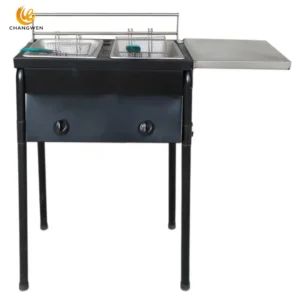
- Double burner outdoor propane deep fryer models with dual baskets for cooking different items simultaneously
- Multiple smaller baskets for portion control and variety
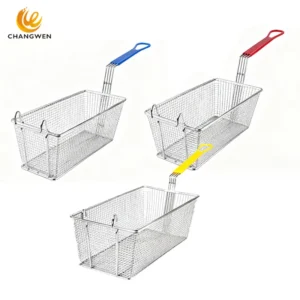
Look for baskets with comfortable, heat-resistant handles, secure latching mechanisms, and mesh sizing appropriate for your menu items. Some advanced models include basket lift systems that reduce the physical strain and safety risks associated with manually raising and lowering heavy baskets.
Temperature Control and Monitoring
Precise temperature management separates good frying from great frying. Quality outdoor propane deep fryers include accurate thermostats and easy-to-read temperature gauges.
Digital temperature displays offer the most precise readings, while traditional dial thermometers provide reliable performance at lower cost. Some commercial models feature programmable temperature controls that automatically adjust heat output to maintain target temperatures.
The ability to adjust temperatures across a wide range (typically 200-400°F) allows you to prepare different menu items optimally. Delicate items like fish require lower temperatures, while items like french fries need higher heat for proper crisping.
Safety Features
Safety must be the top priority when working with large quantities of hot oil and open flames. The best outdoor propane deep fryer models incorporate multiple safety systems:
High-limit safety shutoff automatically cuts fuel flow if temperatures exceed safe thresholds, preventing dangerous overheating situations. This feature is non-negotiable for commercial applications and highly recommended for all users.
Flame failure protection shuts down gas flow if the burner flame extinguishes unexpectedly, preventing dangerous gas buildup.
Stable base design with wide footprint and locking casters prevents tipping. Some models include leg levelers for use on uneven surfaces.
Cool-touch handles and protective guards minimize burn risks during operation.
Wind guards or baffles protect the flame from gusts that could cause uneven heating or flame-out.
Portability and Mobility
If you need to move your fryer frequently, portability features become essential.
Many outdoor propane deep fryer for sale options include wheels or casters for easy repositioning. Look for large-diameter wheels that roll smoothly across various terrain types—parking lots, grass, gravel, and more. Locking mechanisms on at least two wheels provide stability during cooking.
Cart-style designs often incorporate storage shelves or prep surfaces, enhancing functionality for mobile operations. Some portable models fold or disassemble for compact storage and transportation.
Best Outdoor Propane Deep Fryer Options by Category
Navigating the market requires understanding which models excel in specific applications.
Best Overall Commercial Performance
For comprehensive commercial capability, high capacity outdoor propane fryer models from established brands deliver exceptional value. Units featuring 60+ quart capacity, 100,000+ BTU burners, and commercial-grade stainless steel construction handle the most demanding professional applications. These commercial outdoor deep fryer options typically range from $800-$2,500, representing serious investments that pay dividends in reliability and longevity.
Best Budget-Friendly Options
Quality doesn’t always require premium pricing. Several manufacturers produce reliable outdoor propane deep fryer for sale models under $300 that serve light commercial or serious residential use well. These units typically offer 20-30 quart capacity with 50,000-70,000 BTU output—sufficient for food trucks, catering startups, and backyard enthusiasts. While featuring simpler construction than premium models, budget options from reputable brands provide solid performance and durability.
Best for Mobility and Portability
The best portable propane deep fryer models balance power with convenience. Look for units weighing under 60 pounds with sturdy wheels and integrated handles. Compact designs that disassemble or fold for transport suit operators who frequently move between locations. Despite their portability, quality mobile units don’t compromise on performance, delivering 60,000-80,000 BTU heating power in compact packages.
Best for High-Volume Production
When output matters most, large outdoor deep fryer models with 80+ quart capacity become essential. These substantial units often feature dual burners or multiple cooking chambers, allowing simultaneous preparation of different menu items. Some advanced models include oil filtration systems that extend oil life during high-volume service. Investment in large-capacity units ranges from $1,500-$4,000 but proves worthwhile for operations serving hundreds of customers daily.
Regional Considerations: Where to Find Outdoor Propane Deep Fryers
Sourcing the right equipment involves understanding regional market dynamics and availability.
Outdoor Propane Deep Fryer USA Market
The United States market offers the widest selection of outdoor propane deep fryers, from entry-level residential models to industrial-strength commercial units. Major restaurant supply retailers, specialized outdoor cooking stores, and online marketplaces provide extensive options. When searching for an outdoor propane deep fryer nearby, check both national chains and local restaurant supply specialists who often stock popular models and provide valuable setup guidance.
Outdoor Propane Deep Fryer Canada Options
Canadian buyers access most major U.S. brands while also benefiting from domestic manufacturers specializing in cold-weather performance. When purchasing in Canada, verify that units meet Canadian safety standards (CSA certification). Propane fittings and regulators may differ slightly from U.S. specifications, so confirm compatibility with Canadian propane tanks.
Outdoor Propane Deep Fryer UK and European Markets
UK and European markets feature different propane tank standards and connection systems than North American markets. When searching for outdoor propane deep fryer UK options, prioritize units specifically designed for European propane systems or purchase appropriate adapter kits. Many U.S. brands offer international versions meeting European safety certifications.
Outdoor Propane Deep Fryer Australia
Australian buyers should seek units meeting Australian safety standards and compatible with local propane (LPG) systems. The robust outdoor cooking culture in Australia has spawned domestic manufacturers producing equipment optimized for the climate and local preferences. International brands also serve the Australian market through authorized distributors who provide proper fittings and support.
Propane Deep Fryer Commercial Applications
Commercial operations require specialized considerations beyond residential use.
Restaurant and Foodservice Settings
Permanent or semi-permanent outdoor cooking stations benefit restaurants by expanding capacity without indoor kitchen modifications. Patio restaurants use outdoor propane deep fryers to prepare signature fried items tableside or in view of diners, creating engaging culinary theater. The ability to move frying operations outdoors prevents overwhelming indoor ventilation systems during peak service.
Commercial outdoor deep fryer installations in restaurant settings typically require:
- Stable, level concrete pads or non-combustible surfaces
- Adequate clearance from buildings and combustible materials (typically 10+ feet)
- Secure propane storage meeting local fire codes
- Weather protection for extended equipment life
- Easy access for staff without creating safety hazards
Catering and Event Services
Catering operations demand maximum flexibility, making mobile propane fryers invaluable. The best setups for caterers include:
- Reliable wheels suitable for varied terrain
- Quick setup and teardown capabilities
- Sufficient capacity for event sizes you typically serve
- Self-contained design requiring minimal site preparation
Many caterers maintain multiple fryer sizes to match different event scales. A portable 20-30 quart unit serves intimate gatherings while a commercial 60+ quart model handles large festivals and corporate events.
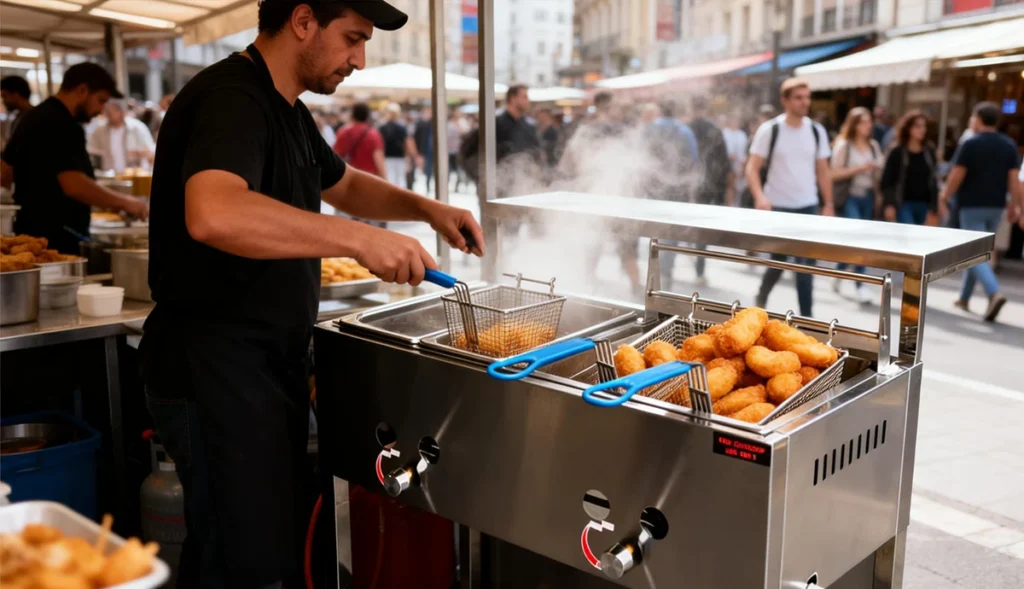
Food Trucks and Mobile Vendors
Space-constrained food truck operations require compact yet powerful equipment. When selecting a propane fryer for mobile vending:
- Prioritize models with small footprints that maximize limited space
- Ensure adequate BTU output despite compact size
- Verify compatibility with truck-mounted propane systems
- Consider models with integrated prep surfaces for space efficiency
Some food trucks permanently install outdoor propane deep fryers on external cooking platforms, freeing interior space for other equipment and preparation areas.
Institutional and Nonprofit Use
Churches, schools, civic organizations, and nonprofits frequently host fundraising fish fries and community meals. For these applications, durability and ease of use trump cutting-edge features. Mid-range outdoor propane deep fryers with straightforward controls serve institutional users well, providing years of reliable service for periodic events.
Propane Deep Fryer Buying Guide: Essential Considerations
Making informed purchasing decisions requires evaluating your specific needs against available options.
Assessing Your Volume Requirements
Honestly evaluate your typical and peak cooking demands. Undersized equipment creates frustrating bottlenecks while oversized units waste resources through excessive oil requirements and energy consumption.
Calculate your needs by estimating:
- Maximum number of servings per hour during peak periods
- Average cooking time per batch for your menu items
- Number of batches needed to meet demand
- Oil capacity required to maintain proper frying depth
This analysis reveals whether you need a compact 20-quart unit or a large outdoor deep fryer with 80+ quart capacity.
Budget Planning and Total Cost of Ownership
Initial purchase price represents just one element of total ownership costs. Factor in:
Operating costs: Propane consumption varies by BTU rating and usage intensity. Calculate expected monthly propane costs based on anticipated hours of operation.
Oil costs: Larger capacity units require more oil. Quality frying oil ranges from $20-60 per container depending on type and bulk pricing.
Maintenance and parts: Budget for routine maintenance supplies, replacement parts, and eventual component repairs.
Safety equipment: Include costs for required fire extinguishers, protective gear, and first aid supplies.
Higher-quality units often deliver lower total ownership costs through superior energy efficiency, longer oil life due to better temperature control, and extended equipment lifespan.
New vs. Used Equipment Decisions
The used equipment market offers potential savings but requires careful evaluation. When considering used outdoor propane deep fryers:
Advantages of used equipment:
- Significant cost savings (often 40-60% off new price)
- Immediate availability
- Opportunity to acquire premium brands within limited budgets
Risks to evaluate:
- Unknown usage history and maintenance quality
- Potential hidden damage or worn components
- Limited or no warranty coverage
- Safety features may not meet current standards
If purchasing used equipment, thoroughly inspect all components, test operation before completing the purchase, and budget for immediate maintenance or part replacement.
Warranty and Support Considerations
Strong warranty coverage and accessible customer support separate quality manufacturers from mediocre ones. Premium outdoor propane deep fryer brands typically offer:
- 1-3 year comprehensive warranties on major components
- Extended warranties available for purchase
- Readily available replacement parts
- Responsive technical support
- Detailed operation and maintenance documentation
Before purchasing, research the manufacturer’s reputation for honoring warranties and providing post-sale support. Equipment requiring hard-to-find parts or lacking support resources becomes expensive to maintain.
Safety Guidelines for Outdoor Propane Deep Fryer Use
Operating propane fryers safely protects people, property, and your business reputation.
Proper Placement and Setup
Safe fryer operation begins with correct placement:
Surface requirements: Always position your outdoor propane deep fryer on stable, level, non-combustible surfaces. Concrete, asphalt, or compacted gravel provide suitable foundations. Never operate on wooden decks, near combustible siding, under overhangs, or on uneven ground.
Clearance distances: Maintain minimum 10-foot clearance from buildings, overhangs, vehicles, and combustible materials. Some local codes require greater distances—verify and exceed minimum requirements.
Wind protection: While outdoor fryers need ventilation, excessive wind disrupts flame and temperature control. Position units where natural windbreaks (like buildings or fencing) provide partial protection without violating clearance requirements.
Accessibility: Ensure operators can safely approach and work around the fryer from all necessary angles without reaching over flames or hot oil.
Fire Prevention and Emergency Response
Despite safety features, cooking with large quantities of hot oil and open flame requires constant vigilance.
Fire prevention essentials:
- Never overfill oil pots beyond marked fill lines
- Ensure food items are dry before immersion (water causes dangerous spattering)
- Keep combustible materials away from cooking area
- Monitor operation continuously—never leave active fryers unattended
- Maintain working fire extinguishers (Class K for grease fires) within easy reach
- Train all operators on emergency shutdown procedures
Emergency response preparation:
- Post emergency contact numbers prominently
- Establish clear evacuation routes
- Maintain first aid kits with burn treatment supplies
- Know propane shutoff procedures
- Never use water on grease fires
- Understand when to fight fires versus evacuating and calling emergency services
Propane Handling and Storage
Proper propane management prevents dangerous situations.
Connection procedures: Always check propane tank connections for leaks before operation using soapy water solution (bubbles indicate leaks). Ensure regulators, hoses, and fittings meet safety standards and show no signs of wear or damage.
Tank storage: Store propane tanks outdoors in well-ventilated areas away from building openings and ignition sources. Keep tanks upright and secure to prevent tipping. Follow local regulations regarding storage distances from buildings and property lines.
Transportation: Secure tanks during transport to prevent movement or tipping. Transport in well-ventilated vehicles or cargo areas. Never transport propane tanks in enclosed passenger compartments.
Operational Safety Protocols
Establish and enforce consistent safety practices:
Pre-operation checks:
- Inspect all connections and hoses
- Verify thermostat function
- Test high-limit shutoff system
- Confirm adequate oil level
- Clear area of hazards and unnecessary items
During operation:
- Use proper protective equipment (long sleeves, closed-toe shoes, heat-resistant gloves)
- Lower baskets slowly to prevent splashing
- Monitor oil temperature continuously
- Work deliberately without rushing
- Keep children and unauthorized persons away from fryer
Post-operation procedures:
- Allow oil to cool completely before handling or draining
- Close propane valve securely
- Cover or store fryer properly
- Clean and inspect equipment before next use
Maintenance and Care for Long-Term Performance
Consistent maintenance extends equipment life and ensures safe, efficient operation.
Daily Cleaning Routines
After each use, implement thorough cleaning procedures:
Cool down period: Allow oil to cool to safe handling temperature (below 150°F) before beginning cleanup.
Oil filtration or removal: Filter oil daily to extend usability, or drain completely for storage. Properly dispose of used oil according to local regulations.
Interior cleaning: Once empty and cool, scrub fryer pot with appropriate cleaning solutions to remove food particles and residue. Rinse thoroughly and dry completely.
Basket maintenance: Wash frying baskets with hot, soapy water, scrubbing mesh to remove accumulated debris. Ensure complete drying before storage.
Exterior cleaning: Wipe down all exterior surfaces, removing grease splatter and dirt. Clean around burners and control areas carefully.
Component inspection: Quickly check visible components for damage, wear, or needed adjustments.
Regular Maintenance Schedule
Beyond daily cleaning, establish periodic maintenance routines:
Weekly tasks:
- Deep clean burner assemblies
- Inspect and clean thermometer probe
- Check all fasteners for tightness
- Verify basket hangers and lift mechanisms operate smoothly
Monthly tasks:
- Inspect and clean propane connections
- Test high-limit safety shutoff function
- Calibrate thermometer accuracy
- Lubricate moving parts as specified by manufacturer
- Inspect hoses for cracks, wear, or deterioration
Seasonal or storage preparation:
- Complete deep cleaning of all components
- Inspect and replace worn parts
- Protect from moisture and pests if storing outdoors
- Disconnect and properly store propane tanks
- Cover equipment with weather-resistant covers
Troubleshooting Common Issues
Understanding common problems enables quick resolution:
Temperature control problems:
- Symptom: Oil won’t reach target temperature
- Possible causes: Insufficient propane flow, clogged burner orifices, faulty thermostat, inadequate BTU rating for conditions
- Solutions: Check propane tank level, clean burner, test and replace thermostat if needed
Ignition difficulties:
- Symptom: Burner won’t light or stay lit
- Possible causes: Empty propane tank, air in lines, faulty ignition system, blocked burner ports
- Solutions: Verify propane supply, purge air from lines, clean burner ports, check and replace ignition components
Uneven heating:
- Symptom: Hot spots or temperature variations in oil
- Possible causes: Damaged or warped pot bottom, uneven burner flame, sediment accumulation
- Solutions: Inspect pot for damage, clean burner for even flame distribution, filter oil regularly
Gas leaks:
- Symptom: Gas odor near connections
- Possible causes: Loose fittings, damaged hoses, worn seals
- Solutions: Tighten all connections, inspect and replace damaged components, test all connections with soap solution
Choosing the Best Oil for Your Outdoor Propane Deep Fryer
Oil selection significantly impacts food quality, operational costs, and equipment maintenance.
Understanding Smoke Points
Every cooking oil has a smoke point—the temperature at which it begins breaking down and producing smoke. For deep frying, you need oils with high smoke points that can handle sustained temperatures of 350-375°F without degrading.
High smoke point oils for propane fryer:
- Peanut oil: 450°F smoke point, excellent flavor, popular for traditional frying
- Canola oil: 400°F smoke point, neutral flavor, economical choice
- Vegetable oil: 400-450°F smoke point, versatile and affordable
- Soybean oil: 450°F smoke point, common in commercial operations
- Safflower oil: 510°F smoke point, premium option with extended life
Avoid oils with low smoke points like extra virgin olive oil (350-410°F) or butter (300-350°F) for deep frying applications.
Cost vs. Performance Balance
Oil represents a significant ongoing expense. Evaluate options by considering:
Initial cost per gallon: Prices range from $8-15 for basic vegetable oils to $25-40+ for specialty options like peanut oil.
Longevity and reusability: Higher-quality oils often last longer, allowing more frying batches before replacement. Factor cost-per-use rather than just initial price.
Flavor profile: Some operations choose peanut oil for its distinctive taste contribution, while others prefer neutral canola or vegetable oil that doesn’t influence food flavor.
Oil Maintenance Tips
Extend oil life and maintain quality through proper care:
- Filter oil after each use to remove food particles
- Monitor oil color and odor (discard when darkened or developing off-smells)
- Maintain proper temperature control (overheating accelerates degradation)
- Cover oil when not in use to prevent contamination
- Store filtered oil in clean, sealed containers
- Never mix old and new oil
- Keep fryer pot clean to prevent buildup affecting oil quality
Cooking Tips and Techniques
Mastering technique ensures consistent, delicious results from your outdoor propane deep fryer.
Temperature Management
Proper temperature control separates excellent fried food from mediocre results.
Preheating: Allow adequate time for oil to reach target temperature before beginning. Most foods fry optimally at 350-375°F, though specific items have preferred temperatures.
Recovery time: After adding food, oil temperature drops temporarily. Allow oil to return to target temperature between batches. High BTU burners recover heat faster, enabling more efficient service.
Temperature monitoring: Check oil temperature regularly, not just at the start. Temperature can drift during extended cooking sessions.
Adjustment for conditions: Cold weather, wind, and altitude affect performance. You may need to adjust burner settings or allow longer preheating in challenging conditions.
Batch Size and Food Preparation
Avoid the temptation to overcrowd your fryer. Proper batch sizing ensures:
- Adequate oil temperature maintenance
- Even cooking throughout batch
- Proper crisping without greasiness
- Food items don’t stick together
General guideline: Fill basket no more than 2/3 full, allowing food pieces to float freely.
Food preparation essentials:
- Pat food dry before frying (moisture causes oil spattering)
- Bring refrigerated items closer to room temperature before frying
- Use proper breading techniques that adhere well
- Avoid putting frozen foods directly into very hot oil (temperature shock can be dangerous)
Menu-Specific Techniques
Different foods require specific approaches:
Fish and seafood: Requires lower temperatures (350-365°F) and shorter cooking times. Pat extremely dry to prevent spattering. Use delicate basket handling to prevent breaking apart.
Chicken and poultry: Needs thorough cooking to safe internal temperatures. Consider par-cooking larger pieces before finish-frying to ensure proper doneness without over-browning exterior.
French fries and vegetables: Benefit from double-frying technique—initial fry at lower temperature (325°F) to cook through, then second fry at higher temperature (375°F) for crisping.
Turkey and large items: Requires extremely careful preparation. Ensure turkey is completely thawed and dry. Calculate oil quantity carefully to prevent overflow when submerging.
Cost Analysis: Outdoor Propane Deep Fryer For Sale
Understanding pricing helps you find the best value for your needs and budget.
Entry-Level Options ($100-$300)
Budget-friendly outdoor propane deep fryers suit occasional use, small-scale operations, and those testing frying as a menu addition. These models typically feature:
- 15-25 quart capacity
- 40,000-60,000 BTU output
- Basic aluminum or light steel construction
- Simple temperature controls
- Limited warranty coverage
While entry-level units lack premium features, reputable brands in this category deliver reliable performance for light duty applications.
Mid-Range Selection ($300-$800)
This sweet spot balances performance, durability, and affordability for serious users. Mid-range outdoor propane deep fryers offer:
- 30-50 quart capacity
- 60,000-90,000 BTU burners
- Heavier gauge steel or stainless steel construction
- Better temperature control and monitoring
- Enhanced safety features
- 1-2 year warranties
Food trucks, catering startups, and restaurants adding outdoor frying capability find excellent value in mid-range options.
Premium Commercial Models ($800-$2,500+)
Professional-grade equipment commands premium pricing but delivers superior performance and longevity. Commercial outdoor propane deep fryers in this category feature:
- 50-100+ quart capacity
- 90,000-150,000+ BTU heating power
- Heavy-duty stainless steel construction
- Advanced temperature management systems
- Comprehensive safety features
- Multi-year warranties with strong support
- Commercial-grade components rated for continuous use
High-volume restaurants, large catering operations, and institutional kitchens justify premium pricing through reliability and performance.
Where to Find Deals
Smart shopping strategies help you secure quality equipment at favorable prices:
Online marketplaces: Major e-commerce platforms offer competitive pricing and customer reviews. Compare multiple sellers and watch for sales events.
Restaurant supply specialists: Dedicated commercial kitchen equipment suppliers provide expertise, proper specifications, and often better long-term support than general retailers.
Manufacturer direct: Some brands sell directly to consumers, eliminating middleman markup.
Used equipment dealers: Reputable used restaurant equipment suppliers inspect, refurbish, and warranty pre-owned equipment at significant savings.
Seasonal sales: Watch for end-of-season clearances and holiday promotions when outdoor cooking equipment is discounted.
Comparing Propane vs. Electric Deep Fryers
While this guide focuses on propane models, understanding the propane versus electric decision helps confirm your choice.
Performance Characteristics
Propane advantages:
- Higher BTU output for faster heating and recovery
- Superior performance in high-volume applications
- Maintains consistent heat output regardless of weather
- No dependency on electrical infrastructure
Electric advantages:
- Precise temperature control and stability
- Can be used indoors with proper ventilation
- No open flame reduces some fire risks
- No propane storage or refilling requirements
For purely outdoor commercial applications, propane typically offers better performance.
Operational Differences
Propane considerations:
- Requires propane storage and handling
- Operating cost depends on propane pricing
- Produces combustion byproducts requiring ventilation
- Must be operated outdoors only
Electric considerations:
- Requires adequate electrical supply (often 208-240V for commercial units)
- Higher energy costs in most regions
- Limited by circuit capacity
- More flexible in placement (indoor or outdoor)
Cost Comparison
Initial investment: Comparable models of propane and electric fryers typically cost similar amounts, though high-capacity electric units may cost slightly more due to electrical components.
Operating costs: Propane typically offers lower cost per BTU compared to electricity in most regions, making propane more economical for high-volume operations.
Infrastructure requirements: Electric fryers may require expensive electrical upgrades, while propane requires ongoing fuel purchases and tank rental/ownership.
Frequently Asked Questions
Can I use my outdoor propane deep fryer indoors?
No. Outdoor propane deep fryers must never be used indoors, in garages, or any enclosed space. Propane combustion produces carbon monoxide and other gases that require open-air ventilation. Indoor use presents serious poisoning and fire hazards. If you need indoor frying capability, purchase electric fryers specifically designed and certified for indoor use.
How much propane does an outdoor deep fryer use?
Propane consumption varies by BTU rating and usage intensity. A typical 60,000 BTU fryer operating at full heat consumes approximately 1 pound of propane per hour. A standard 20-pound propane tank provides roughly 20 hours of operation at full heat, though actual runtime varies based on cooking demands and environmental conditions. Most operations find a 20-pound tank sufficient for 8-12 hours of typical use.
What’s the difference between a commercial outdoor deep fryer and residential models?
Commercial units feature heavier construction, higher BTU outputs, larger capacities, and enhanced safety systems designed for continuous professional use. They’re built from commercial-grade materials that withstand daily operation and frequent cleaning. Residential models use lighter construction suitable for occasional use, lower BTU burners, and simplified controls. Commercial equipment costs more but delivers superior durability, performance, and longevity for business applications.
How often should I change frying oil?
Change oil based on use intensity and visual/sensory indicators rather than fixed schedules. Filter oil after each use to extend life. Replace when oil becomes dark, develops off-odors, smokes at normal temperatures, or produces greasy food. Under moderate use with proper filtration, quality oil may last 5-8 frying sessions. High-volume operations might change daily, while occasional users might get a week or more from properly maintained oil.
Do I need special permits or licenses to operate a commercial outdoor deep fryer?
Requirements vary significantly by location. Most jurisdictions require:
- Business licenses for commercial food operations
- Health department permits for food preparation
- Fire safety inspections for outdoor cooking equipment
- Compliance with local fire codes regarding propane storage
- Proper clearances from structures and property lines
Contact your local health department, fire marshal, and business licensing office early in your planning process to understand specific requirements for your area.
Can I convert my outdoor propane deep fryer to natural gas?
Many propane fryers can be converted to natural gas operation with appropriate conversion kits. However, this requires:
- Conversion kit specific to your fryer model
- Professional installation by licensed gas technician
- Different pressure regulators and burner orifices
- Natural gas supply line installation
- Inspection and approval by local authorities
Natural gas conversion makes sense for permanent installations where connecting to gas supply is feasible. Portable operations benefit from propane’s flexibility.
What size outdoor propane deep fryer do I need for my food truck?
Food truck sizing balances capacity needs with space constraints. Most food trucks work well with 20-40 quart capacity fryers providing 60,000-80,000 BTU output. This range handles typical food truck volumes while fitting limited space. Analyze your menu and expected customer volume—if fried items are your primary offering, invest in maximum capacity your truck can accommodate. If frying is secondary, a smaller unit preserves space for other equipment.
Conclusion: Choosing Your Perfect Outdoor Propane Deep Fryer
An outdoor propane deep fryer is more than just a cooking appliance—it’s a productivity tool that can significantly impact food quality, service speed, and operational efficiency. Whether you operate a commercial kitchen, catering service, food truck, or large-scale outdoor event, selecting the right fryer requires a careful balance of capacity, performance, safety, and long-term cost considerations.
The best outdoor propane deep fryers combine high BTU output, durable construction, and advanced safety features to meet the demands of modern foodservice operations. Commercial-grade models deliver faster heat recovery, consistent frying temperatures, and extended durability—making them ideal for high-volume use. For mobile vendors and caterers, portability, compact design, and fuel efficiency remain key priorities.
When choosing an outdoor propane deep fryer, always evaluate:
Your required oil capacity and hourly output
BTU performance and temperature recovery speed
Construction materials such as stainless steel for longevity
Safety systems including high-limit shutoff and flame failure protection
Mobility needs and compliance with local regulations
Proper setup, routine maintenance, and correct oil selection are just as important as the fryer itself. Following best practices for propane handling, fire safety, and cleaning not only extends equipment lifespan but also protects staff, customers, and your business reputation.
Ultimately, the best outdoor propane deep fryer is the one that aligns with your operational scale, cooking volume, and long-term business goals. By investing in the right equipment and using it responsibly, you can deliver consistently high-quality fried food while maximizing efficiency, safety, and return on investment.