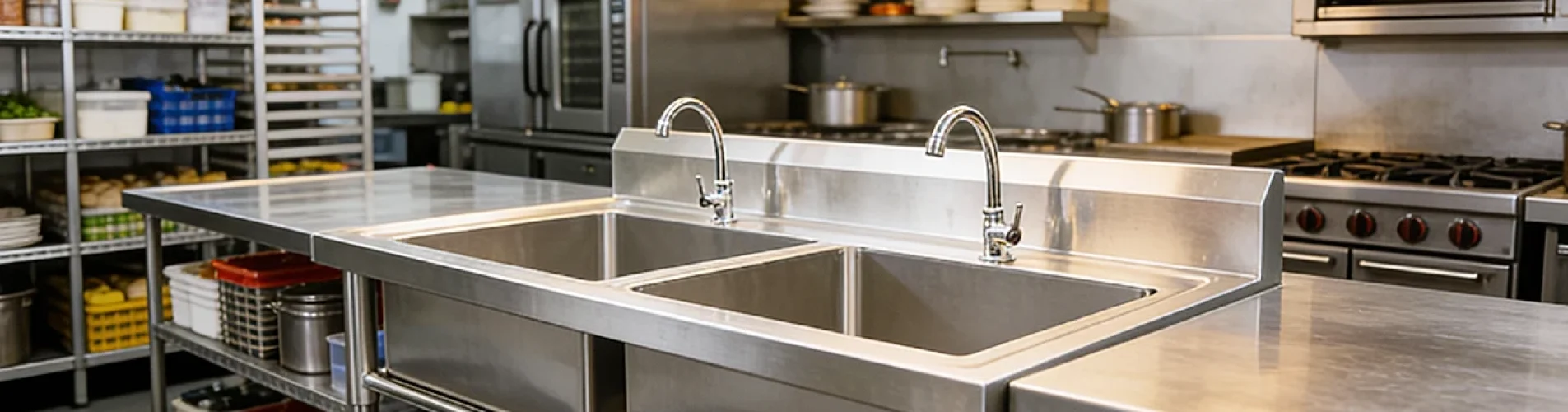
For restaurant professionals who spend every day racing through the back kitchen, what’s the biggest fear? Leaking sinks, grease buildup, and rusted countertops. A commercial kitchen sink must withstand high-frequency, high-intensity “heavy-duty usage,” while also enduring constant exposure to food scraps and chemical cleaning agents. Choosing the wrong sink leads to frequent leaks and repairs at best, and customer complaints due to hygiene issues at worst—damaging both your reputation and your business.
In a commercial environment, the sink is the “heart” of the kitchen. From ingredient prep at five in the morning to dishwashing late at night, it must deliver on three essential requirements: durability, stain resistance, and operational efficiency. A standard residential sink with 0.8 mm thickness simply cannot handle such demands, and low-grade stainless steel is prone to chloride corrosion, resulting in rust spots that become breeding grounds for bacteria. Add to that the constant impact of heavy pots, knife scratches, and high-temperature steam, and the challenges become even more extreme.
This guide will walk you through how to choose the right sinks to ensure smooth operations and high efficiency throughout your restaurant.
Requirements for Sinks Under a Food Service Operation Permit
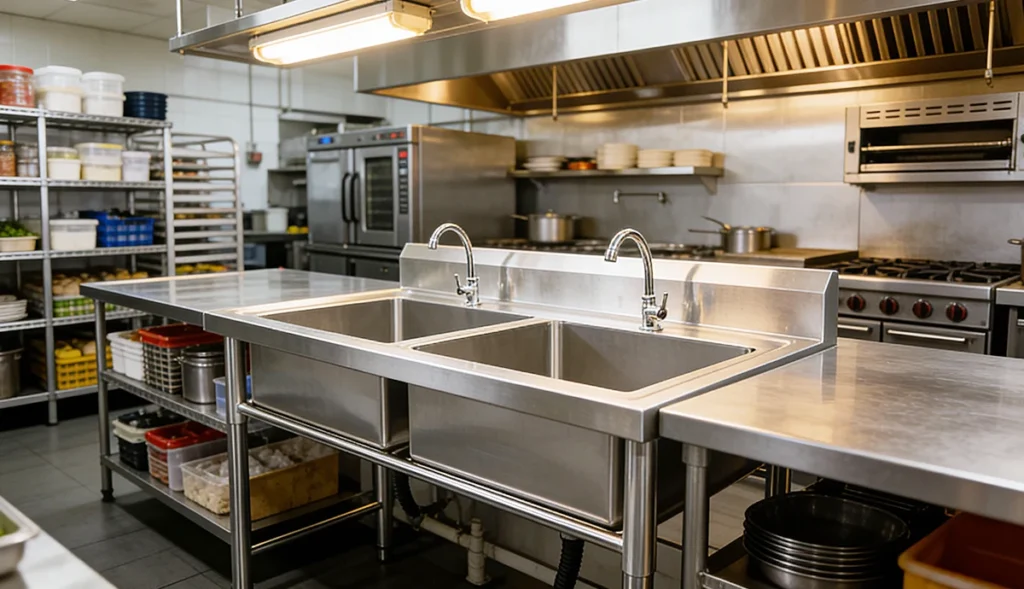
During both the application and ongoing compliance phases of a food service operation permit, the sink area is one of the most strictly inspected zones in the kitchen. Regulatory authorities typically require commercial kitchens to install an adequate number of sinks with clearly separated and designated functions to ensure proper separation of raw and cooked ingredients, standardized cleaning procedures, and prevention of cross-contamination.
The fundamental requirements include: a three-compartment warewashing system (for washing, rinsing, and sanitizing), a dedicated handwashing sink, and a separate sink for produce preparation; stable hot and cold water supply, smooth drainage, anti-splash construction, and corrosion-resistant surfaces that are smooth and easy to clean; as well as proper sanitizing equipment and backflow prevention measures.
If the sink is made of inferior materials, drains poorly, shows signs of rust, or cannot be kept hygienic, the establishment may fail food safety inspections or even be ordered to suspend operations for corrective action. Therefore, a professional sink system that meets permit requirements is not merely kitchen hardware—it forms the foundational safeguard of a restaurant’s hygiene management.
Commercial Sink Options for Modern Restaurants
Choosing the right commercial sink begins with understanding the wide range of configurations designed for different tasks within a professional kitchen. From multi-compartment sinks that support efficient wash–rinse–sanitize workflows, to dedicated handwashing stations required by food safety regulations, each sink type plays a specific role in maintaining hygiene and operational efficiency. Utility sinks handle the toughest cleaning jobs, while produce prep sinks ensure raw ingredients stay uncontaminated. By familiarizing yourself with these options—along with material choices, drainage systems, and compliance requirements—you can build a sink setup that enhances workflow, passes health inspections with ease, and supports the daily demands of a busy foodservice environment.
How to Choose the Right Commercial Sink
Choosing the right commercial sink requires evaluating your kitchen’s workflow, available space, hygiene standards, and daily cleaning tasks. Start by determining the sink’s primary function—food prep, dishwashing, handwashing, or utility use. Then consider the number of compartments, size, depth, and material. Stainless steel with higher grades such as 304 offers better durability and corrosion resistance. Finally, ensure the sink complies with local health regulations and matches the needs of your restaurant, café, or foodservice operation.
Core Types of Commercial Sinks
Compartment Sinks
Compartment sinks are the backbone of warewashing stations in restaurants. They are available in:
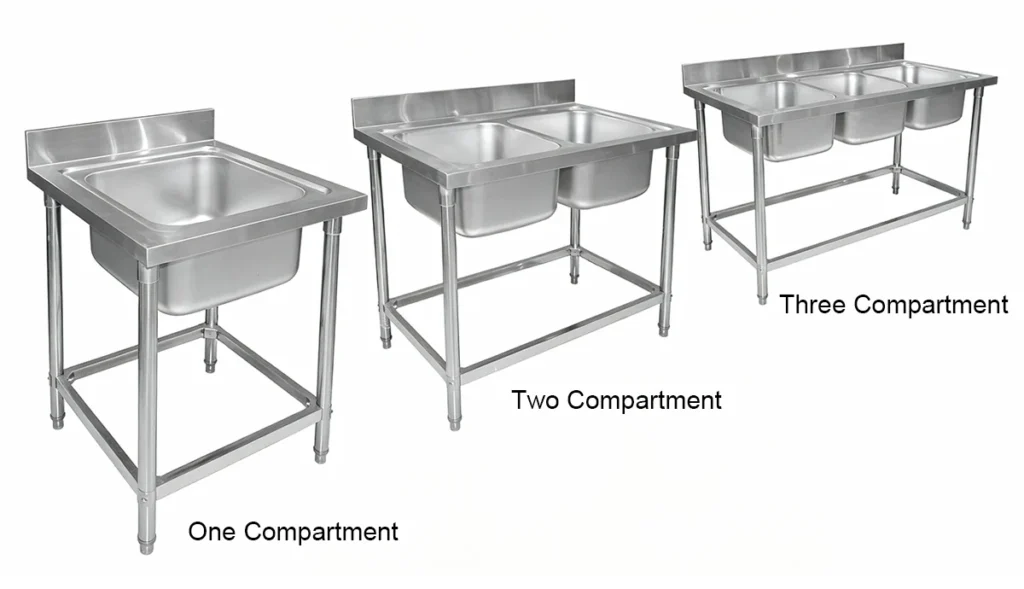
One-Compartment Sinks: Best for small kitchens or specific tasks such as rinsing vegetables or pre-cleaning dishes.
Two-Compartment Sinks: Common for dual purposes like wash and rinse operations.
Three-Compartment Sinks: The industry standard for full wash, rinse, and sanitize workflow required by many health codes.
Four or More Compartments: Useful for kitchens with additional requirements like prep bowls or separate tasks.
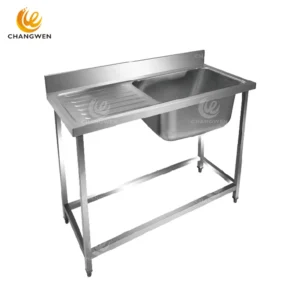
Compartment sinks often include optional drainboards to hold dirty or clean items before/after washing, reducing countertop clutter and streamlining workflow.
Hand Sinks
Hand sinks are dedicated for handwashing and required in every food prep and service area under commercial health codes. They must be easily accessible and supplied with soap, hot water, and disposable towels to prevent cross-contamination.
Utility and Service Sinks
Utility sinks serve non-warewashing tasks such as:
Cleaning mops and sanitation tools
Soaking heavy grease pans
Washing large, awkward items
These are commonly deeper and more robust than standard compartment sinks and can be important for janitorial workflows in restaurants and catering operations.
Material Matters — Choosing the Right Build
Stainless Steel — The Commercial Standard
Stainless steel remains the dominant material in commercial applications due to its:
Hygiene: Non-porous surface prevents bacteria buildup.
Heat Resistance: Withstands boiling water and hot pots.
Durability and Corrosion Resistance: Especially in 16-gauge and 18-gauge variants, thicker steel resists denting, scratching, and noise.
Ease of Cleaning: Basic daily maintenance keeps sinks sanitary and compliant.
Most commercial sinks specify 304 series stainless steel, balancing sanitation, durability, and corrosion resistance.
Alternative Materials — When They Make Sense
While stainless steel dominates, other materials can be used in niche applications:
Composite Sinks: Quieter and aesthetically customizable but less heat resistant than steel.
Polymer/Plastic Sinks: Lightweight and affordable, suitable for food trucks or portable setups, but not ideal for continuous heavy use.
Fireclay or Ceramic: Ultra-hard surfaces with striking looks, heavier and prone to chipping under extreme use.
These alternatives should be selected with awareness of their trade-offs in heat tolerance, durability, and cleaning requirements.
Functional Design Features That Boost Efficiency
Ergonomics and Workflow Optimization
Good sink design reduces fatigue and increases productivity by optimizing:
Sink height for standing posture
Depth of wells to reduce bending
Tap reach and sprayer flexibility
Ergonomic design can improve employee comfort and speed, especially in high-volume kitchens.
Faucets, Sprayers, and Accessories
Professional sinks often include specialized fixtures like:
Pre-rinse sprayers: Remove food debris fast.
Hands-free faucets: Improve hygiene compliance.
Integrated drain strainers and air gaps: Required in some jurisdictions for backflow prevention.
Drainage and Plumbing — Beyond the Basin
A sink’s efficiency depends on a well-designed drainage system. Commercial kitchens must handle not just water, but grease and food particles. Proper plumbing with:
Grease trap
Air gaps
Adequate slope toward drains
ensures smooth wastewater flow and reduces clogs or health inspection issues.
Cleaning and Maintenance Practices
Maintaining a commercial sink isn’t just aesthetic — it ensures food safety and extends equipment life.
Daily wipe downs with mild detergents
Weekly polish with non-abrasive cleaners
Inspect seals and drains for buildu
These simple routines help sinks resist corrosion, prevent bacterial growth, and pass health inspections.
Commercial Stainless Steel Sink Buying Guide
In a commercial kitchen, selecting the right sink requires focusing on three key dimensions: material, craftsmanship, and functionality.
Core Material Standards
Choose sinks with the SUS304/304 stamped marking. The national standard nickel and chromium content should be 8%–10.5% and 18%–20%, respectively.
The panel thickness should be ≥3 mm, and the bowl depth ≥20 cm to ensure load-bearing strength and splash resistance.
Key Craftsmanship Features
Prefer brushed matte or embossed honeycomb finishes; avoid mirror surfaces that scratch easily.
Look for rounded interior corners and a side-drain system, paired with bottom sound-dampening pads and anti-condensation coating.
Smart Functional Configurations
A pull-out faucet supporting 360° rinsing and sensor-activated switches enhances operational efficiency.
A modular large single-bowl design with integrated draining and prep functions, plus rail-slot structures, optimizes workflow.
A large-diameter drain with a countertop control valve should provide a drainage speed of at least 12 L/min.
Commercial Application Recommendations
Verify corrosion resistance through ≥96-hour salt spray testing.
Undermount installations require reinforced support structures; drop-in styles balance stability and aesthetics.
Equipment intended for export should comply with local certification standards (such as WaterMark) and include standardized pre-installed interfaces.
Choose brands that provide material test reports and support customization to reduce long-term maintenance costs.
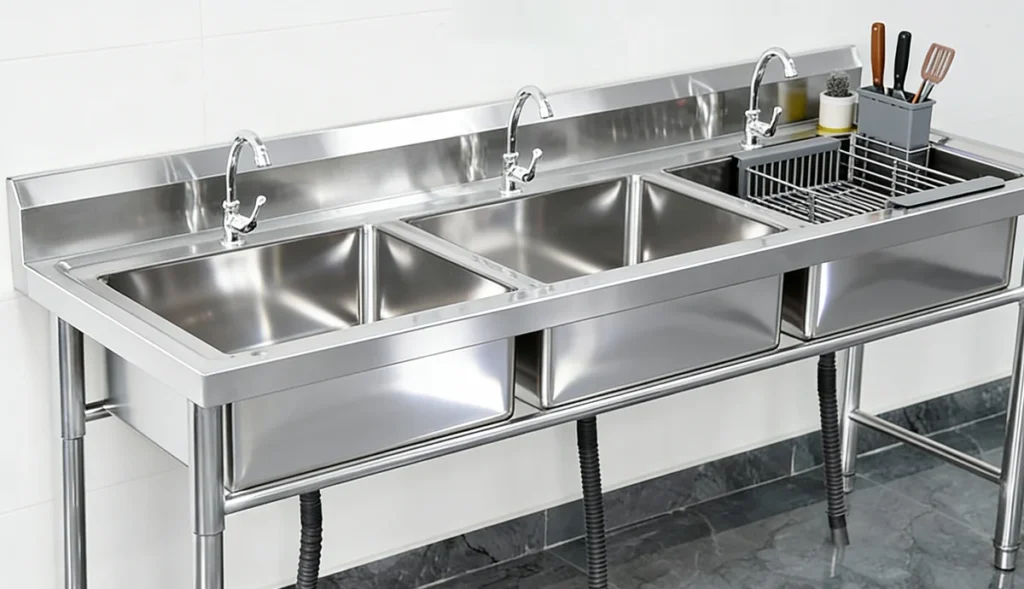
Key Characteristics of a High-Quality Commercial Sink
A premium commercial sink is engineered to deliver durability, efficiency, hygiene, and user-friendly operation. The following features represent the essential attributes of a well-designed professional sink:
High-Grade, Non-Magnetic Stainless Steel
Constructed from 304 or 201 stainless steel, the sink offers strong resistance to corrosion, oxidation, and high temperatures. Reinforced beams enhance load-bearing capacity, ensuring long-term structural stability.
Deep, Enlarged Bowl Capacity
A deep sink basin provides ample space for large-volume washing, supports simultaneous multi-person use, and reduces water splashing. Optional double-bowl configurations allow separation of tasks such as dishwashing and vegetable cleaning for improved hygiene.
Integrated One-Piece Forming with Small R-Corners
The bowl is produced using heavy-duty stainless steel stamping, creating a seamless structure without welded joints. This prevents rust at weld points, eliminates leakage risks, and minimizes dirt buildup. Small R-corners maximize sink volume while ensuring easy cleaning.
X-Shaped Drainage Lines & Large-Diameter Drain Outlet
The X-shaped water guide channels accelerate drainage and prevent standing water. Combined with an enlarged outlet, waste is flushed quickly, reducing clogging risks. Upgraded systems may include 45 mm ultra-thick drainpipes with vortex drainage, capable of emptying 50 L of water in as little as 3 seconds.
Advanced Surface Treatment
Fine brushed or snowflake-texture finishing prevents oil adhesion and makes the surface simple to clean. The smooth, refined texture resists corrosion and maintains a bright, clean appearance even under heavy-use conditions.
Anti-Oil, Anti-Rust Layering for 201 Stainless Steel
Multiple protective layers—including high-temperature oil-removal, acid-alkali neutralization, anti-oxidation, and brushed anti-corrosion layers—significantly enhance durability and hygiene performance.
Raised Backsplash Design
The heightened backsplash protects the wall from water splashes, making the sink ideal for back-wall installations and reducing daily cleaning burdens.
Overflow-Prevention System
A user-focused overflow design channels excess water efficiently, preventing spills that could contaminate floors or disrupt workflow.
Noise Reduction and Hygiene Enhancements
Bottom sound-dampening pads reduce noise to as low as 45 dB—comparable to a library environment. Optional silver-ion antibacterial coating (tested by SGS to inhibit 99.2% of E. coli) provides enhanced food-safety protection.
Intelligent Functional Options
Pull-out faucets, sensor-activated water controls, and modular accessories such as draining racks or prep boards improve operational efficiency and optimize workflow.
Flush-Mount Installation
A flush-mounted installation provides a seamless transition between sink and countertop, improving aesthetics, stability, and ease of cleaning. It integrates well with various commercial kitchen design styles.
Customization Support
High-quality commercial sinks often support custom sizing, materials, accessories, installation styles, and drainage configurations to match specific kitchen layouts and workloads.
Types of Compartment Sinks & How to Choose
| Sink Type | When to Choose | Suitable Scenarios | Typical Dimensions |
| Single-Bowl Sink | • Limited kitchen space• Few categories of items to wash• Fewer kitchen staff | • Small restaurants• Breakfast shops• Small studios• Dormitories | Length: 50/60/70 cmWidth: 50/60/70 cmHeight: 80 cm |
| Double-Bowl Sink | • Moderate space, relatively spacious• Need to separate washing of different items• Kitchen used by 1–2 people frequently | • Small to medium restaurants• Schools• Companies• Hospitals• Labs• Workshops | Length: 100/120 cmWidth: 50/60/70 cmHeight: 80 cm |
| Triple-Bowl Sink | • Large space, ample working area• Many washing categories• More kitchen staff in operation | • Medium to large restaurants• Hospitals• Schools• Corporate cafeterias• Laboratories• Workshops• Markets• Supermarket fresh areas | Length: 145/175/180 cmWidth: 50/60/70 cmHeight: 80 cm |
Conclusion: Choosing the Sink That Fits Your Operation
Selecting the right commercial sink involves balancing material choice, compartments, ergonomics, cleaning protocols, and plumbing infrastructure with your kitchen’s specific needs. Whether you run a high-volume restaurant, catering service, or mobile food operation, understanding these factors will help you design a more efficient, hygienic, and code-compliant kitchen. Continuous maintenance and good workflow design ensure that your sink — though often overlooked — functions as a cornerstone of kitchen hygiene and operations.