Read time: 12 min
Introduction
Every chef who has tried to flip a protein with the wrong turner, stir a sauce with an undersized ladle, or store prep in a container that doesn’t seal properly knows the same truth: restaurant smallwares are not a secondary concern. They are the daily infrastructure of every commercial kitchen — the tools every cook touches dozens of times per shift, and whose quality determines speed, safety, and food consistency as much as any expensive piece of equipment.
Yet smallwares are consistently underbudgeted, poorly specified, and bought as an afterthought after the refrigerators, ranges, and dishwashers are in place. The result: a kitchen that works hard against itself, with missing tools, broken utensils, wrong-size containers, and constant small frustrations that erode service quality shift by shift.
This guide is built to fix that. Whether you’re opening a new restaurant, restocking an existing kitchen, or sourcing commercial kitchen smallwares wholesale for distribution — this is the complete framework: definitions, a full kitchen smallwares list by category, how to choose by restaurant type, NSF requirements, and how to buy restaurant smallwares in China directly from factory-verified suppliers for the lowest cost at wholesale scale.
Key Takeaways
- Kitchen smallwares definition: All non-mechanical, hand-held tools, utensils, cookware, and supplies used in commercial food preparation and service — anything that isn’t a large fixed appliance.
- Smallwares divide into two zones: Back-of-house (BOH) items used in production — cookware, cutting tools, prep containers, baking equipment — and Front-of-house (FOH) items seen by guests — dinnerware, glassware, flatware, serving trays.
- NSF certification is the commercial standard — smallwares items that contact food directly must meet NSF International standards to comply with most state health codes.
- Your menu and restaurant type determine your list — a fine-dining French kitchen and a QSR burger operation share almost no smallwares. Specify by concept, not by generic list.
- China is the dominant global manufacturing source for commercial kitchen smallwares — factory-direct sourcing delivers 30–50% savings over domestic distributor pricing at comparable quality when the right factories are verified.
- Consistent brands and materials across your kitchen reduce maintenance cost, simplify staff training, and standardize replacement ordering.
Smallwares Definition: What Are Restaurant Smallwares?
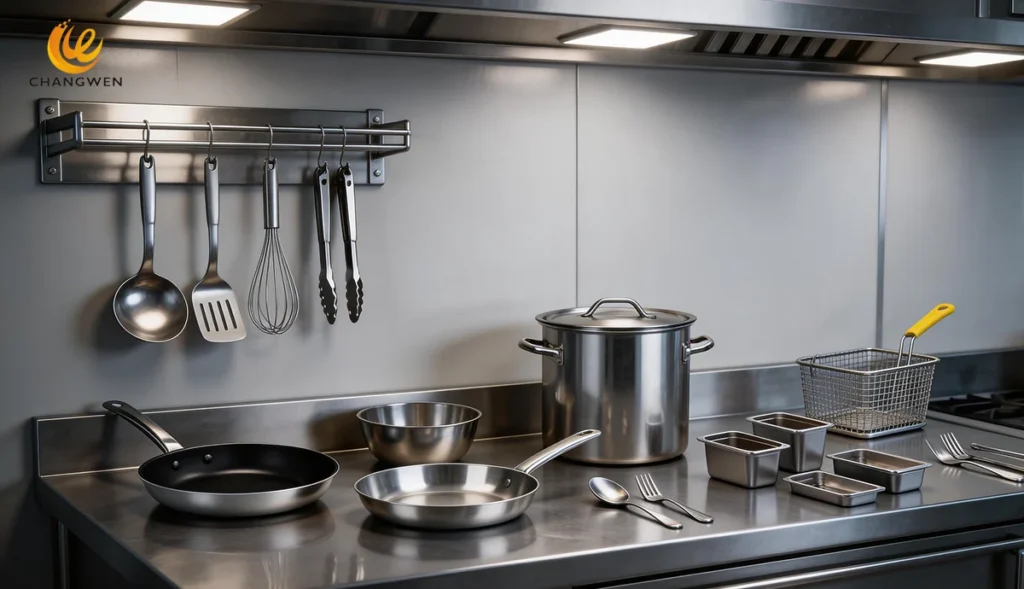
Kitchen smallwares definition: In the foodservice industry, smallwares (also written as “small wares” or “kitchen smallwares”) refers to all the hand-held, reusable, non-electrical items used in a commercial kitchen or dining area — everything from knives and stock pots to thermometers, tongs, mixing bowls, sheet pans, spatulas, food storage containers, flatware, glassware, and serving trays.
The term explicitly excludes large mechanical equipment — ranges, refrigerators, dishwashers, ventilation systems, and other fixed installations are categorized as “equipment,” not smallwares. The distinction matters operationally and financially: smallwares equipment is typically depreciated differently, sourced from different suppliers, and replaced at a much higher frequency than major kitchen equipment.
Smallwares are divided into two broad operational zones:
- Back-of-House (BOH) smallwares — items used in production, invisible to guests: cookware, prep tools, cutting boards, food storage containers, sheet pans, thermometers
- Front-of-House (FOH) smallwares — items seen and handled by guests: dinnerware, glassware, flatware, serving trays, condiment holders, menu holders
Complete Commercial Kitchen Smallwares List by Category
The following commercial kitchen smallwares list covers the full range of items needed in a professional kitchen, organized by function. This is the master reference — your specific kitchen will require a subset based on concept, menu, and volume.
1. Cookware
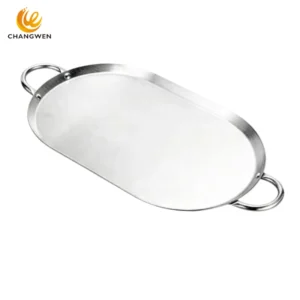
The foundation of any kitchen smallwares collection. All cookware should be commercial-grade (304 stainless steel, hard-anodized aluminum, or cast iron) and NSF-listed for food service use.
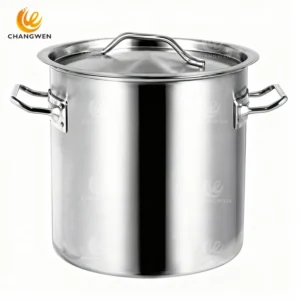
- Stock pots (8 qt, 12 qt, 20 qt, 40 qt)
- Sauce pans (1.5 qt, 2 qt, 3 qt, 4 qt)
- Sauté pans / frying pans (8″, 10″, 12″, 14″)
- Rondeau / braising pan
- Cast iron skillets (for restaurants using cast iron service)
- Double boilers / bain marie inserts
- Induction-ready pots and pans (if using induction ranges)
- Woks (for Asian kitchen concepts)
2. Bakeware and Sheet Pans
- Full-size sheet pans (18″ × 26″) — minimum 12 per kitchen
- Half-size sheet pans (13″ × 18″)
- Quarter-size sheet pans
- Baking pans (loaf, cake, muffin, tart)
- Wire cooling racks
- Pizza screens and pans (for pizza concepts)
- Roasting pans with racks
- Silicone baking molds
3. Food Prep Tools and Cutlery
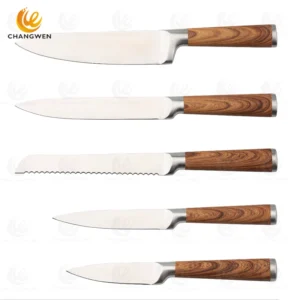
- Chef’s knives (8″ and 10″ — minimum 2 per cook)
- Paring knives
- Boning knives
- Serrated / bread knives
- Cleaver (for butchery concepts)
- Knife sharpener / honing steel
- Kitchen shears
- Mandoline slicer
- Box grater / microplane
- Vegetable peelers
- Pastry cutters and dough scrapers (for bakery/pastry stations)
- Apple corer, melon baller, channel knife (for specialty prep)
4. Cutting Boards
A critical NSF compliance item — color-coded cutting boards prevent cross-contamination and are required by most commercial kitchen health codes.
- Red — raw meat / beef
- Yellow — raw poultry
- Blue — raw fish / seafood
- Green — fresh produce
- White — dairy / cooked food / bread
- Purple — allergen-free preparation
Minimum 2 boards per color in a full-service kitchen. Replace when deeply grooved.
5. Mixing Bowls and Prep Containers
- Stainless steel mixing bowls (1 qt, 3 qt, 5 qt, 8 qt, 13 qt, 20 qt)
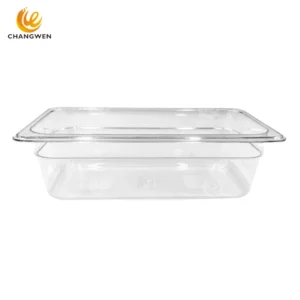
- Polycarbonate food storage containers with lids (2 qt, 4 qt, 6 qt, 8 qt, 12 qt, 18 qt, 22 qt)
- Food pan inserts / hotel pans (full, half, third, sixth, ninth sizes) — for steam tables, prep, and storage
- Prep bowls with lids (pint and quart sizes)
- Bus tubs / tote boxes
6. Kitchen Utensils and Hand Tools
The core daily-use smallwares kitchen items that every cook station needs:
- Ladles (2 oz, 4 oz, 6 oz, 8 oz, 12 oz)
- Serving spoons (solid and perforated)
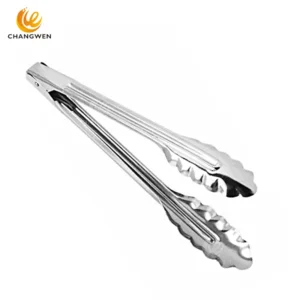
- Tongs (6″, 9″, 12″, 16″) — spring-loaded stainless steel
- Slotted spatulas / fish spatulas
- Rubber and silicone spatulas / scrapers
- Whisks (French whisk and ball whisk in small and large)
- Offset spatulas (for plating and baking)
- Dough scrapers
- Spider strainers / skimmers
- Potato masher / ricer
- Bench scrapers
- Can openers (commercial-grade, table-mount)
- Vegetable peelers
- Thermometers (instant-read digital and probe — mandatory for food safety)
- Kitchen timers
- Measuring cups (1 cup, 2 cup, 4 cup — stainless)
- Measuring spoons (sets)
- Kitchen scales (digital, NSF-rated)
- Portion scales
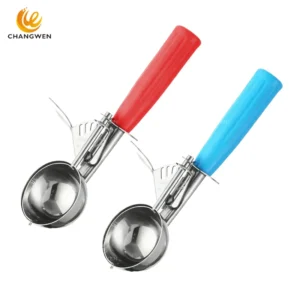
- Ice cream scoops / dishers (in standard portion sizes: #8, #12, #16, #20, #24)
- Pastry brushes
- Squeeze bottles (condiment and sauce service)
7. Colanders, Strainers, and Sieves
- Colanders (large and small — stainless steel)
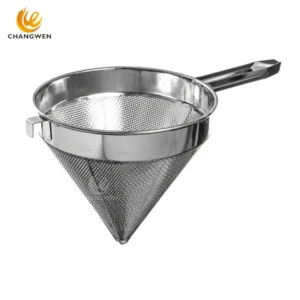
- China cap / conical strainers (fine and medium mesh)
- Chinois / fine mesh strainer (for sauces and stocks)
- Drum sieve / tamis (for pastry)
- Wire skimmers
8. Storage and Food Safety Equipment
- Food storage containers (polycarbonate, labeled by content and date)
- Food pan covers (solid and slotted)
- Date-labeling systems and tape
- FIFO labels
- Food-safe wrap (plastic, foil, parchment)
- Speed racks / sheet pan racks
- Shelving bin containers
9. Thermometers and Measurement Tools
Food temperature compliance is a health code requirement, not an option.
- Instant-read digital thermometers (minimum 2 per kitchen — calibrated)
- Probe / leave-in thermometers for roasting and smoking
- Refrigerator / freezer thermometers
- Infrared / laser thermometers (for surface temperature checks)
- Candy / deep fry thermometers (for pastry and fry stations)
10. Cleaning and Sanitation Supplies
Often categorized separately but technically smallwares equipment in the broader definition:
- Sanitizer buckets and solutions
- Cleaning brushes (pot scrubbers, grill brushes, bottle brushes)
- Scrub pads (non-scratch and heavy-duty)
- Kitchen mops, brooms, and squeegees
- Garbage cans and liners
- Grease-safe cleaning chemicals
- Three-compartment sink supplies (drain plugs, sanitizer test strips)
11. Front-of-House Smallwares
Items that guests see and interact with — critical to brand perception:
- Dinnerware (plates, bowls, platters — match concept and service style)
- Glassware (water, wine, cocktail, beer — by menu)
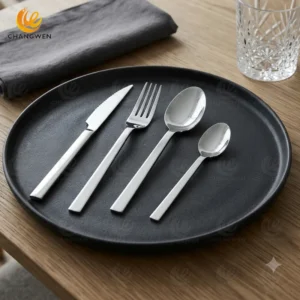
- Flatware (forks, knives, spoons — 18/10 stainless for fine dining; 18/0 for casual)
- Serving trays and tray stands
- Menu holders
- Check presenters and server books
- Condiment holders and refillable dispensers
- Salt and pepper mills
- Bread baskets
- Napkin rings and napkin holders
- Carafes and pitchers
- Ice buckets and wine coolers
Back-of-House vs. Front-of-House Smallwares
Understanding this divide is essential for purchasing strategy, because the criteria for each zone are completely different.
Back-of-House (BOH) Smallwares
BOH items are invisible to guests. The selection criteria are:
- Durability — must survive commercial dishwasher cycles, thermal shock, mechanical impact, and sustained daily use
- NSF compliance — direct food-contact items must be NSF-certified
- Functionality — the right tool for the specific cooking task, right size for volume, ergonomic for repeated use
- Standardization — consistent brands and sizes across stations reduce confusion and simplify replacement
BOH smallwares are typically bought from restaurant smallwares suppliers or directly from manufacturers, in commercial quantities, prioritizing specification over aesthetics.
Front-of-House (FOH) Smallwares
FOH items shape the guest experience. The selection criteria are:
- Brand consistency — flatware, glassware, and dinnerware should present a unified aesthetic that matches the restaurant concept
- Durability — FOH items are handled by both staff and guests; chipping, scratching, and breakage rates matter
- Replacement availability — confirm the pattern/model you select will be available for reorder in 2–3 years. Discontinued dinnerware patterns are one of the most common smallwares headaches in restaurant operations
- Price-to-breakage ratio — fine dining justifies high-end china; high-turnover QSR environments require less expensive, more easily replaced items
How to Choose the Right Smallwares Equipment for Your Restaurant Type
The single most important factor in building your kitchen smallwares list is your menu and service concept. Here is a practical framework:
Step 1 — Start with Your Menu
What dishes are you cooking? Every menu item implies specific tools:
- Soups and stocks → stock pots, ladles, china caps, immersion blender
- Searing proteins → cast iron or heavy stainless sauté pans, tongs, instant-read thermometer
- Pastry and baking → sheet pans, offset spatulas, pastry brushes, bench scrapers, portion scales
- Pasta → large stock pots, colanders, spider strainers, sauté pans for finishing
- Sushi / raw prep → Japanese knives, sashimi boards, molds, squeeze bottles
Step 2 — Calculate Volume, Not Just Type
A restaurant doing 100 covers per service needs a different quantity of smallwares than one doing 400 covers. Calculate based on:
- Turns — how many service cycles will a pot or pan complete before washing?
- Dishwasher cycle time — items in the dishwasher are unavailable. How many of each item must be available at peak service while others are being washed?
- Breakage reserve — FOH items break. Plan for a 15–20% reserve buffer on glassware and dinnerware.
Step 3 — Prioritize NSF Compliance
Every item that contacts food directly — cutting boards, prep containers, cookware, utensils, thermometers — must be NSF-certified for commercial use. Don’t purchase consumer-grade tools for commercial kitchens. They won’t pass health inspection and will fail faster under commercial demand.
Step 4 — Standardize by Brand and Specification
Consistency reduces cost. Choose one brand for your cookware line, one standard for your food storage containers, and one spec for your flatware. Buying consistently means every piece is interchangeable, replacement ordering is simple, and new staff can use any tool from any station without confusion.
Smallwares by Restaurant Type
Fast-Casual / QSR
Priority items: Heavy-duty prep bowls, heat-proof scoops and dispensers, large-format sheet pans, portion scales, squeeze bottles, speed-rack systems. FOH is typically disposable or semi-disposable — not fine china.
Casual / Family Dining
Priority items: Versatile sauté pans, full prep utensil sets, durable mid-grade flatware, tempered glassware, serving trays and tray stands. FOH items should be durable but unpretentious.
Fine Dining / Upscale
Priority items: Precision measuring tools, heavy-gauge cookware (tri-ply or five-ply), specialty plating spoons and tweezers, mandoline, thermometers, chinois strainers. FOH items are core to the brand — invest in high-quality china, crystal or quality glassware, and 18/10 flatware.
Bakery / Café / Pastry
Priority items: Sheet pans (lots of them), baking molds, offset spatulas, bench scrapers, portion scales, pastry bags and tips, mixing bowls across all sizes, cooling racks, proofing containers.
Catering / Banquet
Priority items: Large-format cookware (40–80 qt stock pots), chafing dishes and fuel, GN food pans, tray stands, transport containers, insulated carriers. FOH items need to be both presentable and durable under transport conditions.
Bars / Cocktail Venues
Priority items: Cocktail shakers, bar spoons, jiggers, strainers, muddlers, ice buckets, tongs, pourers, commercial glassware (weighted bases for durability), blenders.
NSF Certification and Food Safety Requirements
NSF International sets the food safety and sanitation standards for commercial kitchen equipment globally. For commercial kitchen smallwares, NSF certification is not optional in most jurisdictions — it is a health code requirement.
What NSF Certification Means for Smallwares
- Direct food-contact compliance: The material does not leach harmful chemicals into food under commercial use conditions
- Sanitary design: The item can be adequately cleaned and sanitized — no crevices, porous surfaces, or design features that trap food particles and bacteria
- Durability under commercial use: The item survives commercial dishwasher cycles, thermal cycling, and daily mechanical stress without structural degradation
What Must Be NSF-Certified in a Commercial Kitchen
- All cutting boards (color-coded NSF-listed boards are the standard)
- Food storage containers (polycarbonate or NSF-rated plastic)
- All cookware used in direct food preparation
- Thermometers (probe type especially)
- Scoops and portion tools
- Colanders, strainers, and china caps
- Any utensil or tool that contacts food directly
How to Verify NSF Certification
Look for the NSF mark stamped or embossed directly on the product. For wholesale orders from China, request the NSF Listing Number from the manufacturer — a legitimate certified product will have a verifiable number in the NSF online database. Do not accept catalog claims of certification without the actual listing number.
Where to Buy Restaurant Smallwares: Local vs. China Wholesale
Option 1 — Local / Domestic Restaurant Smallwares Suppliers
Best for: Immediate need, small quantity, specific brands, and items where health code compliance documentation is time-sensitive.
Pros of domestic suppliers: Immediate availability, established brands, easy returns, clear health code compliance documentation.
Cons: 30–80% higher unit cost than factory-direct China sourcing at equivalent quality; limited ability to customize or private-label.
Option 2 — Buy Restaurant Smallwares from China (Wholesale / Factory Direct)
For restaurant groups, distributors, and equipment dealers sourcing at volume, buying restaurant smallwares from China factory-direct delivers the most significant cost advantage available in the industry. The same 304 stainless steel construction, NSF-certifiable materials, and commercial-grade manufacturing found in domestic brands — at 30–50% lower cost.
This is the option most serious wholesale buyers use.
How to Buy Restaurant Smallwares from China: A Step-by-Step Guide
Why China for Restaurant Smallwares?
China is the world’s largest manufacturer of commercial kitchen smallwares — from stainless steel cookware and food pans to cutting boards, mixing bowls, serving trays, glassware, and flatware. The manufacturing clusters are concentrated in:
- Guangdong Province (Guangzhou, Jiangmen, Chaozhou) — stainless steel cookware, food pans, hotel pans, serving equipment
- Shandong Province (Zibo) — glassware
- Zhejiang Province (Yongkang, Wenzhou) — kitchen tools, gadgets, utensils
- Guangdong (Yangjiang) — kitchen knives and cutlery
Factories in these regions produce the same products sold under major US and European brands — often with the exact same materials and specifications, at factory-direct prices.
Step 1 — Define Your Complete Smallwares List Before Sourcing
Don’t approach suppliers item by item. Build your complete restaurant smallwares list first — materials, sizes, grades, NSF requirements, quantities, and packaging specifications for every item. Suppliers can then quote your full list, allowing you to evaluate total order value rather than individual item prices.
Step 2 — Identify Genuine Factories vs. Trading Companies
The most important step in China sourcing. Trading companies present themselves as manufacturers but are intermediaries that add 15–30% to the factory price and cannot provide direct quality control. A genuine factory can show:
- Factory floor video and production photos on demand
- Business registration identifying company type as “manufacturer”
- NSF, FDA, CE, or LFGB certification documentation with verifiable listing numbers
- Audited Supplier or Verified Manufacturer status on Alibaba or Made-in-China
Platforms to source verified manufacturers:
- Alibaba (Gold Supplier + Verified Manufacturer filter)
- Made-in-China.com (Audited Supplier certification)
- Canton Fair (biannual trade show in Guangzhou — the most direct factory access available)
- Global Sources (trade show and online B2B platform)
Step 3 — Request Samples Before Bulk Orders
Never place a bulk order without physical samples. For commercial kitchen smallwares, assess:
- Material weight and gauge (stainless steel should feel substantial, not tinny)
- Weld quality on handles and joints (clean, full welds — no gaps or rough edges)
- Finish consistency (mirror polish or brushed satin should be uniform)
- NSF listing number physically stamped on the product, not just on packaging
Sample lead time from Chinese factories: typically 5–15 days. Request samples of all critical items before committing to bulk.
Step 4 — Verify NSF and Food Safety Certifications
For any commercial kitchen smallwares item sold into the US market, NSF certification must be verifiable — not just claimed. Request:
- NSF Listing Number for each item
- Copy of current NSF certificate
- For plastic items: FDA food-contact compliance documentation
- For European markets: LFGB (German food safety standard, widely accepted across EU)
Legitimate factories provide this documentation without hesitation. Reluctance or inability to provide certification numbers is a red flag.
Step 5 — Establish MOQ, Lead Time, and Logistics
Typical MOQ ranges for restaurant smallwares from China:
- Stainless steel hotel pans / food pans: 50–200 units per size
- Stainless steel cookware: 50–200 units per size
- Plastic food storage containers: 200–500 units
- Glassware: 300–1,000 units (higher MOQ due to packing requirements)
- Kitchen utensils: 100–500 units per item
- Flatware: 200–1,000 sets
Lead time: 25–40 days production, plus 15–25 days ocean freight to US/Europe (standard LCL or FCL container).
Freight considerations: Order volume should consolidate into a full container (FCL) when possible — this reduces per-unit freight cost significantly versus LCL (less-than-container-load). A standard 20-foot container can hold approximately $30,000–80,000 USD worth of smallwares depending on product mix and weight.
Step 6 — Payment and Protection
Standard payment terms for verified Chinese factories:
- 30% deposit before production
- 70% balance before shipment (after pre-shipment inspection)
Use Trade Assurance on Alibaba for order protection on first-time supplier relationships. For established relationships, T/T (bank wire transfer) is standard. Avoid full payment upfront with any new supplier.
Step 7 — Pre-Shipment Inspection
For orders above $5,000 USD, commission a third-party pre-shipment inspection through SGS, Bureau Veritas, Intertek, or QIMA. The inspector visits the factory, checks quantity, quality against your specifications, and packaging before the container is sealed. Cost is approximately $200–400 per inspection — one of the highest-ROI steps in China sourcing.
FAQ
What is the definition of smallwares in a restaurant?
Kitchen smallwares (or restaurant smallwares) are all the hand-held, reusable, non-electrical tools and supplies used in commercial food preparation and service — everything that isn’t a large fixed appliance. The category includes cookware, cutlery, prep containers, measuring tools, utensils, thermometers, bakeware, serving equipment, glassware, flatware, and cleaning supplies. The term comes from the foodservice industry and distinguishes these small, high-replacement items from major “equipment” like ranges, refrigerators, and dishwashers.
What should be on a complete commercial kitchen smallwares list?
A complete commercial kitchen smallwares list organized by category includes: cookware (stock pots, sauté pans, sauce pans), bakeware (sheet pans, baking molds, wire racks), prep tools (knives, cutting boards, mandoline, graters), mixing bowls and food storage containers, kitchen utensils (tongs, ladles, spatulas, whisks, thermometers, portion scoops), colanders and strainers, sanitation equipment, and front-of-house items (dinnerware, glassware, flatware, serving trays). The specific items needed depend on your menu, restaurant type, and service volume. See the full restaurant smallwares list by category earlier in this guide.
What is the difference between restaurant equipment and restaurant smallwares?
Restaurant equipment refers to large, typically fixed or mechanical appliances — ranges, commercial refrigerators, dishwashers, ventilation hoods, fryers, and commercial mixers. Restaurant smallwares are all the hand-held, non-mechanical tools and supplies used alongside that equipment — cookware, utensils, cutting boards, food pans, and serving items. The distinction matters for purchasing (different suppliers), depreciation schedules (different accounting treatment), and maintenance (equipment requires service contracts; smallwares are simply replaced).
Do restaurant smallwares need to be NSF certified?
Yes, for commercial use in most jurisdictions. Items that come into direct contact with food — cutting boards, cookware, food storage containers, utensils, scoops, and thermometers — must be NSF-certified to comply with commercial health codes in the US and equivalent standards in other markets. NSF certification confirms food-safe materials, sanitary design, and durability under commercial use. Always verify the NSF Listing Number on a product before purchasing for commercial kitchen use.
Where can I find restaurant smallwares near me?
For kitchen smallwares near me, options include: restaurant supply stores, broadline foodservice distributors, kitchen supply wholesale clubs, and commercial kitchen showrooms that offer smallwares alongside equipment. For the widest selection and best pricing, online commercial suppliers ship nationally. For wholesale buyers sourcing at scale, factory-direct purchasing from Chinese manufacturers delivers the lowest per-unit cost.
Is it worth buying restaurant smallwares from China directly?
Yes — for buyers purchasing at wholesale or distribution scale. Buying restaurant smallwares from China factory-direct delivers 30–50% cost savings versus domestic distributor pricing for comparable quality. The same 304 stainless steel construction, NSF-certifiable materials, and commercial-grade manufacturing are available from verified Chinese factories. The key requirements: verify factory status (not a trading company), request NSF certification documentation with listing numbers, order samples before bulk, and use a pre-shipment inspection service. For restaurants buying small quantities for immediate use, domestic suppliers are more practical. For distributors, restaurant groups, or equipment dealers sourcing at volume, China factory-direct is the standard industry approach.
What are the most essential smallwares for a new restaurant kitchen?
The non-negotiables for any new commercial kitchen include: a full knife set (chef’s, paring, bread, boning), color-coded cutting boards (NSF-rated), mixing bowls in multiple sizes, food storage containers with lids, a full set of kitchen utensils (tongs, ladles, spatulas, whisks), instant-read digital thermometers (minimum 2), sheet pans (minimum 12 full-size), a cookware set matched to your menu (stock pots, sauté pans, sauce pans), and colanders/strainers. Front-of-house essentials depend on your service style — see the FOH section of this guide. Plan for 15–20% reserve on high-breakage items like glassware and cutting boards.
Conclusion
Restaurant smallwares are the operational backbone of every commercial kitchen — not an afterthought, and not a category to underspecify in order to free up budget for bigger equipment. The wrong ladle, the missing thermometer, the cutting board that fails health inspection, the glassware pattern that gets discontinued — these are the daily friction points that slow service, create staff frustration, and ultimately affect food quality and guest experience.
The framework in this guide gives you everything needed to build a complete, well-specified commercial kitchen smallwares list for any restaurant type:
- Start with the kitchen smallwares definition to understand scope and distinguish from equipment
- Use the commercial kitchen smallwares list by category as your master reference
- Filter by your restaurant type and menu to build the right specification
- Require NSF certification on all food-contact items — it’s not optional
- Source from restaurant smallwares suppliers locally for immediate needs and from China wholesale factories for volume purchasing at the best cost-per-unit
We are a factory-direct manufacturer and exporter of commercial kitchen smallwares — stainless steel cookware, hotel pans, GN food pans, mixing bowls, serving equipment, and full smallwares packages — with over 20 years of experience supplying restaurant groups, distributors, and equipment dealers worldwide. Request our complete catalog, NSF documentation, and wholesale pricing using the contact form below.