Introduction
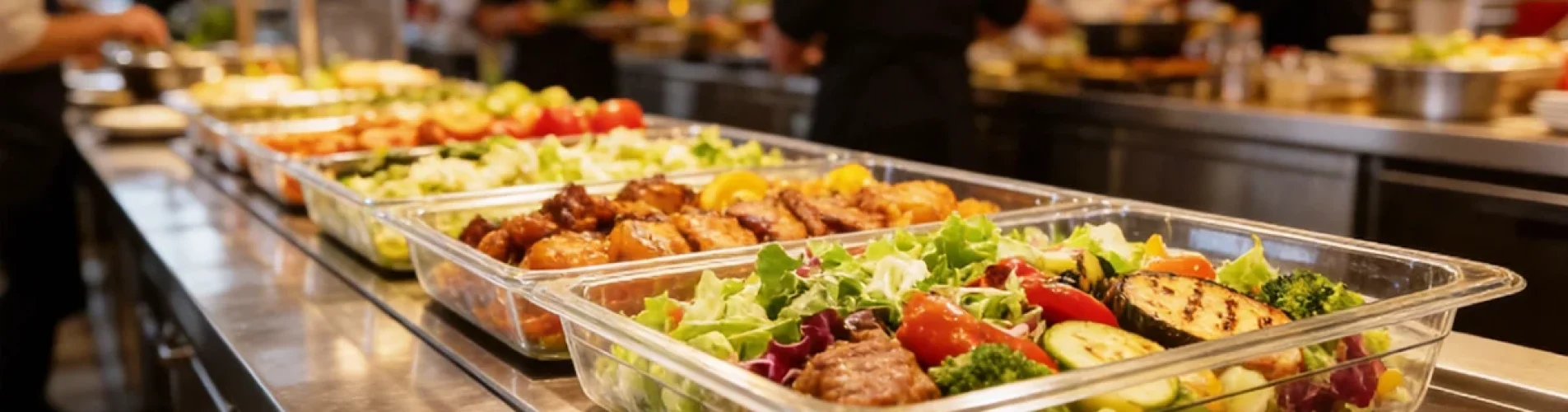
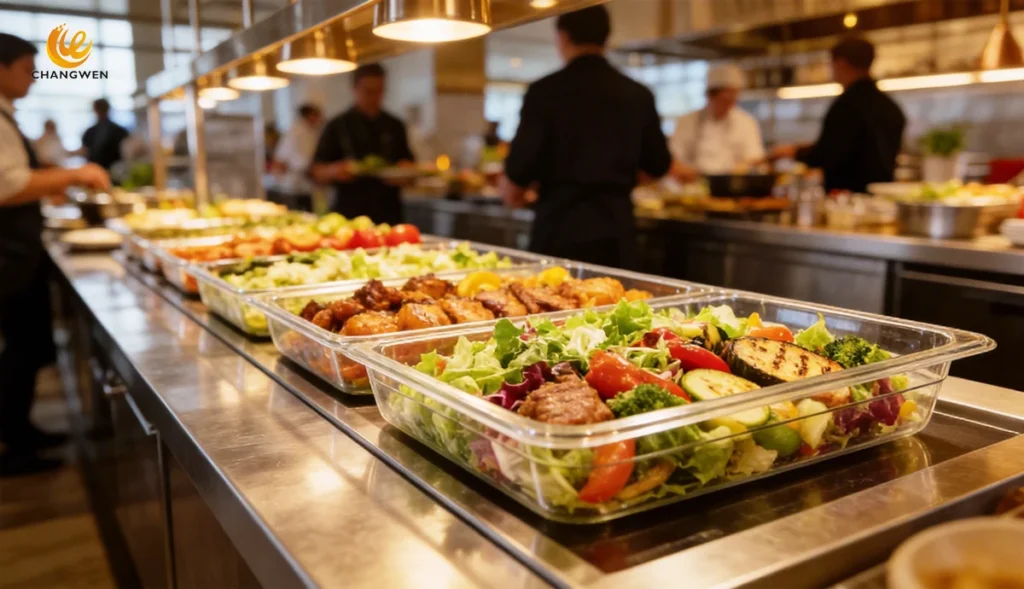
In the fast-paced world of commercial kitchens, catering services, and food storage operations, choosing the right food storage containers can significantly impact efficiency, food safety, and operational costs. Polycarbonate gastronorm pans have emerged as a leading solution for professional food service environments, offering an exceptional balance of durability, versatility, and value.
Polycarbonate gastronorm containers represent a modern evolution in food storage technology. Unlike traditional stainless steel or basic plastic alternatives, these transparent, virtually unbreakable containers provide food service professionals with a reliable system that withstands the rigors of daily commercial use while maintaining excellent clarity for easy content identification.
The gastronorm (GN) sizing system, established as an international standard, ensures that these polycarbonate containers fit seamlessly into standardized kitchen equipment including refrigerators, steam tables, prep stations, and transportation systems. This standardization eliminates compatibility issues and streamlines kitchen workflows across operations of all sizes.
This comprehensive guide explores everything you need to know about polycarbonate gastronorm pans, from understanding the complete range of sizes and dimensions to selecting the right configurations for your specific needs. Whether you’re equipping a restaurant kitchen, catering operation, institutional cafeteria, or commercial food production facility, this guide will help you make informed decisions about polycarbonate gastronorm containers that optimize your food storage and handling processes.
Key Takeaways
- Polycarbonate gastronorm pans offer exceptional durability and impact resistance, withstanding drops and rough handling better than glass or standard plastic containers
- The gastronorm sizing system provides standardized dimensions that ensure compatibility across all commercial kitchen equipment worldwide
- Polycarbonate gastronorm containers feature crystal-clear transparency, allowing instant visual identification of contents without opening lids
- Temperature versatility allows polycarbonate GN pans to safely handle temperatures from -40°C to +99°C, suitable for freezer storage through hot holding applications
- Available sizes range from GN 1/9 (the smallest) to GN 2/1 (the largest), with multiple depth options from 65mm to 200mm to accommodate various food volumes
- Polycarbonate gastronorm containers are dishwasher-safe, making cleaning and sanitization efficient in high-volume operations
- These containers resist staining from acidic foods and won’t absorb odors, maintaining a professional appearance throughout their service life
- Compatible accessories including polycarbonate gastronorm lids (flat and dome covers), drain shelves, and color-coded systems enhance organization and food safety
- Polycarbonate material is BPA-free and meets stringent food safety standards required for commercial food service applications
What Are Polycarbonate Gastronorm Pans?
Understanding Polycarbonate Material
Polycarbonate is a thermoplastic polymer renowned for its exceptional strength-to-weight ratio and optical clarity. In foodservice applications, polycarbonate gastronorm containers leverage these material properties to create food storage solutions that are:
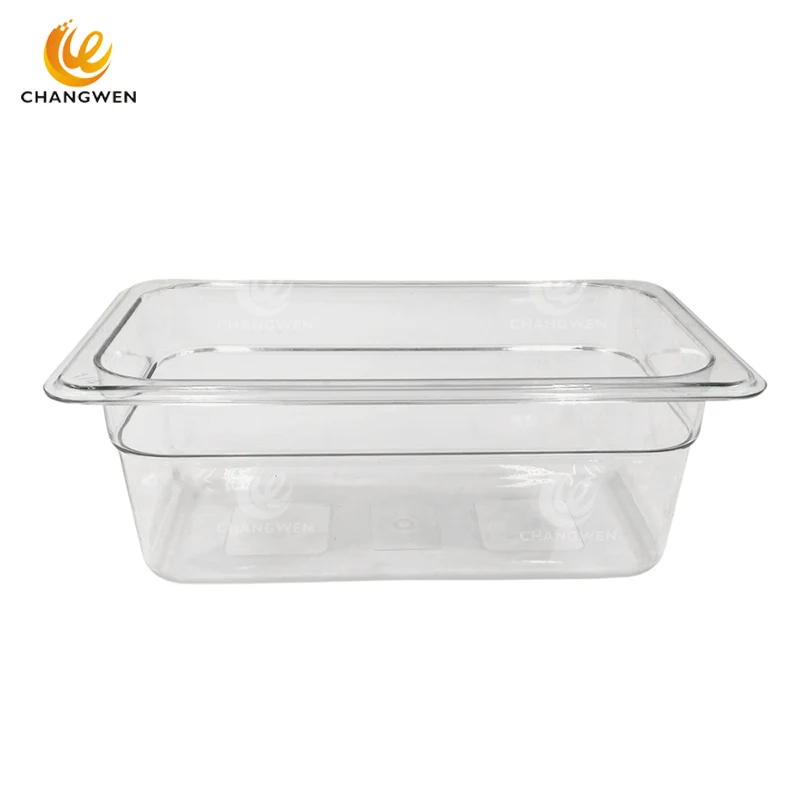
Virtually Unbreakable: Polycarbonate material exhibits remarkable impact resistance, able to withstand drops from counter height without cracking or shattering. This durability dramatically reduces replacement costs compared to glass or acrylic alternatives.
Crystal Clear: The transparency of polycarbonate gastronorm pans rivals glass, allowing kitchen staff to instantly identify contents, assess food quality, and determine inventory levels at a glance. This visibility reduces unnecessary container opening, helping maintain food temperatures and minimize contamination risks.
Temperature Versatile: Quality polycarbonate gastronorm containers safely operate across a wide temperature range from -40°C (-40°F) to +99°C (210°F). This versatility means the same polycarbonate gastronorm pan can move from freezer storage to refrigeration to hot holding applications.
Lightweight: Despite their strength, polycarbonate gastronorms weigh significantly less than stainless steel equivalents, reducing physical strain on staff during repeated handling and transport.
Chemical Resistant: Polycarbonate resists acids, fats, and most food-related chemicals, preventing staining and odor absorption that plagues some other plastic materials.
The Gastronorm Standard Explained
The gastronorm (GN) standard, formally known as EN 631-1:1993 in Europe and similar standards globally, establishes unified dimensions for food storage containers and compatible equipment. This standardization originated in Switzerland during the 1960s to address compatibility issues between kitchen equipment from different manufacturers.
Standard Base Size: The gastronorm system uses GN 1/1 (full size) as its base measurement: 530mm × 325mm (20.87″ × 12.80″). All other gastronorm sizes represent precise fractions or multiples of this dimension.
Universal Compatibility: Equipment designed to gastronorm specifications—including refrigerators, blast chillers, bain maries, prep tables, and transport carts—accepts any gastronorm-sized container regardless of manufacturer. This interoperability simplifies equipment procurement and operational flexibility.
Fraction System: The naming convention (1/2, 1/3, 1/6, etc.) indicates how many containers of that size fit into a full GN 1/1 footprint. For example, two polycarbonate gastronorm 1/2 pans equal one GN 1/1 space.
Why Choose Polycarbonate Over Other Materials?
Versus Stainless Steel:
- Polycarbonate gastronorm containers cost 40-60% less than equivalent stainless steel
- Transparency allows content identification without opening
- Lighter weight reduces handling fatigue
- No metal transfer reactions with acidic foods
- However, stainless steel offers higher temperature tolerance for cooking applications
Versus Standard Plastic (Polypropylene):
- Superior clarity—polypropylene tends to be translucent or opaque
- Greater impact resistance and durability
- Better low-temperature performance without becoming brittle
- Maintains clarity longer without clouding
- Polypropylene offers slightly higher heat resistance (up to 120°C)
Versus Glass:
- Dramatically more impact-resistant—won’t shatter if dropped
- Significantly lighter weight for easier handling
- Lower cost per unit
- Glass offers better scratch resistance and doesn’t cloud over time
For food service operations prioritizing durability, visibility, and value, polycarbonate gastronorm pans deliver an optimal combination of properties that neither metal nor alternative plastic materials can match.
Complete Gastronorm Size Chart and Dimensions
Understanding gastronorm dimensions is essential for selecting the right polycarbonate containers for your operation. This comprehensive chart covers all standard polycarbonate gastronorm sizes.
Full-Size Gastronorm Dimensions
| GN Size | External Dimensions (mm) | External Dimensions (inches) | Internal Capacity (Liters)* | Typical Applications |
|---|---|---|---|---|
| GN 2/1 | 650 × 530 | 25.6″ × 20.9″ | 28-38L | Batch preparation, bulk storage, large-scale catering |
| GN 1/1 | 530 × 325 | 20.9″ × 12.8″ | 14-20L | Primary storage, main courses, salad bars |
*Capacity varies by depth; ranges shown are for 100-150mm depths
Half-Size Gastronorm Dimensions
| GN Size | External Dimensions (mm) | External Dimensions (inches) | Internal Capacity (Liters)* | Typical Applications |
|---|---|---|---|---|
| Polycarbonate Gastronorm 1/2 | 325 × 265 | 12.8″ × 10.4″ | 7-10L | Side dishes, sauces, salad components |
| GN 2/4 | 530 × 162 | 20.9″ × 6.4″ | 5-7L | Condiments, garnishes, narrow storage |
Third-Size Gastronorm Dimensions
| GN Size | External Dimensions (mm) | External Dimensions (inches) | Internal Capacity (Liters)* | Typical Applications |
|---|---|---|---|---|
| GN 1/3 | 325 × 176 | 12.8″ × 6.9″ | 4.5-6.5L | Sauces, dressings, prep ingredients |
| GN 2/3 | 354 × 325 | 13.9″ × 12.8″ | 9-13L | Alternative to 1/1 for specific equipment |
Quarter and Sixth-Size Gastronorm Dimensions
| GN Size | External Dimensions (mm) | External Dimensions (inches) | Internal Capacity (Liters)* | Typical Applications |
|---|---|---|---|---|
| GN 1/4 | 265 × 162 | 10.4″ × 6.4″ | 2.8-4L | Condiments, small garnishes, sample storage |
| Polycarbonate Gastronorm 1/6 | 176 × 162 | 6.9″ × 6.4″ | 1.7-2.6L | Toppings, spices, small portion storage |
| GN 2/8 | 325 × 132 | 12.8″ × 5.2″ | 2.8-4L | Specialty narrow storage |
Smaller Gastronorm Dimensions
| GN Size | External Dimensions (mm) | External Dimensions (inches) | Internal Capacity (Liters)* | Typical Applications |
|---|---|---|---|---|
| GN 1/9 | 176 × 108 | 6.9″ × 4.3″ | 0.8-1.3L | Individual condiments, small samples |
Standard Depth Options
Polycarbonate gastronorm containers are available in multiple depth options to accommodate different food volumes and applications:
Common Polycarbonate Gastronorm Depths:
- 65mm (2.5″) – Shallow storage, garnishes, thin items
- 100mm (4″) – Standard depth, most versatile for general storage
- 150mm (6″) – Deep storage, soups, stews, bulk ingredients
- 200mm (8″) – Extra-deep storage, large batch preparation
Example Capacity Calculations:
Polycarbonate Gastronorm 1/1 200mm Deep Clear:
- Dimensions: 530 × 325 × 200mm
- Capacity: Approximately 28-30 liters
- Use Cases: Large batch soup storage, bulk marinating, major prep work
Polycarbonate Gastronorm 1/2:
- Dimensions: 325 × 265mm (depth varies)
- 100mm depth: ~7 liters
- 150mm depth: ~10 liters
- Use Cases: Standard side dishes, component storage
Polycarbonate Gastronorm 1/6:
- Dimensions: 176 × 162mm (depth varies)
- 65mm depth: ~1.5 liters
- 100mm depth: ~2.3 liters
- Use Cases: Salad bar toppings, condiment storage
How GN Sizes Fit Together
Understanding spatial relationships helps optimize refrigerator and equipment space:
Into GN 1/1 Space Fits:
- 2× GN 1/2 containers
- 3× GN 1/3 containers
- 4× GN 1/4 containers
- 6× GN 1/6 containers
- 9× GN 1/9 containers
This modular design allows flexible configuration based on daily menu requirements and storage needs.
Types of Polycarbonate Gastronorm Containers
Standard Polycarbonate Gastronorm Pans
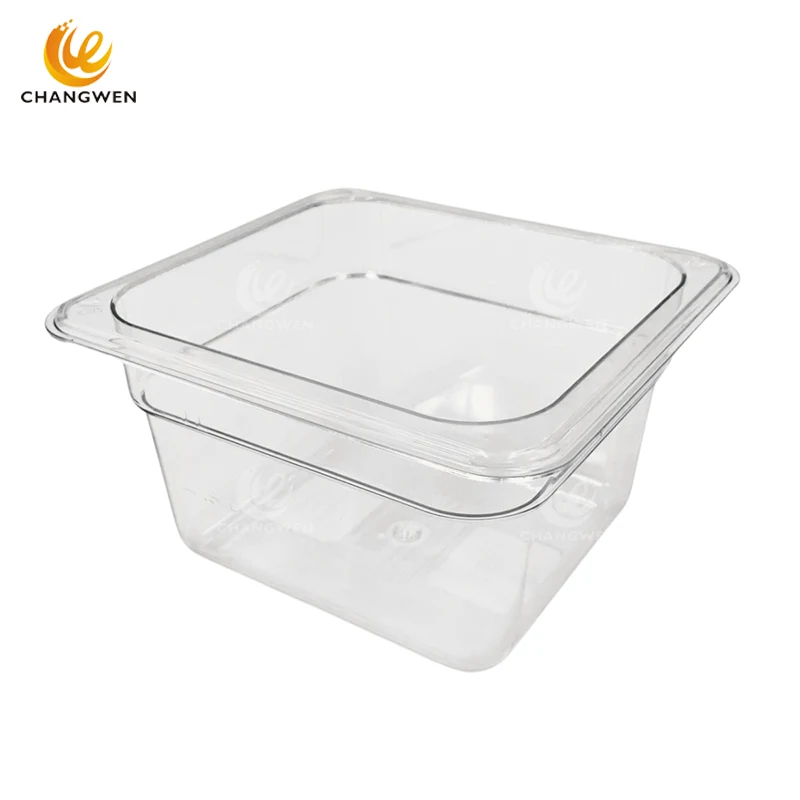
The foundation of any food storage system, standard polycarbonate gastronorm pans feature smooth interiors and exteriors with rounded corners for easy cleaning.
Key Features:
- Crystal-clear transparency for instant content identification
- Molded-in capacity graduations on some models for portion control
- Stacking lugs prevent jamming when nesting multiple containers
- Temperature range: -40°C to +99°C
- Dishwasher safe up to 90°C cycles
Available Options:
- All standard GN sizes from 1/9 through 2/1
- Depths from 65mm to 200mm
- Both clear and colored (blue, green) variants for color-coding systems
Polycarbonate GN Pan with Lid Options
Proper lids are essential for maintaining food quality, preventing contamination, and maximizing storage efficiency. Several polycarbonate gastronorm lid types serve different functions:
Flat Polycarbonate Gastronorm Lids:
- Seal tightly to pan rim
- Stackable for efficient storage
- Clear for content visibility
- Available with or without handles
- Some feature notched corners for utensil storage
- Temperature resistant matching pan specifications
Polycarbonate Gastronorm Tray with Dome Cover:
- Raised dome design accommodates higher food volumes
- Prevents compression of delicate items like cakes or garnished dishes
- Extra clearance for dishes with height
- Maintains presentation quality
- Particularly useful for display applications
- Available for most popular GN sizes
Sliding Lids:
- Slide open for easy access
- Reduce contamination exposure
- Ideal for salad bar and self-service applications
- Stay attached to pan during use
Vented Lids:
- Allow steam release during hot holding
- Prevent moisture buildup
- Reduce condensation dripping onto food
- Useful for maintaining crispy textures
Specialized Polycarbonate Gastronorm Containers
Drain Shelves and Perforated Pans:
- Perforated bottoms allow liquid drainage
- Ideal for washing and storing produce
- Thawing proteins while catching drips
- Marinating with drainage
Handled Polycarbonate Gastronorms:
- Integrated handles on long sides
- Facilitate safe carrying of heavy or full containers
- Reduce risk of drops and spills
- Available in most popular sizes
Colored Polycarbonate Gastronorm Containers:
- Available in blue, green, yellow, red
- Implement HACCP color-coding systems
- Prevent cross-contamination
- Quick visual identification by food type
- Particularly popular: blue for fish, green for vegetables, red for raw meat, yellow for cooked foods
Measuring and Portioning Containers:
- Molded-in measurement markings
- Graduated in liters, quarts, or both
- Essential for recipe consistency
- Portion control for cost management
- Popular for sauce and dressing storage
Temperature-Specific Variants
High-Heat Polycarbonate Gastronorms:
- Amber-colored for higher heat resistance
- Withstand up to 190°C (374°F)
- Suitable for some warming applications
- More expensive but offer greater versatility
Cold-Optimized Containers:
- Engineered for extreme cold applications
- Maintain flexibility at -40°C
- Won’t crack or become brittle in freezers
- Standard clear polycarbonate handles this well
Benefits of Polycarbonate Gastronorm Containers
Exceptional Durability and Impact Resistance
Polycarbonate gastronorm pans excel in commercial environments where containers face constant handling, stacking, and occasional drops.
Impact Performance: Commercial kitchen testing demonstrates that polycarbonate gastronorm containers withstand drops from counter height (typically 36-42 inches) repeatedly without cracking. This resilience contrasts sharply with glass containers that shatter and acrylic that cracks under similar conditions.
Longevity: Quality polycarbonate gastronorms typically serve 5-7 years in high-volume commercial operations before showing significant wear. This extended service life delivers superior return on investment despite slightly higher upfront costs compared to basic polypropylene containers.
Stress Resistance: The material’s molecular structure allows polycarbonate gastronorm trays to flex slightly under stress rather than cracking. This property prevents failure at weak points like corners and edges where other materials commonly fail.
Superior Visibility and Food Safety
The crystal-clear transparency of polycarbonate gastronorm containers delivers practical operational advantages:
Content Identification: Staff can instantly identify stored items without opening containers, reducing:
- Unnecessary exposure to temperature fluctuations
- Contamination risks from repeated opening
- Time spent searching for specific ingredients
- Food waste from misidentified items
Quality Assessment: Visual inspection through clear polycarbonate gastronorm pans allows staff to:
- Assess food freshness at a glance
- Identify potential spoilage early
- Verify proper preparation and portioning
- Monitor inventory levels accurately
HACCP Compliance: Transparency supports Hazard Analysis Critical Control Point (HACCP) protocols by:
- Enabling visual verification without handling
- Facilitating easier inspection audits
- Supporting proper labeling visibility
- Allowing monitoring without disturbing food
Temperature Versatility
The wide operating temperature range of polycarbonate gastronorm containers (typically -40°C to +99°C or -40°F to 210°F) provides remarkable flexibility:
Freezer to Service: A single polycarbonate gastronorm 1/1 200mm deep clear container can:
- Store prepped ingredients in walk-in freezer
- Move to refrigeration for controlled thawing
- Sit on prep table during assembly
- Transfer to cold holding table for service
This temperature versatility eliminates container transfers that risk contamination and consume staff time.
Hot Holding Capability: While not suitable for cooking, polycarbonate gastronorms safely hold hot foods in:
- Bain maries and steam tables
- Hot holding cabinets
- Insulated transport systems
- Heated display cases
The 99°C upper limit accommodates most hot holding applications while the material maintains structural integrity and doesn’t leach chemicals.
Thermal Shock Resistance: Quality polycarbonate gastronorm pans tolerate reasonable thermal transitions without cracking—for example, moving from refrigeration to ambient temperature or vice versa. However, extreme thermal shock (like pouring boiling liquid into frozen container) should be avoided.
Space Optimization and Standardization
The gastronorm standard’s modular design maximizes storage efficiency:
Flexible Configuration: Operations can configure refrigeration and equipment space based on daily needs:
- Six polycarbonate gastronorm 1/6 pans for varied toppings on Monday
- Three polycarbonate gastronorm 1/3 pans for bulk sides on Tuesday
- Two polycarbonate gastronorm 1/2 pans for primary components on Wednesday
All configurations fit the same GN 1/1 equipment footprint.
Universal Compatibility: Polycarbonate gastronorm containers from any manufacturer fit standardized equipment:
- Walk-in and reach-in refrigerators with GN shelving
- Prep tables with GN pan wells
- Transport carts with GN rails
- Display cases with GN holders
Efficient Stacking: Designed with stacking lugs, polycarbonate gastronorms nest efficiently when empty, consuming minimal storage space. When filled and lidded, they stack securely without crushing lower containers.
Hygiene and Easy Cleaning
Maintaining food safety standards requires easily sanitizable equipment:
Non-Porous Surface: Unlike some materials that develop micro-scratches harboring bacteria, polycarbonate gastronorm surfaces remain smooth and non-porous. Properly maintained containers resist bacterial colonization even after years of use.
Dishwasher Compatible: Polycarbonate gastronorm pans withstand commercial dishwasher cycles up to 90°C (194°F), enabling proper sanitization without manual scrubbing. The material won’t warp, crack, or cloud from repeated machine washing.
Stain and Odor Resistance: Polycarbonate resists absorption of:
- Acidic foods (tomatoes, citrus, vinegar)
- Strongly colored ingredients (beets, turmeric, berries)
- Aromatic foods (garlic, onions, fish)
Containers maintain clarity and cleanliness throughout their service life.
Rounded Corners: Most polycarbonate gastronorm containers feature rounded internal corners rather than sharp 90-degree angles. This design prevents food residue accumulation in hard-to-clean crevices.
Cost-Effectiveness and ROI
While polycarbonate gastronorm containers cost more initially than basic plastic alternatives, they deliver superior value:
Reduced Replacement Costs: Durability means purchasing new containers less frequently:
- Polycarbonate: Replace every 5-7 years
- Polypropylene: Replace every 2-4 years
- Budget plastic: Replace every 1-2 years
Lower Labor Costs: Efficiency benefits translate to time savings:
- Quick content identification reduces search time
- Dishwasher compatibility eliminates hand-washing labor
- Durability reduces time spent managing damaged containers
- Temperature versatility eliminates container transfers
Decreased Food Waste: Better visibility and proper sealing reduce spoilage:
- Staff identify aging inventory before spoilage
- Proper lids maintain food quality longer
- Clear marking prevents misidentification waste
Equipment Protection: Polycarbonate’s impact resistance protects expensive equipment:
- No glass shards damaging refrigeration components
- No sharp edges from cracked containers damaging surfaces
- Fewer spills from failed containers
For operations using hundreds of containers, these factors compound into substantial cost savings over time.
How to Choose the Right Polycarbonate Gastronorm Pans
Assess Your Storage and Service Needs
Volume Requirements: Calculate your typical storage volumes for different food categories:
- High-volume items: Use larger polycarbonate gastronorm 1/1 or 1/2 sizes
- Medium-volume components: Select polycarbonate gastronorm 1/3 or 1/4 pans
- Small-volume items: Choose polycarbonate gastronorm 1/6 or 1/9 containers
- Bulk preparation: Consider deep variants (150-200mm) for batch work
Service Style Considerations:
Table Service Restaurants:
- Fewer, larger containers for back-of-house storage
- Focus on durability and temperature versatility
- Standard depths (100-150mm) most practical
Buffet or Cafeteria Operations:
- Multiple smaller sizes for variety presentation
- Polycarbonate gastronorm tray with dome cover for display items
- Combination of depths based on food type
Catering Services:
- Emphasis on transport durability
- Matching polycarbonate GN pan with lid sets
- Consider handled variants for easier carrying
Quick-Service Restaurants:
- Prep-focused sizes (1/3, 1/6) for component storage
- Shallow depths (65-100mm) for frequent access
- Color-coded polycarbonate gastronorms for HACCP compliance
Depth Selection Strategy
Shallow (65mm):
- Garnishes, herbs, grated cheese
- Sliced vegetables and fruits
- Items requiring frequent access
- Situations where visibility of entire contents matters
Standard (100mm):
- Most versatile depth for general storage
- Prepared salads, cut vegetables
- Portioned proteins
- Sauces and dressings
- Ideal starting point for new operations
Deep (150mm):
- Soups, stews, and sauces in volume
- Marinating proteins
- Bulk prepared ingredients
- Items requiring longer storage periods
Extra-Deep (200mm):
- Large batch preparation
- Bulk ingredient storage
- Whole produce storage
- Operations with high volume and limited refrigeration space
Practical Tip: Many successful operations maintain a 60-30-10 ratio:
- 60% standard depth (100mm) for versatility
- 30% deep (150mm) for bulk storage
- 10% shallow (65mm) for specialty uses
Consider Lid Requirements
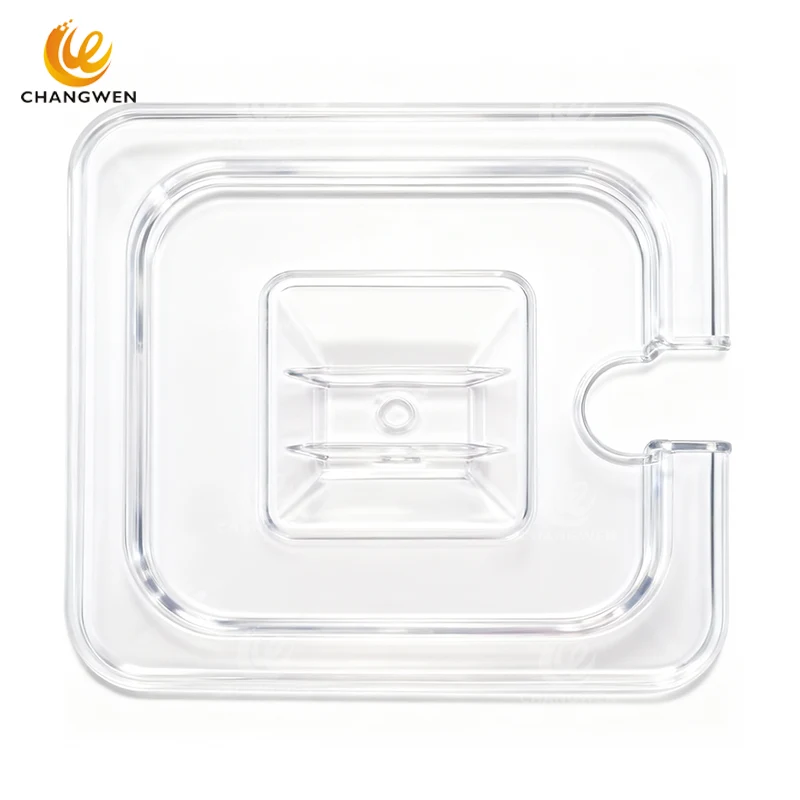
When to Choose Flat Lids:
- Standard storage applications
- When stacking efficiency matters
- Items that don’t require height clearance
- Cost-sensitive operations
When to Choose Polycarbonate Gastronorm Tray with Dome Cover:
- Display applications requiring height
- Delicate items that shouldn’t be compressed
- Garnished or decorated dishes
- Cakes, pastries, and baked goods
- Premium presentation requirements
Lid Quantity Planning: Not every container needs a dedicated lid. Consider:
- Containers in active use: 100% lid coverage
- Cold storage backup containers: 50-75% lid coverage
- Prep containers in constant use: May not need lids
- Sealed storage and transport: 100% lid coverage
Material Quality Indicators
Visual Inspection:
- Clarity: Premium polycarbonate should be crystal clear, not cloudy
- Consistency: Uniform material thickness without thin spots
- Finish: Smooth surfaces inside and out
- Corners: Properly rounded without sharp edges
Physical Testing:
- Flexibility: Should flex slightly under pressure without cracking
- Stacking: Lugs should engage cleanly without jamming
- Rim: Should be smooth and even for proper lid sealing
- Base: Should sit flat on surfaces without rocking
Certification Verification:
- FDA compliance for food contact
- EU 1935/2004 and 10/2011 compliance where applicable
- BPA-free certification
- Dishwasher-safe rating
- Temperature rating documentation
Size Mix Recommendations by Operation Type
Small Restaurant (50-100 covers):
- 10× polycarbonate gastronorm 1/1 (various depths)
- 15× polycarbonate gastronorm 1/2 (100-150mm)
- 12× polycarbonate gastronorm 1/3 (100mm)
- 8× polycarbonate gastronorm 1/6 (65-100mm)
Large Restaurant (200+ covers):
- 20× polycarbonate gastronorm 1/1 (various depths)
- 30× polycarbonate gastronorm 1/2 (100-150mm)
- 25× polycarbonate gastronorm 1/3 (100mm)
- 15× polycarbonate gastronorm 1/6 (65-100mm)
- 10× polycarbonate gastronorm 1/4 (65mm)
Catering Operation:
- 15× polycarbonate gastronorm 1/1 (deep variants)
- 25× polycarbonate gastronorm 1/2 (various depths)
- 20× polycarbonate gastronorm 1/3 (100mm)
- 15× matching polycarbonate GN pan with lid sets
Institutional Kitchen:
- 30× polycarbonate gastronorm 1/1 (various depths)
- 40× polycarbonate gastronorm 1/2 (100-150mm)
- 30× polycarbonate gastronorm 1/3 (100mm)
- 20× polycarbonate gastronorm 1/6 (all depths)
Budget Considerations
Initial Investment:
- Entry-level polycarbonate gastronorms: $8-15 per container
- Mid-range quality: $15-30 per container
- Premium brands: $30-50 per container
- Lids: $5-20 each depending on type and size
Long-term Value Calculation: When comparing options, calculate total cost of ownership:
Example Comparison (100 containers over 5 years):
Budget Polypropylene:
- Initial cost: $5 × 100 = $500
- Replacement (year 2, 4): $500 × 2 = $1,000
- Total 5-year cost: $1,500
Mid-Range Polycarbonate:
- Initial cost: $20 × 100 = $2,000
- No replacement needed in 5 years
- Total 5-year cost: $2,000
While polycarbonate costs $500 more initially, it eliminates replacement costs and provides superior performance throughout its service life.
Budget Optimization Strategies:
- Purchase premium polycarbonate for high-use applications
- Consider mid-range options for medium-use storage
- Reserve budget alternatives only for rarely-used sizes
- Buy in bulk for better per-unit pricing
- Prioritize sizes you use most frequently
Maintenance and Care for Polycarbonate Gastronorm Containers
Daily Cleaning Procedures
Manual Washing: When hand-washing polycarbonate gastronorm pans:
- Pre-rinse: Remove loose food debris with warm water
- Wash: Use mild dish detergent and soft sponge or cloth
- Avoid abrasives: Never use steel wool, abrasive pads, or harsh chemicals
- Rinse thoroughly: Remove all soap residue with clean water
- Sanitize: Use approved food-safe sanitizing solution
- Air dry: Allow complete drying before storage
Machine Washing: Polycarbonate gastronorm containers are dishwasher-safe with these guidelines:
- Maximum temperature: 90°C (194°F) wash cycle
- Rack placement: Secure containers to prevent movement
- Orientation: Position for proper water drainage
- Detergent: Use commercial dish machine detergent per manufacturer instructions
- Avoid: Extremely harsh alkaline detergents that may cloud material over time
- Dry cycle: Air dry or low-temperature drying
Stain Removal: For stubborn stains or discoloration:
- Baking soda paste: Mix with water, apply, let sit 15 minutes, rinse
- White vinegar soak: 15-30 minutes for mineral deposits
- Specialized cleaners: Use polycarbonate-safe commercial cleaners only
- Sun exposure: Brief outdoor sunlight can help bleach some stains naturally
Preventing Cloudiness and Extending Life
Avoid Chemical Damage:
- Don’t use strong alkaline cleaners or bleach regularly
- Avoid prolonged contact with harsh chemicals
- Never use abrasive cleaning compounds
- Keep away from petroleum-based solvents
Prevent Physical Damage:
- Don’t use sharp knives or utensils inside containers
- Avoid dropping even though material is impact-resistant
- Don’t force-stack containers beyond design capacity
- Keep away from direct heat sources (burner flames, hot oven surfaces)
Storage Best Practices:
- Store clean and completely dry to prevent bacterial growth
- Stack properly using integral lugs to prevent jamming
- Keep in clean, dry storage areas away from chemicals
- Maintain separation from raw proteins that might drip
Temperature Guidelines:
- Don’t exceed 99°C (210°F) maximum temperature rating
- Avoid extreme thermal shock (boiling to freezing quickly)
- Allow hot containers to cool before refrigeration
- Remove from freezer 10-15 minutes before adding hot food
Inspection and Replacement Indicators
When to Replace Polycarbonate Gastronorms:
Safety Issues:
- Deep cracks or fractures that could harbor bacteria
- Warping that prevents proper lid sealing
- Sharp edges from chips that could cause injury
- Significant clouding that obscures contents completely
Performance Degradation:
- Heavy scratching that impairs visibility and cleaning
- Persistent staining despite proper cleaning
- Brittleness indicating material degradation
- Dimensional changes affecting equipment fit
Professional Tip: Implement a container inspection schedule:
- Daily: Quick visual check during washing
- Weekly: Detailed inspection of high-use containers
- Monthly: Complete inventory assessment
- Annually: Systematic retirement of worn containers
Most polycarbonate gastronorm containers serving commercial kitchens require replacement every 5-7 years with proper care.
HACCP Compliance and Food Safety
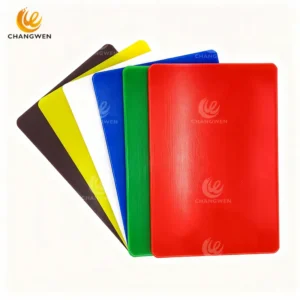
Color Coding Systems: Implement polycarbonate gastronorm color-coding for HACCP compliance:
- Red polycarbonates: Raw red meats
- Blue polycarbonates: Raw fish and seafood
- Yellow polycarbonates: Cooked meats and proteins
- Green polycarbonates: Fruits and vegetables
- White/clear polycarbonates: Dairy products and ready-to-eat foods
Labeling Requirements:
- Use food-safe labels or markers
- Include: contents, preparation date, use-by date, staff initials
- Place labels consistently (e.g., upper right corner)
- Update labels when contents change
- Remove old labels completely to prevent confusion
Cross-Contamination Prevention:
- Maintain dedicated containers for specific allergens
- Never use raw meat containers for ready-to-eat foods
- Establish clear workflows separating contamination risks
- Train staff on proper container selection and use
Polycarbonate Gastronorm Accessories and Complementary Products
Matching Lids and Covers
Standard Flat Lids: Available for all polycarbonate gastronorm sizes, flat lids provide:
- Tight seal preventing contamination
- Stackability for efficient storage
- Transparency for content visibility
- Notched corners (some models) for utensil storage
- Temperature range matching containers
Dome Covers: The polycarbonate gastronorm tray with dome cover combination offers:
- Extra height clearance (typically 50-100mm)
- Protection for garnished or decorated items
- Display-appropriate presentation
- Available for most popular GN sizes
- Clear or colored options
Sliding Lids: Specialized lids that slide open/closed:
- Reduce exposure time during service
- Ideal for salad bars and buffets
- Keep lids attached during operation
- Minimize contamination risks
Seal Covers: Flexible seal covers create airtight storage:
- Stretch to fit multiple container sizes
- Washable and reusable
- Prevent odor transfer
- Cost-effective for operations with mixed container sizes
Organization and Storage Systems
Pan Racks and Carts: Mobile storage optimizes kitchen workflow:
- Aluminum or stainless steel construction
- Accommodate standard GN spacing
- Wheels for easy transport
- Capacities from 10 to 40+ containers
- Some models include refrigeration
Wall-Mounted Systems: Vertical storage saves valuable floor space:
- Hold polycarbonate gastronorms at convenient heights
- Organize prep areas efficiently
- Available in various configurations
- Stainless steel construction for durability
Color-Coded Lid Systems:
- Lids in multiple colors match container coding
- Quick visual identification
- HACCP compliance support
- Reduce cross-contamination risk
Drain Shelves and Perforated Inserts
False Bottom Drain Shelves:
- Fit inside polycarbonate gastronorm pans
- Elevate food above liquids
- Perfect for thawing proteins
- Washing and storing produce
- Maintaining crispy textures
Perforated Polycarbonate Pans:
- Full-container perforation for drainage
- Stackable design allows liquid collection
- Ideal for produce storage and washing
- Food-safe polycarbonate construction
Temperature Control Accessories
Insulated Carriers:
- Maintain polycarbonate gastronorm temperatures during transport
- Front-loading or top-loading designs
- Multiple capacity options
- Stackable when empty
Cooling Paddles:
- Accelerate safe cooling of hot foods
- Fill with water, freeze, then insert into food
- Help meet critical cooling time requirements
- Work with all polycarbonate gastronorm sizes
Measurement and Portioning Tools
Container Scales:
- Fit under polycarbonate gastronorms
- Enable accurate portioning
- Support cost control
- Digital displays for precision
Graduated Measuring Containers:
- Molded-in measurement markings
- Ensure recipe consistency
- Support portion control
- Available in popular sizes
Frequently Asked Questions (FAQ)
What sizes do polycarbonate gastronorm pans come in?
Polycarbonate gastronorm containers are available in all standard gastronorm sizes from the smallest (GN 1/9 measuring 176 × 108mm) up to the largest (GN 2/1 measuring 650 × 530mm). The most commonly used sizes include:
- Polycarbonate gastronorm 1/1: 530 × 325mm – full size for primary storage
- Polycarbonate gastronorm 1/2: 325 × 265mm – half size for side dishes
- Polycarbonate gastronorm 1/3: 325 × 176mm – third size for components
- Polycarbonate gastronorm 1/6: 176 × 162mm – sixth size for toppings and condiments
Each size is available in multiple depths ranging from 65mm (shallow) to 200mm (extra deep). The modular system ensures that combinations of smaller sizes fit perfectly into larger equipment spaces designed for GN 1/1 footprints.
For example, six polycarbonate gastronorm 1/6 pans fit exactly into one GN 1/1 space, allowing flexible configuration based on daily menu requirements.
Can polycarbonate gastronorm containers withstand high temperatures?
Standard polycarbonate gastronorm pans safely operate within a temperature range of -40°C to +99°C (-40°F to 210°F). This makes them suitable for:
Cold Applications:
- Freezer storage at -40°C without becoming brittle
- Standard refrigeration
- Cold holding and display
- Chilled transport
Hot Applications:
- Hot holding in bain maries and steam tables
- Heated display cases
- Insulated transport at service temperatures
- Warm prep applications
Important Limitations: Polycarbonate gastronorm containers are NOT suitable for:
- Direct stovetop cooking
- Oven cooking above 99°C
- Microwave heating (unless specifically rated)
- Direct contact with flames or heating elements
For applications requiring higher temperatures, specialized amber polycarbonate variants can withstand up to 190°C (374°F), though these cost more and are less commonly needed. For cooking applications, stainless steel gastronorm pans remain the better choice.
The temperature versatility of standard polycarbonate gastronorms allows a single container to move from freezer through prep to hot holding service, eliminating time-consuming transfers between containers.
How do I clean and maintain polycarbonate gastronorm pans?
Polycarbonate gastronorm containers are designed for easy cleaning and maintenance:
Daily Cleaning:
- Hand washing: Use warm water, mild dish soap, and soft sponge or cloth. Avoid abrasive scrubbers or steel wool that can scratch the surface.
- Machine washing: Polycarbonate gastronorms are dishwasher-safe up to 90°C wash cycles. Use standard commercial dish machine procedures.
- Sanitizing: After washing, sanitize with approved food-safe sanitizing solution per local health codes.
- Drying: Allow containers to air dry completely before storage.
Avoiding Damage:
- Never use harsh chemicals, bleach, or strong alkaline cleaners regularly
- Don’t expose to temperatures exceeding 99°C
- Avoid using sharp knives or cutting directly in containers
- Don’t subject to extreme thermal shock (boiling to freezing quickly)
Stain Removal: For stubborn stains, create a paste of baking soda and water, apply to stained areas, let sit for 15 minutes, then rinse thoroughly. White vinegar soaks can remove mineral deposits.
Longevity Tips:
- Store completely dry to prevent bacterial growth
- Stack properly using integral stacking lugs
- Inspect regularly for cracks, warping, or significant cloudiness
- Replace containers showing safety-compromising damage
With proper care, quality polycarbonate gastronorm containers typically last 5-7 years in commercial kitchen environments.
Are polycarbonate gastronorm containers dishwasher safe?
Yes, polycarbonate gastronorm pans are dishwasher-safe, which represents a significant advantage for busy commercial kitchens. However, following proper guidelines ensures longevity:
Dishwasher Guidelines:
- Maximum temperature: 90°C (194°F) wash cycle – do not exceed
- Detergent: Use standard commercial dish machine detergent
- Placement: Secure containers properly in racks to prevent movement during washing
- Orientation: Position for proper drainage to prevent water pooling
- Frequency: No limit on wash frequency with proper procedures
Benefits of Machine Washing:
- Consistent sanitization meeting health code requirements
- Time savings compared to hand washing
- More thorough cleaning than manual methods
- Proper high-temperature sanitization (if machine provides)
Precautions: Avoid extremely harsh alkaline detergents used in some heavy-duty industrial applications, as these may cause gradual clouding over extended periods. Standard commercial kitchen dish detergents pose no problems.
The combination of dishwasher compatibility and impact resistance makes polycarbonate gastronorms particularly valuable in high-volume operations where hundreds of containers require daily washing.
What is the difference between polycarbonate and polypropylene gastronorm pans?
Both polycarbonate and polypropylene gastronorm containers serve professional kitchens, but they have distinct characteristics:
Polycarbonate Gastronorm Advantages:
- Clarity: Crystal-clear transparency for excellent content visibility
- Durability: Superior impact resistance, virtually unbreakable
- Low-temperature performance: Remains flexible at -40°C without brittleness
- Professional appearance: Maintains clarity longer without clouding
- Temperature range: -40°C to +99°C
Polypropylene Gastronorm Advantages:
- Heat resistance: Higher temperature tolerance up to 120°C
- Cost: Generally 20-30% less expensive
- Chemical resistance: Slightly better resistance to some strong acids and bases
- Flexibility: More flexible material, less likely to crack under extreme stress
Polycarbonate Limitations:
- Higher initial cost
- Lower maximum temperature (99°C vs 120°C)
- Can cloud over many years if exposed to harsh chemicals
Polypropylene Limitations:
- Not crystal clear—translucent or opaque appearance
- Less impact resistant than polycarbonate
- Can become brittle at very low temperatures
- More prone to warping at high temperatures
When to Choose Polycarbonate:
- Operations prioritizing visibility and content identification
- Applications requiring maximum impact resistance
- Freezer storage requirements
- Upscale presentation standards
When to Choose Polypropylene:
- Budget-conscious operations
- Applications requiring temperatures above 99°C
- Chemical storage applications
- Less concern about transparency
For most professional food service applications, polycarbonate gastronorm containers provide superior performance and visibility that justify their moderate cost premium.
Can I use polycarbonate gastronorm pans in the freezer?
Yes, polycarbonate gastronorm containers excel in freezer applications. The material maintains its structural integrity and flexibility at temperatures down to -40°C (-40°F), making polycarbonate gastronorms ideal for:
Freezer Applications:
- Long-term frozen ingredient storage
- Batch-prepped item freezing
- Ice cream and frozen dessert holding
- Blast chiller use for rapid freezing
- Cold supply chain distribution
Freezer Performance Advantages:
- Won’t become brittle or crack like some plastics at low temperatures
- Maintains clarity for content identification even when frozen
- Seal integrity preserved with proper polycarbonate gastronorm lid
- Stackability maintained for efficient freezer space utilization
Best Practices for Freezer Use:
- Leave headspace: Liquids expand when freezing—leave 1-2 inches of space at top
- Cool first: Let hot foods cool to room temperature before freezing to prevent thermal stress
- Label clearly: Use freezer-safe labels indicating contents and freeze date
- Seal properly: Ensure polycarbonate GN pan with lid fits securely to prevent freezer burn
- Stack wisely: Don’t overload—allow air circulation around containers initially
Defrosting Recommendations: When removing polycarbonate gastronorms from freezer:
- Allow gradual temperature transition (freezer to refrigerator to ambient)
- Avoid adding hot foods immediately to frozen containers
- Use drain shelves underneath when thawing proteins to catch liquids
The temperature versatility of polycarbonate allows the same container to move seamlessly from freezer storage through prep to service, streamlining workflows and reducing contamination risks from transfers.
How long do polycarbonate gastronorm containers last?
With proper care and maintenance, polycarbonate gastronorm pans typically provide 5-7 years of reliable service in commercial kitchen environments. Some factors affecting lifespan include:
Usage Intensity:
- Light use (occasional catering, small operations): 7-10 years
- Moderate use (busy restaurant service): 5-7 years
- Heavy use (institutional high-volume): 4-6 years
- Extreme use (continuous commercial production): 3-5 years
Care Quality:
- Excellent care (hand washing, proper storage): Maximum lifespan
- Good care (machine washing, careful handling): Expected lifespan
- Poor care (harsh chemicals, rough handling): 2-3 years
Factors Extending Life:
- Proper cleaning procedures without harsh chemicals
- Avoiding temperatures exceeding rated limits
- Gentle handling preventing drops and impacts
- Appropriate storage preventing scratches
- Regular inspection and rotation of inventory
Factors Reducing Life:
- Frequent exposure to harsh alkaline cleaners
- Regular temperature extremes beyond specifications
- Rough handling and frequent drops
- Using sharp utensils inside containers
- Improper stacking causing stress
Signs Replacement is Needed:
- Deep cracks or fractures
- Significant clouding obscuring contents
- Warping preventing proper lid seal
- Heavy scratching impairing cleaning
- Brittleness indicating material degradation
Value Comparison: Compared to alternatives, polycarbonate offers excellent longevity:
- Budget polypropylene: 2-4 years
- Polycarbonate: 5-7 years
- Premium stainless steel: 15-25 years
While stainless steel lasts longer, polycarbonate’s significantly lower cost, superior visibility, and lighter weight often make it the better value proposition for cold storage and prep applications.
Are polycarbonate gastronorm pans safe for food contact?
Yes, quality polycarbonate gastronorm containers are completely safe for food contact when manufactured to appropriate standards and used properly. Safety considerations include:
Material Safety:
- Food-grade polycarbonate meets FDA regulations for food contact surfaces
- Compliant with EU regulations 1935/2004 and 10/2011 for food contact materials
- BPA-free formulations available from reputable manufacturers
- No harmful chemical migration at rated temperatures
Certification Verification: When purchasing polycarbonate gastronorms, look for:
- FDA compliance certification
- NSF International certification (where applicable)
- EU food contact compliance marking
- BPA-free labeling
- Manufacturer’s material safety data sheet (MSDS)
Safe Usage Guidelines:
- Use only within rated temperature range (-40°C to +99°C)
- Don’t microwave unless specifically rated microwave-safe
- Replace containers showing significant wear, cracks, or damage
- Clean and sanitize properly between uses
- Follow manufacturer’s care instructions
Health Department Approval: Polycarbonate gastronorm containers are approved by health departments worldwide for commercial food service use. They meet sanitation standards for:
- Food storage and preservation
- Food preparation applications
- Cold and hot holding
- Food transport and delivery
Comparison to Other Materials: Polycarbonate safety profile is comparable to:
- Stainless steel: Both completely food-safe when properly maintained
- Food-grade polypropylene: Similar safety profile, different performance characteristics
- Glass: Equivalent safety, though glass shattering creates different hazards
Allergy and Sensitivity Considerations: Standard polycarbonate is inert and doesn’t contain common allergens. However:
- Some individuals may be sensitive to BPA—choose BPA-free variants if concerned
- Material itself doesn’t absorb or transfer allergens between uses with proper cleaning
- Color-coded polycarbonate gastronorms help prevent cross-contamination
For maximum safety, purchase polycarbonate gastronorm containers from reputable manufacturers, verify appropriate certifications, and follow proper use and care guidelines.
What are the advantages of clear polycarbonate over colored containers?
Both clear and colored polycarbonate gastronorm containers serve important functions in professional kitchens, each with distinct advantages:
Clear Polycarbonate Gastronorm Advantages:
Visibility Benefits:
- Instant content identification without opening containers
- Visual assessment of food quality and freshness
- Easy inventory monitoring at a glance
- Reduced unnecessary exposure to temperature fluctuations
- Faster item location during busy service periods
Presentation:
- Professional appearance for display applications
- Suitable for front-of-house use in buffets and salad bars
- Shows food attractiveness to customers
- Maintains premium aesthetic standards
Versatility:
- Universal use across all food categories
- No need to match container color to food type
- Easier for new staff to use correctly
- Simpler inventory management with single color
Colored Polycarbonate Gastronorm Advantages:
HACCP Compliance:
- Supports color-coded food safety systems
- Prevents cross-contamination through visual cues
- Industry-standard colors:
- Red: Raw red meats
- Blue: Raw fish and seafood
- Yellow: Cooked proteins
- Green: Fruits and vegetables
- White: Dairy and ready-to-eat foods
Organization:
- Quick identification by food category
- Reduces errors during busy periods
- Supports staff training and compliance
- Facilitates health inspections
Allergen Management:
- Dedicated colors for allergen-containing foods
- Visual reminder of special handling requirements
- Reduces cross-contamination risks
- Supports allergen tracking protocols
Best Practice Recommendation:
Most successful operations implement a hybrid approach:
- Clear containers: Primary use for most storage and prep
- Colored containers: Dedicated use for raw proteins requiring HACCP color-coding
- Result: Maximum visibility benefits with safety protocol compliance
For operations handling raw proteins, the investment in colored polycarbonate gastronoms for these specific applications (typically 20-30% of total container needs) provides important safety benefits while clear containers handle the majority of storage requirements.
Can I stack polycarbonate gastronorm pans when full?
Yes, polycarbonate gastronorm containers are designed for safe stacking when filled, with several important considerations:
Design Features Supporting Stacking:
Stacking Lugs: Most polycarbonate gastronoms feature molded-in stacking lugs or ribs around the upper rim. These serve to:
- Support the weight of containers stacked above
- Prevent containers from nesting too deeply when filled
- Distribute weight evenly across the rim
- Protect food from compression by the container above
Reinforced Construction: Quality polycarbonate gastronorm pans use adequate material thickness to:
- Support typical stacking loads without deformation
- Maintain structural integrity under weight
- Prevent bottom bulging when stacked
Safe Stacking Guidelines:
Height Limitations:
- Refrigerator storage: Stack 3-4 filled containers maximum
- Cold holding: Stack 2-3 containers maximum for service access
- Transport: Follow specific cart or carrier capacity limits
- Never: Stack so high that lower containers are compromised
Weight Considerations:
- Consider combined weight of stacked containers
- Heavier items (soups, liquids) on bottom positions
- Lighter items (salads, garnishes) on upper positions
- Total stack weight shouldn’t exceed shelf load capacity
Lid Requirements for Stacking:
- Always use proper-fitting polycarbonate gastronorm lids when stacking filled containers
- Lids distribute weight and protect food in lower containers
- Polycarbonate gastronorm tray with dome cover provides extra protection for delicate items
- Ensure lids seal properly to prevent contamination
Temperature Considerations:
- In refrigeration, don’t stack so densely that air can’t circulate
- Leave small gaps between stacks for cold air flow
- Monitor that lower containers reach safe storage temperatures
- Hot holding: avoid stacking as it can cause uneven heating
Practical Stacking Tips:
- Stack same-size containers when possible for stability
- Align containers carefully to prevent shifting
- Place heavier, fuller containers at bottom
- Use separate shelving tiers rather than excessive stacking
- Label top container for easy identification
- Check lower containers periodically for condensation or spillage
When Not to Stack:
- Very delicate foods that could be crushed
- Items requiring frequent access during service
- Containers without proper lids
- Shallow containers (65mm depth) with liquids
- When health codes prohibit stacking specific items
Proper stacking of polycarbonate gastronorm containers maximizes refrigeration space efficiency while maintaining food safety and quality. Following manufacturer guidelines and common-sense weight distribution prevents damage and ensures food remains protected.
Conclusion
Polycarbonate gastronorm pans represent a sophisticated solution for modern professional food service operations, combining exceptional durability, superior visibility, and excellent value. Understanding the complete range of polycarbonate gastronorm sizes, from the compact 1/9 through the large 2/1, empowers food service professionals to configure storage and preparation systems that precisely match their operational requirements.
The standardized gastronorm sizing system ensures universal compatibility across equipment from all manufacturers, eliminating costly compatibility issues while providing the flexibility to reconfigure spaces based on changing menu needs. Whether you need polycarbonate gastronorm 1/1 containers for bulk storage, polycarbonate gastronorm 1/2 pans for side dishes, or polycarbonate gastronorm 1/6 containers for condiments and toppings, the modular system provides optimal solutions for every application.
Polycarbonate’s crystal-clear transparency delivers practical advantages that directly impact operational efficiency and food safety. Staff can instantly identify contents, assess quality, and monitor inventory levels without opening containers, reducing temperature fluctuations and contamination risks. When paired with appropriate polycarbonate GN pan with lid options—whether flat lids for standard storage or polycarbonate gastronorm tray with dome cover for display applications—these containers create a complete food storage ecosystem.
The temperature versatility of polycarbonate gastronoms, safely operating from -40°C through +99°C, eliminates the need for multiple container types for different temperature applications. A single polycarbonate gastronorm 1/1 200mm deep clear container can seamlessly move from freezer storage through refrigeration to hot holding service, streamlining workflows while reducing cross-contamination risks from unnecessary transfers.
For operations prioritizing durability and long-term value, polycarbonate gastronorm containers deliver 5-7 years of reliable service with proper care—significantly longer than budget alternatives while costing substantially less than stainless steel. The impact resistance, dishwasher compatibility, and stain resistance of quality polycarbonate result in lower total cost of ownership when replacement frequency and labor costs are factored into the equation.
Success with polycarbonate gastronorm systems requires thoughtful selection based on your specific operational needs. Consider your typical food volumes, service styles, temperature requirements, and organizational systems when determining your optimal mix of sizes, depths, and accessories. Most operations benefit from a core inventory of versatile sizes (GN 1/1, 1/2, 1/3, and 1/6) in standard depths, supplemented with specialized options for specific applications.
As you implement or upgrade your polycarbonate gastronorm container system, remember that proper maintenance and care directly impacts performance and longevity. Following manufacturer guidelines for cleaning, avoiding temperature extremes, and inspecting containers regularly ensures your investment delivers maximum value over its extended service life.
Whether you’re outfitting a new kitchen, upgrading aging equipment, or optimizing existing operations, polycarbonate gastronorm containers provide a proven foundation for efficient, safe, and cost-effective food storage and handling. The combination of standardized sizing, exceptional material properties, and universal equipment compatibility makes polycarbonate gastronorms an essential component of professional food service operations worldwide.