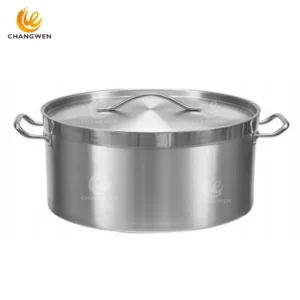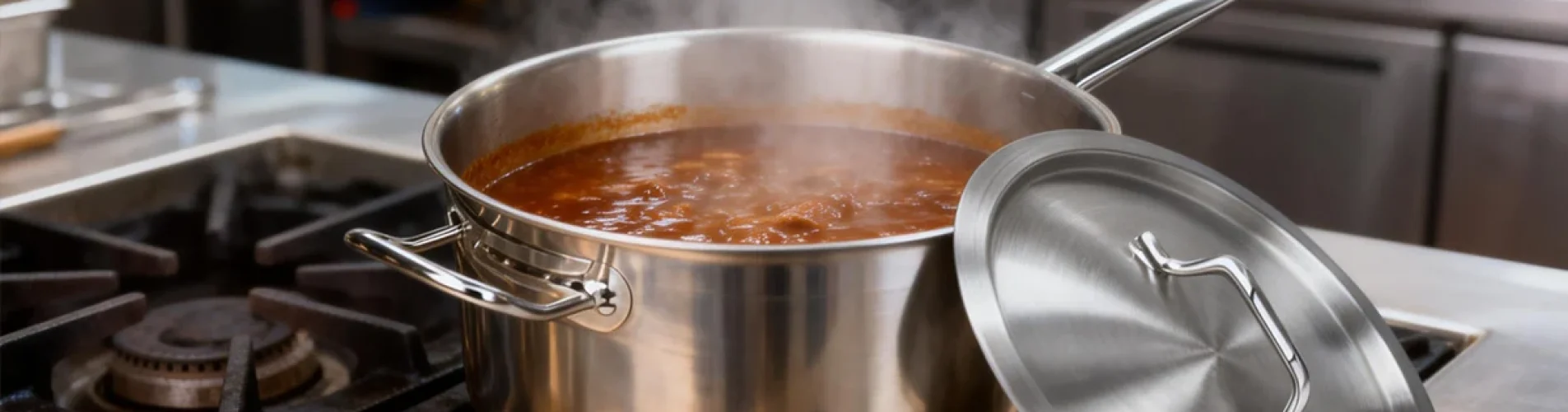
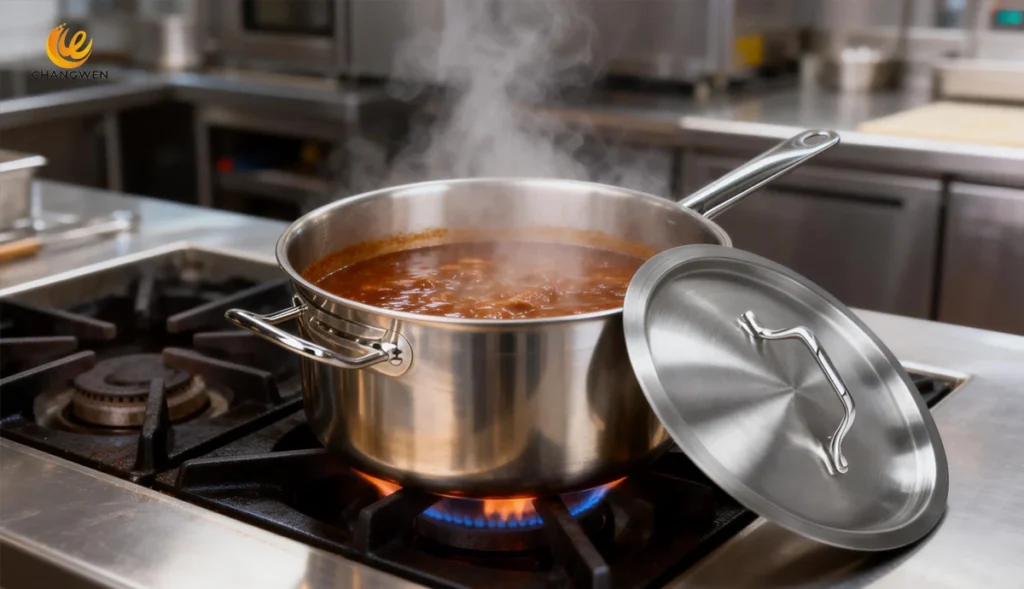
A stainless steel saucepan represents one of the most versatile and essential pieces of equipment in professional kitchens worldwide. From simmering delicate sauces to preparing grains, steaming vegetables, and reducing stocks, these workhorses handle countless daily tasks. In commercial environments where consistency, durability, and food safety are paramount, quality stainless steel cookware delivers reliable performance shift after shift.
The best stainless steel saucepan combines superior materials, thoughtful construction, and practical features that streamline kitchen workflows. Unlike residential cookware, commercial-grade stainless steel saucepans withstand intense daily use, frequent temperature changes, and rigorous cleaning protocols. They’re designed for chefs and kitchen staff who need equipment that performs flawlessly during the busiest service periods without compromising food quality or safety.
When you invest in professional-quality saucepan with stainless steel construction, you’re choosing equipment engineered for longevity. Quality commercial saucepans maintain their performance characteristics through years of intensive use, making them a smart financial investment that pays dividends through reduced replacement costs and consistent cooking results.
Key Takeaways
Essential Points for Choosing the Best Stainless Steel Saucepan:
- Construction Matters: Look for 5 ply stainless steel saucepan or tri-ply construction with aluminum core for superior heat distribution and durability in commercial settings
- Size Selection: Stock multiple sizes from 1 qt stainless steel saucepan to 5 quart stainless steel saucepan to meet diverse cooking needs efficiently
- Features for Efficiency: Prioritize stainless steel saucepan with pour spout, tight-fitting lids, and ergonomic handles for smooth kitchen operations
- Quality Indicators: Best stainless steel saucepan models feature 18/8 or 18/10 stainless steel composition, induction compatibility, and oven-safe construction
- Maintenance: Understanding how to clean burnt stainless steel saucepan properly extends equipment life and maintains food safety standards
Whether you’re outfitting a new restaurant kitchen, upgrading catering equipment, or expanding your commercial cooking capacity, the right stainless steel saucepan makes a significant difference in efficiency, food quality, and operational costs.
Why Choose Stainless Steel for Commercial Saucepans?
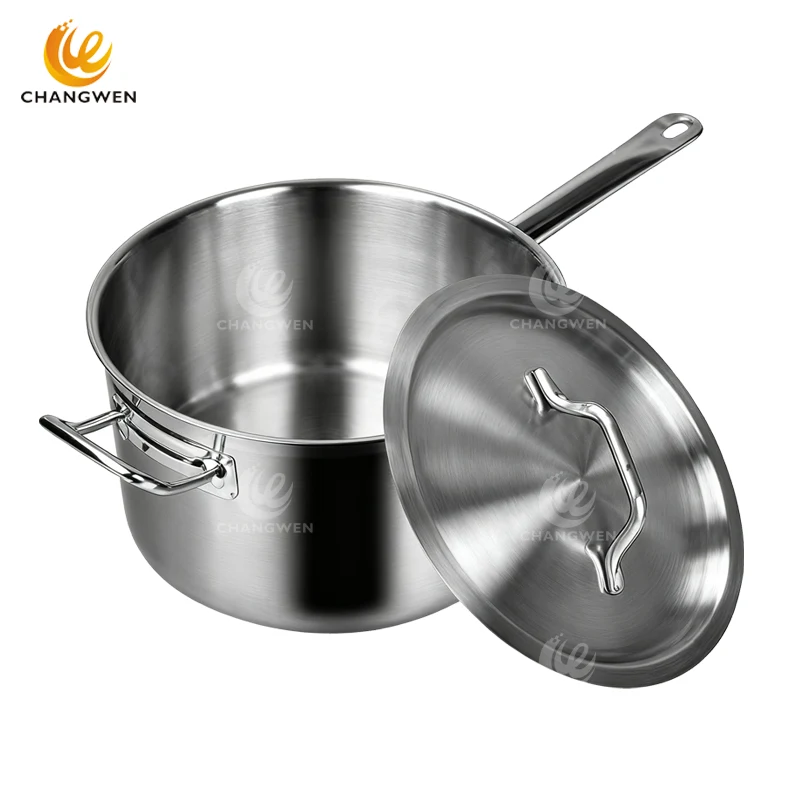
Professional kitchens demand materials that deliver on multiple fronts: performance, safety, durability, and value. Stainless steel consistently outperforms alternative materials across all these categories, making it the preferred choice for serious commercial operations.
Exceptional Durability and Longevity
Stainless steel saucepans withstand the demanding conditions of commercial kitchens far better than alternatives. The material resists denting, scratching, and warping even under intensive daily use. Quality commercial-grade stainless won’t crack, chip, or degrade like ceramic coatings or non-stick surfaces that require periodic replacement.
In busy restaurant environments where equipment handles hundreds of service cycles monthly, this durability translates directly to cost savings. A well-maintained stainless steel saucepan set can serve a professional kitchen for decades, while alternative materials typically need replacement every few years. The initial investment in quality stainless steel cookware proves economical over the equipment’s operational life.
Superior Heat Distribution and Control
The best stainless steel saucepan models feature multi-ply construction that combines stainless steel’s durability with aluminum or copper cores for exceptional thermal conductivity. This layered approach ensures even heat distribution across the cooking surface, eliminating hot spots that cause scorching or uneven cooking.
A 5 ply stainless steel saucepan provides optimal heat performance through its sophisticated construction: exterior stainless steel for durability, multiple aluminum layers for heat distribution, and interior stainless steel for a non-reactive cooking surface. This engineering allows precise temperature control essential for delicate sauces, perfect rice, and consistent reduction of stocks.
Tri-ply construction offers excellent performance at a more accessible price point, making it ideal for operations balancing quality with budget considerations. Both configurations deliver the responsive temperature control professional chefs require for sophisticated cooking techniques.
Non-Reactive and Food-Safe
Stainless steel’s non-reactive properties make it ideal for all cooking applications. You can safely prepare acidic foods like tomato sauces, citrus-based reductions, or wine-infused stocks without worrying about metallic flavors leaching into dishes. This chemical stability ensures pure flavors and protects food quality.
The non-porous surface doesn’t harbor bacteria, odors, or flavors from previous dishes. This characteristic simplifies sanitation and helps maintain stringent food safety standards required in commercial operations. Regular cleaning with standard commercial detergents effectively sanitizes stainless steel surfaces, providing confidence in food safety protocols.
Versatility Across Cooking Methods
Commercial stainless steel saucepans adapt seamlessly to various cooking techniques and heat sources. Most quality models work on gas, electric, ceramic, and induction cooktops, providing flexibility as kitchen equipment evolves. Many high temperature stainless steel saucepan options are oven-safe to 500°F or higher, allowing you to start dishes on the stovetop and finish them under broilers or in ovens.
This versatility extends to cooking methods beyond simple simmering. Use stainless steel saucepans for making caramel, tempering chocolate, blanching vegetables, cooking grains, preparing custards, and reducing sauces. The material’s stability across temperature ranges supports diverse culinary techniques without specialized equipment.
Types and Sizes: Choosing the Right Stainless Steel Saucepan
Commercial kitchens benefit from maintaining a range of saucepan sizes to handle various tasks efficiently. Understanding standard sizes and their optimal applications helps you stock your kitchen appropriately.
Small Capacity: 1 Qt and 1.5 Quart Options
A 1 qt stainless steel saucepan serves as the perfect tool for precision tasks. Use it for making small batches of specialty sauces, melting butter or chocolate, warming cream, or preparing individual portions. The 1 quart stainless steel saucepan with lid prevents evaporation and maintains temperature during these delicate operations.
Catering operations particularly value 1 qt stainless steel saucepan with lid models for preparing sauces that accompany plated dishes. The compact size heats quickly, requires minimal energy, and allows precise control for temperature-sensitive preparations. Institutional kitchens use these smaller saucepans for dietary accommodations requiring separate preparation.
The 1.5 quart saucepan stainless steel bridges the gap between individual portions and small batch cooking. It’s ideal for breakfast service (perfect for hollandaise), preparing garnishes, or making compound butters. This size also works well in teaching kitchens where students learn fundamental sauce techniques.
Medium Capacity: 2 Qt and 3 Quart Models
The 2 quart stainless steel saucepan represents one of the most versatile sizes for commercial kitchens. It handles everyday tasks like cooking grains for 4-6 portions, preparing side dish sauces, steaming vegetables for table service, or reheating soups. A stainless steel 2 quart saucepan with lid maintains moisture and prevents surface cooling during longer cooking processes.
Many chefs consider a 3 quart stainless steel saucepan the ideal all-purpose size. This capacity comfortably accommodates family-style portions, batch cooking for smaller restaurants, or prep work for larger operations. The 3 qt stainless steel saucepan provides enough volume for substantial batches while remaining manageable for a single cook.
Both sizes benefit from features like pour spouts. A 2qt stainless steel saucepan with well-designed spouts simplifies transferring sauces, stocks, or cooked grains without drips or spills. This seemingly small feature significantly improves efficiency during busy service periods.
Large Capacity: 4 Qt and 5 Quart Saucepans
For high-volume operations, a 4 qt saucepan stainless steel construction handles substantial batches efficiently. Use these larger models for preparing soups, cooking pasta, making large quantities of rice or grains, or reducing stocks. The increased capacity reduces the need for multiple batches, streamlining prep work.
A 5 quart stainless steel saucepan represents the upper end of saucepan sizing before transitioning to stock pots. This size excels in catering operations, institutional kitchens, or restaurants with high-volume sauce requirements. The generous capacity accommodates complete meal prep for buffet service or batch cooking for meal prep operations.
When selecting larger saucepans, prioritize models with helper handles opposite the main handle. This second grip point provides crucial support when moving heavy pots filled with hot liquids, enhancing kitchen safety and reducing strain on staff.
Mini Saucepans for Specialized Tasks
A mini saucepan stainless steel design serves specific commercial applications. These compact pans excel at tableside preparations, making individual butter sauces, warming single servings of soup, or preparing specialty garnishes. Fine dining establishments use mini saucepans for plating precision, allowing chefs to keep small quantities of finishing sauces at optimal serving temperature.
Mini saucepans also prove valuable in beverage programs for warming milk, preparing hot chocolate, or crafting specialty coffee drinks. Their small footprint makes them practical for bars and café setups with limited cooking space.
Stainless Steel Saucepan Sets: Building Your Collection
Investing in a stainless steel saucepan set provides comprehensive coverage at better value than purchasing individual pieces. Quality commercial sets typically include 1, 2, and 3-quart saucepans with corresponding lids, covering the most common cooking needs.
When evaluating sets, verify that all pieces feature consistent construction quality. The best stainless steel saucepan set maintains the same material grade, handle design, and lid compatibility across all sizes. This consistency ensures predictable performance and simplifies staff training on equipment usage.
Essential Features in Commercial Stainless Steel Saucepans
Beyond basic construction, specific features distinguish exceptional commercial saucepans from mediocre options. Understanding these characteristics helps you select equipment that enhances kitchen efficiency and longevity.
Multi-Ply Construction: Tri-Ply vs 5-Ply
The number of layers in a saucepan’s construction directly impacts its cooking performance. Tri-ply saucepans feature three bonded layers: stainless steel exterior, aluminum core for heat conduction, and stainless steel interior cooking surface. This configuration delivers excellent heat distribution at an accessible price point, making tri-ply construction popular in commercial applications.
A 5 ply stainless steel saucepan adds two additional layers, typically alternating between stainless steel and aluminum. This more sophisticated construction provides even better heat distribution, faster response to temperature changes, and enhanced durability. The additional layers create a more substantial pan that holds temperature more consistently, particularly valuable for delicate sauce work requiring precise thermal control.
For most commercial operations, tri-ply construction offers optimal value. High-end restaurants, pastry kitchens, and operations emphasizing sauce-based cuisine may justify the premium cost of 5-ply construction for its superior performance characteristics.
Pour Spout Design and Functionality
A stainless steel saucepan with pour spout streamlines countless kitchen tasks. Well-designed pour spouts allow controlled pouring without drips, critical when transferring expensive stocks, delicate sauces, or hot liquids. The best designs feature formed spouts on both sides of the rim, accommodating both right and left-handed users.
Quality pour spouts maintain clean edges that don’t trap food particles or create cleaning challenges. They should direct flow precisely without causing liquid to run down the exterior of the pan. This seemingly minor feature prevents waste, improves presentation, and speeds service during busy periods.
Lid Design and Compatibility
Every stainless steel saucepan with lid benefits from tight-fitting covers that trap moisture and maintain temperature effectively. Commercial-grade stainless steel saucepan lids should fit securely without wobbling, creating an effective seal for simmering and reducing.
Tempered glass lids allow visual monitoring without removing the cover and releasing heat. However, all-metal stainless steel lids typically prove more durable in demanding commercial environments. They withstand higher temperatures, resist breakage, and handle the rigors of high-volume dishwashing better than glass alternatives.
Many commercial operations maintain separate collections of universal lids sized to fit multiple pots and pans. If pursuing this approach, verify lid sizing compatibility before purchase to ensure proper fit across your cookware inventory.
Handle Construction and Ergonomics
Commercial saucepan handles endure constant use, making sturdy construction essential. Permanently riveted handles provide superior strength compared to welded attachments. The rivets should sit flush with the interior cooking surface to prevent food from catching and simplifying cleaning.
Ergonomic handle design reduces fatigue during extended cooking periods. Look for handles with comfortable grip diameter and adequate length to keep hands safely away from heat. Hollow handles resist heat transfer better than solid designs, staying cooler during stovetop use.
The best commercial saucepans include helper handles on larger sizes (typically 3 quarts and above). This second grip point proves invaluable when maneuvering heavy pots filled with hot liquids, significantly enhancing kitchen safety.
Steamer Inserts and Accessories
A stainless steel saucepan with steamer insert transforms a basic saucepan into a versatile cooking system. Steamer baskets allow you to prepare vegetables, dumplings, or seafood while preserving nutrients and delicate textures. This dual functionality maximizes kitchen efficiency without requiring additional specialized equipment.
Quality steamer inserts feature perforated stainless steel construction that matches the saucepan’s diameter precisely. They should sit securely without wobbling and include handles for safe removal when hot. Some models offer collapsible steamer inserts that adjust to fit multiple saucepan sizes, providing excellent versatility.
Material Composition: Understanding Stainless Steel Grades
Not all stainless steel offers identical performance. Understanding common grades helps you select cookware with the right characteristics for commercial applications.
18/8 and 18/10 Stainless Steel
These numerical designations indicate the percentage of chromium and nickel in the stainless steel alloy. An 18/8 composition contains 18% chromium and 8% nickel, while 18/10 contains 18% chromium and 10% nickel. Both formulations provide excellent corrosion resistance, durability, and food safety for commercial cookware.
The slightly higher nickel content in 18/10 stainless steel offers marginally better corrosion resistance and a brighter, more lustrous finish. However, for practical commercial cooking applications, both grades perform comparably. Many professional chefs can’t distinguish performance differences between 18/8 and 18/10 in daily use.
Both grades qualify as food-grade materials suitable for commercial food preparation. They resist pitting, maintain stable cooking surfaces, and clean easily with standard commercial detergents. When comparing cookware, consider construction quality and design features alongside material grade for the complete picture.
304 Stainless Steel Properties
Type 304 stainless steel (often called 18/8 stainless) represents the industry standard for commercial cookware. This austenitic steel offers exceptional corrosion resistance, good formability for manufacturing, and excellent durability. The material won’t react with acidic or alkaline foods, ensuring pure flavors in all preparations.
304 stainless steel maintains its properties across a wide temperature range, making it suitable for both refrigerated storage and oven use. The material’s non-magnetic properties suit it perfectly for induction cooking when combined with magnetic base layers in multi-ply construction.
This grade provides optimal value for commercial operations, delivering professional-quality performance at reasonable cost. The overwhelming majority of quality commercial cookware uses 304 stainless steel for cooking surfaces, testament to its proven reliability in demanding professional environments.
Comparing Stainless Steel to Other Cookware Materials
Understanding how stainless steel compares to alternatives helps justify equipment investments and guides purchasing decisions.
Aluminum vs Stainless Steel: Pure aluminum conducts heat excellently but reacts with acidic foods, potentially affecting flavors and appearance. Aluminum also dents and warps more easily than stainless steel. Commercial cookware typically uses aluminum in core layers while maintaining stainless steel cooking surfaces, combining aluminum’s conductivity with stainless steel’s durability and non-reactive properties.
Copper vs Stainless Steel: Copper offers superior heat conductivity but requires extensive maintenance to prevent tarnishing. It’s significantly more expensive than stainless steel and demands specialized cleaning. Most commercial operations choose stainless steel for its practical advantages, reserving copper for showpiece items or specialized applications.
Cast Iron vs Stainless Steel: Cast iron excels at heat retention but requires seasoning, reacts with acidic foods, and rusts if not properly maintained. Stainless steel’s easy maintenance and versatility make it more practical for diverse commercial kitchen tasks.
Induction Compatibility and Heat Source Versatility
Modern commercial kitchens increasingly adopt induction cooking technology for its energy efficiency, precise temperature control, and improved kitchen comfort. When selecting saucepans for contemporary commercial operations, induction compatibility deserves serious consideration.
Understanding Induction Cookware Requirements
Induction cooktops generate heat through magnetic fields, requiring cookware with magnetic properties. Pure stainless steel (like 304 grade) isn’t magnetic and won’t work on induction surfaces. However, quality multi-ply commercial saucepans incorporate magnetic stainless steel or iron layers in their base construction, making them induction-compatible while maintaining non-magnetic food contact surfaces.
Test induction compatibility with a simple magnet. If it adheres firmly to the pan’s bottom, the cookware will work on induction cooktops. Most reputable manufacturers clearly mark induction-compatible cookware, but this quick test provides confirmation.
Benefits of Multi-Cooktop Compatibility
The best commercial saucepans work on all heat sources: gas, electric coil, smooth-top electric, induction, and even some solid fuel ranges. This universal compatibility provides operational flexibility, allowing kitchen layouts to evolve without replacing entire cookware inventories.
Multi-compatible cookware simplifies equipment standardization across multiple locations. Restaurants expanding to new sites with different cooktop configurations can use identical cookware everywhere, streamlining staff training and maintenance procedures.
High Temperature Capabilities
Commercial cooking often requires oven finishing or high-temperature applications. A high temperature stainless steel saucepan withstands oven temperatures typically ranging from 450°F to 550°F depending on construction and handle materials.
Verify maximum oven-safe temperatures before purchasing. Saucepans with all-metal construction (stainless steel handles and lids) typically tolerate higher temperatures than models with silicone, plastic, or wooden components. For operations requiring maximum versatility, prioritize fully oven-safe construction rated to at least 500°F.
Selecting the Best Stainless Steel Saucepan for Your Operation
Different commercial operations have distinct requirements. Matching saucepan characteristics to your specific needs ensures optimal performance and value.
Restaurant and Food Service Applications
Full-service restaurants require versatile saucepan collections covering various capacities. A well-stocked line typically includes:
- Multiple 1 qt stainless steel saucepan with lid units for delicate sauce work
- Several 2 quart stainless steel saucepan options for everyday tasks
- 3 quart stainless steel saucepan models for batch cooking
- Specialized features like pour spouts for high-volume sauce service
Fast-casual operations may emphasize larger sizes (3 and 4 quart) for batch cooking menu components. Fine dining establishments often maintain larger inventories of 1 and 2-quart sizes supporting complex sauce programs.
Catering and High-Volume Production
Catering operations benefit from durable, multi-purpose equipment that transports well and handles varied cooking scenarios. Prioritize features like:
- Stainless steel saucepan set configurations for complete mobile kitchens
- Reinforced handles rated for heavier loads
- Stainless steel saucepan with steamer inserts for versatile food preparation
- Larger capacities (4 qt saucepan stainless steel and 5 quart models) for efficient batch cooking
The best stainless steel saucepan for catering combines professional-grade construction with practical portability, withstanding frequent transport and diverse cooking environments.
Institutional and Healthcare Kitchens
Large-scale institutional cooking emphasizes efficiency, food safety, and cost-effectiveness. Healthcare facilities require equipment meeting strict sanitation standards. Key considerations include:
- Easy-clean designs without crevices that harbor bacteria
- Standardized stainless steel saucepan set collections simplifying equipment tracking
- Durable construction withstanding industrial dishwashing systems
- Larger capacities for bulk preparation
Institutional purchasers often negotiate volume pricing on standardized cookware specifications, creating consistent inventory across multiple facilities.
Commercial Baking and Pastry Applications
Pastry departments use saucepans extensively for custards, caramels, sugar work, and various preparations. Specific requirements include:
- Precise temperature control favoring 5 ply stainless steel saucepan construction
- Pour spouts for controlled transfer of delicate preparations
- Smaller capacities (1 to 2 quart) for formula-based recipes
- Highest-quality non-reactive surfaces preventing flavor contamination
Professional pastry chefs often invest in premium saucepans as essential precision tools supporting their craft.
Care and Maintenance: Maximizing Saucepan Lifespan
Proper maintenance extends equipment life and maintains food safety standards. Understanding effective cleaning techniques and preventive care protects your cookware investment.
Daily Cleaning Best Practices
Clean stainless steel saucepans promptly after use prevents food from bonding to surfaces. Allow pans to cool slightly before washing—extreme temperature changes can cause warping. Use hot water, commercial dish detergent, and non-abrasive scrubbers for routine cleaning.
For stuck-on food, fill the saucepan with warm water and a small amount of dish soap, bring to a simmer, and let sit for 15 minutes. This loosens residue for easy removal without harsh scrubbing that might scratch surfaces.
Dry saucepans thoroughly after washing to prevent water spots and mineral deposits. Immediate drying maintains the lustrous stainless steel finish and prevents potential discoloration from hard water minerals.
How to Clean Burnt Stainless Steel Saucepan
Despite best efforts, burnt food occasionally occurs. Addressing how to clean burnt stainless steel saucepan properly restores cookware without damage:
- Baking Soda Method: Create a paste with baking soda and water. Apply to burnt areas, let sit for 30 minutes, then gently scrub with a non-abrasive pad. The mild abrasive action lifts burnt residue without scratching stainless steel.
- Vinegar Soak: Fill the burnt pan with equal parts water and white vinegar. Bring to a boil and simmer for 10 minutes. The acidity helps break down carbonized food particles. Pour out the solution, let cool, and clean as usual.
- Commercial Cleaners: Specialized stainless steel cleaners effectively remove stubborn stains and restore shine. Follow manufacturer instructions and rinse thoroughly to remove all chemical residue before cooking.
- Bar Keeper’s Friend: This commercial cleaning powder contains oxalic acid effective for removing tough stains and discoloration. Apply according to package directions, scrub gently, and rinse completely.
Preventing Common Problems
Warping: Avoid thermal shock by not plunging hot pans into cold water. Let cookware cool gradually before washing. Choose heavy-gauge cookware less prone to warping under high heat.
Discoloration: Heat tint (rainbow discoloration) occurs from overheating empty pans. While harmless, it detracts from appearance. Remove with vinegar cleaning or commercial stainless steel cleaner.
Pitting: Prolonged exposure to salt or acidic foods can cause surface pitting. Don’t add salt to cold water—wait until water boils. Clean pans promptly after cooking acidic foods.
Scratching: Use wooden, silicone, or plastic utensils instead of metal whenever possible. Store saucepans with protective padding between nested units to prevent scratches.
Long-Term Storage Considerations
When storing saucepans long-term (seasonal operations or excess inventory):
- Clean thoroughly and dry completely before storage
- Nest pans with protective liners between each piece
- Store in dry, temperature-controlled environments
- Apply light coating of food-grade mineral oil to prevent water spotting during storage
- Inventory and inspect stored equipment periodically for any issues
Pricing Guide and Value Considerations
Understanding the relationship between price and quality helps you make informed purchasing decisions that balance budget constraints with performance requirements.
Budget-Friendly Options ($30-$75)
Entry-level commercial saucepans in this range typically feature:
- Tri-ply or disc-bottom construction (aluminum disc bonded to stainless base)
- Standard 18/8 stainless steel
- Basic handle designs
- Limited size selections
These options suit startup operations, backup cookware needs, or low-intensity applications. While affordable, expect shorter lifespans under heavy commercial use compared to premium options.
Mid-Range Professional Quality ($75-$200)
This price segment represents the sweet spot for most commercial operations. Expect:
- Full tri-ply or 5-ply construction
- Ergonomic handle designs with helper handles on larger sizes
- Complete stainless steel saucepan set options
- Enhanced features like pour spouts and measurement markings
- Excellent heat distribution and durability for daily commercial use
Mid-range professional cookware from established manufacturers delivers outstanding value, providing decades of reliable service with proper care.
Premium and Specialty Models ($200+)
High-end commercial saucepans justify premium pricing through:
- Advanced 5-ply or 7-ply construction
- Specialized designs for specific cooking applications
- Exceptional manufacturing tolerances and finish quality
- Extended warranties reflecting superior durability
- Heritage brand reputation
Premium cookware suits operations where equipment quality directly impacts culinary results: fine dining restaurants, specialty pastry operations, or culinary schools training future professionals.
Total Cost of Ownership
Evaluate cookware investments beyond initial purchase price. Consider:
Longevity: A $150 saucepan lasting 15 years costs less annually than a $50 pan requiring replacement every 3 years.
Energy Efficiency: Superior heat distribution in quality multi-ply construction reduces cooking times and energy consumption.
Labor Costs: Easy-clean surfaces and efficient heat performance reduce staff time on cooking and cleaning tasks.
Food Cost Management: Precise temperature control prevents scorching and reduces waste from ruined batches.
Maintenance: Durable construction requires fewer repairs and replacement parts over operational life.
Calculate total cost of ownership rather than focusing solely on upfront expense to make truly cost-effective purchasing decisions.
Frequently Asked Questions
Can a stainless steel stock pot go in the oven?
Most quality stainless steel stock pots are oven-safe, though maximum safe temperatures vary by model. Pots with all-metal construction (stainless steel handles and lids without plastic components) typically withstand oven temperatures from 450°F to 550°F or higher. Always verify the manufacturer’s specified maximum oven temperature before using cookware in the oven. Handles may become extremely hot during oven use, so always use appropriate protective equipment when removing pots from the oven.
Which is better: aluminum or stainless steel stock pot?
For commercial applications, stainless steel stock pots generally prove superior despite aluminum’s better heat conductivity. Stainless steel offers crucial advantages: it’s non-reactive (won’t affect flavors of acidic foods like tomato sauce or wine-based stocks), dramatically more durable, doesn’t discolor, and maintains food safety standards more easily. Modern multi-ply stainless steel construction incorporates aluminum layers for excellent heat distribution while maintaining stainless cooking surfaces. The optimal choice combines both materials—stainless steel exterior and interior with aluminum cores—delivering aluminum’s thermal benefits with stainless steel’s practical advantages.
Is there a stainless steel stock pot that doesn’t stick?
Pure stainless steel naturally has more sticking potential than non-stick coatings, but proper technique virtually eliminates sticking issues. The key is proper preheating and temperature management: heat the pot before adding oil or fat, heat the oil until shimmering before adding ingredients, and avoid moving food too soon—it will release naturally when properly seared. Deglazing stuck bits (fond) actually creates rich flavor for stocks and sauces. Some manufacturers offer stainless steel pots with special surface treatments reducing sticking, though these don’t match true non-stick coatings. For most stock pot applications, traditional stainless steel performs excellently with correct technique.
Where to buy stainless steel stock pots for commercial use?
Purchase commercial-quality stainless steel stock pots from:
Restaurant Supply Distributors: Dedicated foodservice suppliers offer commercial-grade equipment with proper specifications and often provide volume pricing for multi-unit purchases.
Online Commercial Retailers: Websites specializing in professional kitchen equipment provide extensive selections with detailed specifications and customer reviews.
Manufacturer Direct: Some brands sell directly to commercial customers, potentially offering better pricing or exclusive models.
Local Restaurant Supply Stores: Regional suppliers provide hands-on inspection before purchasing and often maintain relationships supporting ongoing equipment needs.
For commercial operations, prioritize suppliers offering:
- Proper commercial specifications (gauge thickness, construction details)
- Warranty support and replacement parts
- Volume pricing for multiple units
- Knowledgeable staff who understand professional cooking requirements
Avoid consumer-oriented retailers unless they clearly designate commercial-grade products—residential cookware rarely withstands professional kitchen demands.
How do I choose between 1 qt, 2 qt, and 3 quart saucepan sizes?
Size selection depends on your typical cooking applications:
1 Qt Stainless Steel Saucepan: Choose for individual portions, delicate sauces, melting butter or chocolate, warming cream, or precise small-batch work. Ideal for fine dining sauce programs or specialty preparations.
2 Quart Stainless Steel Saucepan: The most versatile all-purpose size handles everyday tasks like cooking grains for 4-6 servings, preparing standard sauce batches, steaming vegetables, or reheating soups. If choosing only one size, 2 quart offers maximum flexibility.
3 Quart Stainless Steel Saucepan: Select for larger batch cooking, family-style portions, substantial sauce production, or when you frequently cook for 6-10 people. Perfect for restaurants or caterers needing efficiency in moderate-volume preparation.
Most professional kitchens stock all three sizes, using each for its optimal applications. If budget requires prioritizing, start with a 2 quart and add 1 and 3-quart sizes as needs and budget allow.
What’s the difference between tri-ply and 5-ply stainless steel construction?
Both constructions bond multiple metal layers into a single piece, but differ in layer count and performance characteristics:
Tri-Ply Construction: Features three bonded layers—stainless steel exterior, aluminum core for heat conduction, and stainless steel interior. This provides excellent heat distribution, responsive temperature control, and durability at accessible pricing. Tri-ply represents the minimum construction standard for quality commercial cookware.
5-Ply Construction: Adds two additional layers, typically alternating stainless steel and aluminum. This creates a more substantial pan with even better heat distribution, faster response to temperature changes, and superior temperature retention. The additional mass provides more consistent results for delicate sauce work or precision cooking.
For most commercial applications, tri-ply delivers outstanding performance and value. Operations emphasizing complex sauce programs, pastry work, or highest-level culinary precision may justify 5-ply’s premium cost for its enhanced performance. Both constructions dramatically outperform single-layer or disc-bottom alternatives in commercial settings.
Do I need special lids for my stainless steel saucepans?
Quality commercial saucepans typically include properly fitted lids designed specifically for each pan size. These matched lids create effective seals for simmering, steaming, and moisture retention. However, universal lids sized by diameter (e.g., 7-inch, 8-inch) can work across multiple pots and pans of similar size, offering cost savings and inventory simplification.
Consider these lid options:
Matched Stainless Steel Lids: Provided with many saucepan sets, offering perfect fit and high-temperature capability. All-metal construction withstands rigorous commercial use and high oven temperatures.
Tempered Glass Lids: Allow visual monitoring without removing the cover and releasing heat. Useful for cooking rice, grains, or simmering stocks where you want to check progress without disturbing the cooking process.
Universal Fit Lids: Multi-size lids that adjust to fit various diameter cookware save storage space and reduce inventory complexity. Verify fit quality—lids should seal well without wobbling.
For commercial operations, stainless steel saucepan lids should match the quality of the base cookware. Poor-fitting lids compromise cooking performance and energy efficiency.
Are stainless steel saucepans with pour spouts worth the extra cost?
A stainless steel saucepan with pour spout delivers significant value in professional settings through:
Reduced Waste: Precise pouring prevents drips and spills, important when working with expensive stocks, reductions, or specialty ingredients.
Improved Efficiency: Clean pouring without running down the exterior saves time during service and reduces cleaning tasks.
Enhanced Safety: Controlled pouring of hot liquids reduces splash risks and burn potential.
Professional Presentation: When saucing plates tableside or during service, pour spouts enable precise, attractive sauce placement.
The minimal added cost of pour spout design justifies itself quickly in busy commercial kitchens. If choosing between models, pour spout functionality provides excellent value. Many manufacturers include this feature as standard on mid-range and premium cookware.
How do I know if a stainless steel saucepan is truly commercial grade?
Identify commercial-grade quality through these indicators:
Construction Specifications: Look for tri-ply or 5-ply construction throughout the entire pan (not just disc bottom). Commercial models typically use 18/8 or 18/10 stainless steel with clearly specified gauge thickness (18 to 22 gauge for commercial quality).
Weight and Feel: Commercial saucepans feel substantial and well-balanced. Avoid lightweight pans that feel flimsy—they won’t withstand professional use demands.
Handle Attachment: Professional-quality handles are permanently riveted (not welded) with smooth interior rivets that don’t trap food. Helper handles on larger sizes indicate commercial design.
Manufacturer Specifications: Reputable brands clearly identify commercial-grade products and provide detailed specifications. Look for NSF certification, which indicates the product meets commercial foodservice standards.
Warranty Coverage: Commercial cookware typically includes substantial warranties (often lifetime against defects) reflecting manufacturer confidence in durability.
Pricing Reality: True commercial-grade cookware requires quality materials and manufacturing. Extremely low prices usually indicate consumer-grade construction unsuitable for professional demands.
Conclusion: Investing in Quality Stainless Steel Saucepans
Selecting the right stainless steel saucepans for your commercial kitchen represents a strategic investment in operational efficiency, food quality, and long-term cost management. Quality cookware delivers consistent performance shift after shift, year after year, ultimately proving more economical than frequent replacement of inferior equipment.
Whether you need a versatile 2 quart stainless steel saucepan for everyday tasks, a specialized mini saucepan stainless steel for precision work, or a complete stainless steel saucepan set to outfit a new kitchen, prioritizing construction quality, appropriate features, and proven manufacturers ensures satisfaction with your investment.
The best stainless steel saucepan for your operation balances performance requirements, budget constraints, and specific cooking applications. By understanding construction techniques, material grades, essential features, and maintenance requirements, you can confidently select cookware supporting your culinary goals and operational success.
Remember that proper care extends equipment life significantly. Implementing correct cleaning procedures, understanding how to clean burnt stainless steel saucepan when accidents occur, and following manufacturer maintenance guidelines protects your investment and maintains food safety standards.
As you build or upgrade your commercial cookware inventory, consider your operation’s unique needs, cooking style, and volume requirements. Invest in quality where it matters most—in the sizes and features you use daily—and watch as reliable, well-chosen equipment becomes an integral partner in your kitchen’s success.