Read Time: 10 minutes
The Problem That’s Costing Hospitality Businesses More Than They Realize
Here’s a scenario that plays out in hospitality procurement offices around the world every year:
A hotel group restocking cookware for twelve properties orders from three different suppliers — because the original source ran out of stock. The pans arrive. The wall thickness is different. The handle weight is off. The surface finish doesn’t match. The kitchen staff notices immediately.
A restaurant chain expanding to new locations discovers that the “same” cookware it ordered from a different batch six months later isn’t the same at all — the base disc thickness changed, the coating quality degraded, and the returns start coming in.
An independent restaurant invests in quality cookware — but it’s branded with a supplier’s name, not theirs. Their carefully curated kitchen identity is compromised every time a guest sees a pan.
These aren’t edge cases. They’re the predictable consequences of sourcing cookware without a private label manufacturer relationship — one built on consistent specifications, verified quality standards, and your brand, not theirs.
This guide explains exactly how private label cookware solutions for hotels and restaurants work, what they deliver, and how to identify the right manufacturing partner.
What Is Private Label Cookware — And Why Does It Matter for Hospitality?
Private label cookware means cookware manufactured to your specifications, carrying your brand identity — not the factory’s brand, not a generic catalog product, not whatever was available in stock.
For hotels, restaurants, and catering operations, private label cookware delivers four outcomes that generic sourcing cannot:
1. Brand Consistency Across Properties
For hotel groups and restaurant chains operating multiple locations, brand consistency isn’t cosmetic — it’s operational. Private label programs ensure that every pan in every kitchen, in every property, meets the same specification, carries the same brand mark, and delivers the same performance. Guests and kitchen staff experience the same quality everywhere.
2. Quality Specification Control
When you own the product specification, you own the quality outcome. Gauge thickness, steel grade, handle attachment method, coating chemistry, base construction — every parameter is locked to your standard, not the supplier’s current inventory. Batch variation — the silent cost-driver in generic procurement — is eliminated.
3. Professional Kitchen Identity
Branded cookware communicates professionalism and investment to kitchen staff, visiting food writers, and open-kitchen dining guests. A kitchen that runs its own branded cookware line is a kitchen that takes its craft seriously.
4. Long-Term Cost Control
Private label programs typically deliver better unit economics at volume than spot-market procurement — and the real savings come from dramatically reduced replacement cycles when you control the specification and get commercial-grade quality from the start.
Part 1: Private Label Cookware Solutions for Hotels
Hotels present a specific and demanding procurement context. Here’s what a private label cookware manufacturer for hotel programs needs to understand and deliver:
The Hotel Kitchen Challenge
Hotel kitchens operate under conditions that residential and most restaurant kitchens don’t:
- Multi-outlet operations: A single hotel property may run a main restaurant, a pool bar kitchen, a banquet facility, and room service — each with different volume and equipment requirements
- Shift-based staffing: Cookware must withstand handling by multiple kitchen staff across multiple shifts, every day
- Commercial cleaning cycles: Industrial dishwashers, chemical cleaning agents, and high-frequency use accelerate wear on lower-specification products
- F&B brand consistency: High-end hotel dining operations have visual standards that extend to the kitchen — cookware seen by guests in open kitchens or tableside service is part of the brand experience
- Multi-property procurement: Hotel groups need consistent supply across dozens or hundreds of properties — supply chain reliability is as important as product quality
What Hotel Procurement Programs Require
Commercial-Grade Construction Hotel programs require cookware built to commercial specifications:
- Wall gauge: 1.0mm minimum for frying pans and sauce pans; 1.2mm–1.5mm for stock pots and commercial-volume vessels
- Base construction: Capsule bottom minimum; tri-ply for premium F&B operations
- Handle attachment: Fully riveted for maximum durability under high-frequency use
- Steel grade: 18/8 (304) interior minimum; 18/10 (316) for luxury hotel properties
Volume & Supply Reliability Hotel procurement cycles require a supplier that can reliably fulfill large volume orders — and maintain consistent specification across multiple production runs over multi-year supply agreements.
Customization Capability
- Logo engraving on pans, lids, and handles
- Custom color finishes for on-brand visual identity in open kitchens
- Matching packaging for staff training kits and replenishment orders
- SKU-level specification sheets for internal procurement records
Product Range Depth A hotel program typically requires a full commercial kitchen range — not just frying pans. The full scope includes:
| Category | Key Items |
|---|---|
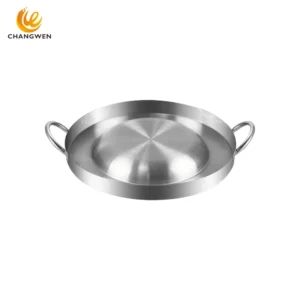
| Cookware | Frying pans, sauté pans, stock pots, sauce pans, steamers, woks, casseroles |
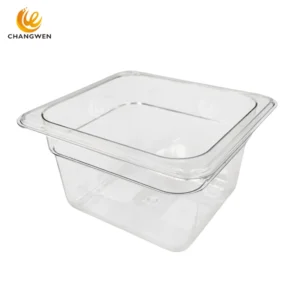
| Bakeware | Sheet pans, roasting pans, hotel pans (GN format) |
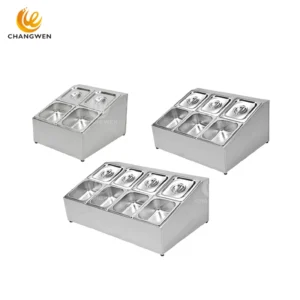
| Banquet & Buffet | Chafing dishes, hotel pans, serving inserts, buffet equipment |
| Tableware | Plates, bowls, serving platters, communal service pieces |
| Kitchen Tools | Ladles, spatulas, tongs, serving spoons, slotted tools |
One-supplier procurement for the full kitchen range reduces administrative overhead, ensures aesthetic consistency, and simplifies supplier relationship management.
Part 2: Private Label Cookware Solutions for Restaurants
Restaurant procurement has its own distinct requirements — different from hotel procurement in scale and operation, but equally demanding in quality.
The Restaurant Kitchen Challenge
Restaurants operate with:
- High-frequency, high-heat use: Commercial gas burners at full flame, daily service, high throughput
- Limited storage space: Every item must earn its place — over-specified or under-performing products waste both money and space
- Cuisine-specific requirements: A Japanese restaurant needs different pans than an Italian trattoria; a steakhouse needs different tools than a dim sum kitchen
- Chef standards: Professional chefs have strong opinions about their tools — they notice weight, balance, handle ergonomics, and heat distribution in the first five minutes of use
- Visual brand expression: Open kitchens, chef’s tables, and passing-kitchen layouts mean that cookware is visible to guests — it’s part of the dining experience
What Restaurant Programs Require
Chef-Grade Performance Restaurant programs require cookware that professional chefs trust:
- Even heat distribution — tri-ply or capsule bottom construction minimizes hotspots on commercial burners
- Appropriate weight — professional chefs prefer pans with substance; too light signals poor construction
- Handle ergonomics — balance point, grip diameter, and wrist torque at operational weight all matter
- Lid performance — secure seal, minimal condensation drip, easy single-hand operation during service
Cuisine-Specific Configuration Private label programs for restaurants can be configured around specific cuisine requirements:
| Cuisine Focus | Recommended Pan Configuration |
|---|---|
| French / European fine dining | Tri-ply sauté pans, copper-core sauce pans, shallow braisers |
| Italian | Wide sauté pans, pasta pots, cast iron braisers |
| Asian / Chinese | Carbon steel woks, stainless steamers, high-heat frying pans |
| Steakhouse / Grill | Heavy cast iron skillets, grill pans, basting pans |
| Café / Bistro | Compact frying pans, sauce pans, omelette pans |
| Banquet / Catering | GN hotel pans, stock pots, large-format sauté pans |
Branding on the Pass For open-kitchen and chef’s-table operations, branded cookware is a front-of-house investment. Custom-engraved logos on pans, matching handle finishes, and coordinated aesthetics contribute to the dining room experience just as much as plating and service design.
Part 3: The Private Label Cookware Manufacturing Process
Understanding how private label cookware programs are built helps procurement teams set realistic timelines and get the most out of their manufacturer relationship.
Step 1 — Procurement Brief Development
A successful private label program starts with a detailed procurement brief:
What to include:
- Full product list (category, item, size, quantity per SKU)
- Performance specification per item (gauge, construction, steel grade)
- Branding requirements (logo placement, application method, approved artwork)
- Certification requirements (FDA, LFGB, NSF, or relevant market standards)
- Delivery requirements (destination, Incoterms, phased delivery if applicable)
- Budget parameters (target unit price or acceptable price range)
Pro tip: The more detailed your brief, the more accurate your initial quotation — and the fewer surprises at production approval. Vague briefs lead to generic products, not tailored solutions.
Step 2 — Manufacturer Selection & Qualification
Selecting the right private label manufacturer for a hotel or restaurant program requires evaluating:
Factory vs. Trading Company Only a genuine manufacturer — one with in-house production capabilities — can commit to your specification, control your quality outcome, and maintain consistency across multi-year supply programs. Trading companies cannot do this.
Commercial-Grade Capability Verify the factory has experience producing commercial-grade cookware (not just consumer retail products) — wall gauge specifications, handle attachment methods, and commercial cleaning resistance are different requirements than consumer market production.
OEM Program Infrastructure
- In-house or partner design team for logo and packaging development
- Sample room for pre-production prototype review
- Documented QC systems with lot tracking for multi-property supply programs
- Certification documentation capability (factory test reports, third-party inspection welcome)
Supply Reliability For hotel groups and restaurant chains, supply reliability across multiple production runs is as important as the initial product quality. Ask for references from existing multi-property or chain hospitality clients.
Step 3 — Specification Lock & Sample Approval
Before production, every specification is locked in writing:
- Signed specification sheet per SKU
- Approved pre-production sample (golden sample retained at factory)
- Approved packaging artwork (print-ready files)
- Confirmed order quantities per SKU
- Agreed delivery schedule
This step cannot be rushed. Changes made after production begins are expensive. Changes made to the golden sample standard are not changes — they’re a new sample approval cycle.
Step 4 — Production & Quality Control
Production of a private label hospitality cookware program follows:
Incoming Material Inspection: Steel grade verification, thickness measurement, surface quality check before forming begins.
In-Process Checkpoints: Dimensional verification at forming, handle attachment inspection, surface treatment quality audit.
Pre-Shipment Inspection: Final inspection against golden sample and AQL standards. Carton labeling, barcode verification, packaging integrity check.
Third-Party Inspection (Recommended): For programs over $10,000 USD or multi-property supply agreements, an independent inspection adds objective quality confirmation before shipment.
Step 5 — Logistics & Ongoing Supply
A reliable private label manufacturer supports not just the first order but the ongoing supply program:
- Reorder lead time commitments
- Safety stock holding options for key SKUs
- Proactive notification of material or specification changes
- Annual specification review meetings
Part 4: What Can Be Private Labeled — The Full Menu
For hospitality buyers, the scope of private label customization is broader than most realize:
Branding & Identity
- Laser-engraved logo on pan body, handle, or base — permanent, premium, dishwasher-proof
- Embossed brand mark — raised or recessed logo on handle or base
- Screen-printed branding — color logo application for decorative or lifestyle positioning
- Custom handle color — PVD-coated handle in brand color (matte black, gold, brushed nickel)
- Custom knob design on lids — hotel or restaurant logo cast into lid knob
Product Configuration
- Gauge and construction to your commercial specification
- Handle ergonomics — custom grip profile with new mold development
- Lid profile — domed vs. flat, vented vs. sealed, glass vs. stainless
- Base configuration — plain, capsule bottom, tri-ply, 5-ply
- Surface finish — mirror polish, satin, hammered, PVD color
Packaging & Documentation
- Custom packaging for staff training sets and new-property openings
- Specification sheets per SKU for internal procurement and maintenance records
- Care and maintenance inserts branded with your hotel or restaurant identity
- Replacement part ordering information — handle, knob, and lid sourcing for long-term program support
Part 5: Certifications & Compliance for Hospitality Cookware
Hotel and restaurant cookware programs must meet the compliance requirements of their operating jurisdiction and supply chain:
| Certification | Relevance |
|---|---|
| FDA (USA) | Food contact safety for US properties and F&B operations |
| LFGB (Germany / EU) | EU food contact standard — highest specification globally |
| NSF International | Commercial kitchen equipment certification, required by some US foodservice operators |
| REACH (EU) | Chemical substance compliance for EU market |
| BSCI / SEDEX | Social compliance audit — required by major hotel group procurement standards |
| ISO 9001 | Quality management system certification — factory-level |
| CA Proposition 65 | California chemical disclosure requirements |
For hotel groups: Major international hotel chains frequently require BSCI or equivalent social compliance audits from their suppliers. Confirm your manufacturer’s audit status before committing to a supply program.
Why Choose Changwen for Private Label Hospitality Cookware
When you’re building a private label cookware program for hotels, restaurant chains, or catering operations, the manufacturer you choose determines everything.
Changwen Cookware and Kitchenware Co., Ltd. delivers the manufacturing depth, OEM expertise, and hospitality-sector experience that serious commercial procurement programs require.
20+ Years of OEM/ODM Manufacturing Experience
Changwen has been producing and exporting private label cookware and kitchenware for over two decades. Our client programs range from individual restaurant brands building their first branded kitchen range to international hotel groups maintaining consistent supply across multiple continents.
Factory Direct — Complete Transparency
You work directly with Changwen’s production team, design team, and QC department. No trading company intermediaries, no margin layers, no communication delays. Factory-direct relationships mean better pricing, faster problem resolution, and unambiguous accountability.
Full Commercial Hospitality Range Under One Roof
Changwen manufactures the complete range required by hotel and restaurant programs:
| Category | Products |
|---|---|
| Commercial Cookware | Frying pans, sauté pans, stock pots, sauce pans, steamers, woks, pressure cookers, casseroles |
| Bakeware & Banquet | Sheet pans, roasting pans, hotel pans (GN), chafing sets |
| Dinnerware | Plates, bowls, serving platters — ceramic, porcelain, stainless steel |
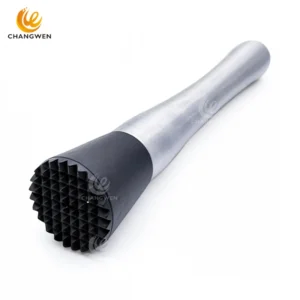
| Kitchen Tools | Ladles, spatulas, tongs, serving tools — coordinated stainless steel sets |
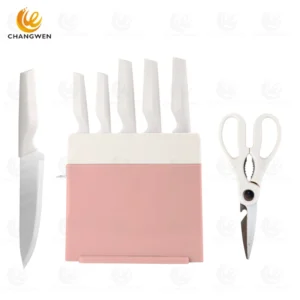
| Knives & Cutlery | Chef’s knives, knife sets, OEM cutlery programs |
Consolidating your full kitchen program with a single manufacturer means consistent aesthetics, simplified logistics, and one relationship to manage.
Commercial-Grade Specification Standards
Changwen’s hospitality programs are built to commercial, not consumer, specifications:
- Wall gauge from 0.8mm to 1.5mm depending on program requirement
- Fully riveted handle attachment as standard for commercial programs
- 304 stainless steel interior as minimum specification
- Commercial cleaning and industrial dishwasher resistance validated
Global Hospitality Export Experience
Our products are in hotel kitchens, restaurant groups, and catering operations across 80+ countries — including properties in North America, Europe, the Middle East, Southeast Asia, and Australia. We understand the compliance requirements, logistics infrastructure, and quality expectations of each major market.
Full Private Label Service
| Service | Changwen Capability |
|---|---|
| Logo application | Laser engraving, embossing, screen print, etching |
| Custom packaging | Color box, branded staff sets, specification inserts |
| Handle customization | Custom profile (mold development available) |
| Surface finish | Mirror, satin, hammered, PVD color coating |
| Certification support | FDA, LFGB, REACH, NSF, BSCI documentation |
| MOQ flexibility | From 300 pieces for trial programs |
| Lead time | Sample: 2–3 weeks · Production: 30–45 days |
Frequently Asked Questions
What’s the minimum order quantity for a hotel or restaurant private label program? Changwen’s standard minimum for private label programs starts from 300 pieces per SKU for trial and initial orders. Multi-SKU programs benefit from consolidated minimum order structures. Volume pricing improves significantly at 1,000+ pieces per SKU.
Can you supply the same specification consistently across multiple orders over several years? Yes — this is the core value proposition of a private label manufacturer relationship. Changwen retains golden samples and signed specification sheets for all active programs, and all production runs are measured against these standards.
How do you handle hotel group programs across multiple properties? We support phased delivery programs — production runs timed to match new property openings or refit schedules. We can also hold safety stock for fast-turnaround replenishment orders on key SKUs.
Do you support NSF certification for commercial kitchen programs? We can produce to NSF-compatible specifications and support buyers in obtaining NSF certification through accredited third-party testing laboratories. This is a common requirement for US foodservice distributor programs.
Can we visit the factory before committing to a supply program? Absolutely. Factory visits and virtual factory tours are welcome. We also support third-party factory audits (BSCI, Sedex, or buyer-organized) for hotel group compliance requirements.
What’s the typical lead time from brief to first delivery? Sample development: 2–3 weeks. Sample approval and pre-production confirmation: 1–2 weeks. Production: 30–45 days. Sea freight: 15–30 days depending on destination. Total first-order lead time: approximately 10–14 weeks.
Start Your Private Label Cookware Program
Whether you’re a hotel procurement director building a brand-consistent kitchen supply program across multiple properties, a restaurant group standardizing its commercial kitchen equipment, or a catering operator looking to upgrade to branded commercial-grade cookware — Changwen is ready to be your manufacturing partner.
Tell us about your program:
- 🏨 Property type and number of locations
- 🍳 Product categories required (cookware, dinnerware, tools, etc.)
- 🎨 Branding requirements (logo, finish, custom packaging)
- 📊 Estimated annual volume per SKU
- 🌍 Destination country and certification requirements
- 📅 First delivery timeline
We’ll respond within 24 hours with a tailored program proposal.